
-- Connecting the dots between our economy, government and business --
-- Connecting the dots between our economy, government and business --
 The concept appears straightforward: Use government funds to help build stores, shorten the trek for fresh food, and in the process, make people healthier and bolster the local economy. But the way Rise Community Market has struggled in Cairo, IL, illustrates how these programs fall short. Because what happens after a store opens is just as important — and despite the up-front financial investments, that hasn’t been solved at all.
 Chicago’s political leadership is floating a pension buyout program as evidence it is seriously addressing the city’s thirty-six-billion-dollar unfunded pension liability, but Mark Glennon, founder of the Illinois policy research organization Wirepoints, said that the proposal moves debt from one column to another rather than reducing it, and that the broader fiscal picture facing the city continues to deteriorate across every measurable dimension. Audio here.
 Expect no retraction or apology. This what they do.
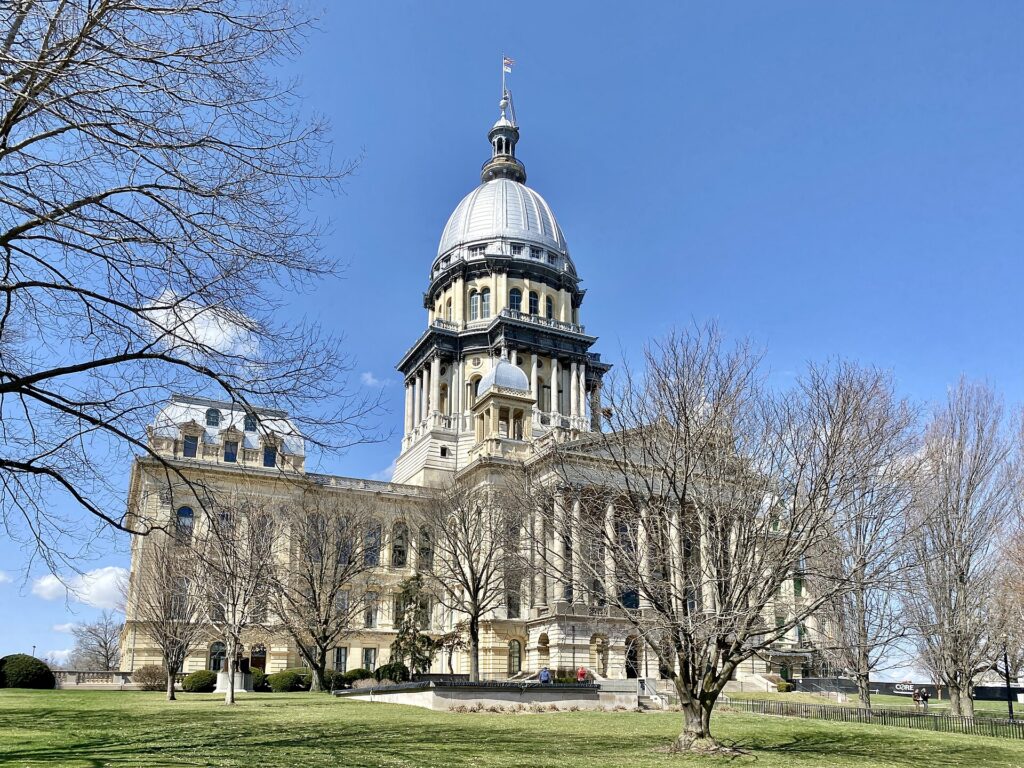 The state’s existing buyout program for its own pensions is the precedent for Chicago, which should be a warning: Look out for similar exaggerated claims and shoddy analysis.
SIGN UP HERE FOR OUR FREE WIREPOINTS DAILY NEWSLETTER
stop the looting and you wont have food deserts
Walmart was losing money on all their south side Chicago stores under Mayor Lightfoot and States Attorney Kim Fox. I know a BIG SHOT from a competitor company who told me that while his company had already left under the above named ladie’s business climate, Walmart was hoping against hope that the new Mayor (Brandon Johnson) would listen to the business owners about the unsustainable theft that no store or chain could survive. Johnson was months away from his swearing in, when he made a crack about some young rioters/looters/truants weekend takeover of downtown, not chastising the miscreants, but scolding… Read more »
Hmm, does climate change cause food deserts?
The Dems will tell you it does if it means they can raise our taxes.
When in doubt, blame all your problems on climate change.
No profits, along with violence towards the employees, insure the food desert will always be a part of the community.
The same problems are occurring in the Chicago Metro area. To big fanfare and many subsidies these stores open and not one stays open very long. Beside the big box
Stores they cannot compete with the shrinkage.
The state or local governments get involved
And it almost guarantees failure.
They cannot engineer success, throwing
Money at this is a total wasted effort.
The common thread of the article is that grocery stores in distressed neighborhoods and counties have a hard time starting up due to difficulties accessing capital. Even if startup costs could be funded, the stores cannot compete with the big boys of retail like WalMart. Even in these distressed locations, WalMart is somehow able to serve these markets and keep the shelves filled and the doors open, even though their nearest location might require a bit of a drive to access it. We see in these distressed startup grocery stores a lack of management talent, mostly due to cost. The… Read more »
Yup. Margins just 2-3% in grocery business. Competition brutal. If there’s anywhere government won’t succeed it’s there.
Theft is brutal with these small margins, never will survive.
To echo Mark Glennon below, “A WELL RUN” grocery store might make 3% net profits. With the government running this I would be impressed if they only had a 3% loss. There is a reason retail outlets like grocery stores, Walmart, Target, CVS, Walgreens are shutting down hundreds of stores between them. These stores are closing because they cannot make a profit in the neighborhoods they are in. When you add in internet ordering like Amazon, the physical retail store environment is under a lot of pressure. I look for Chicago to open these store, hold their nose when they… Read more »