
By: Mark Glennon*
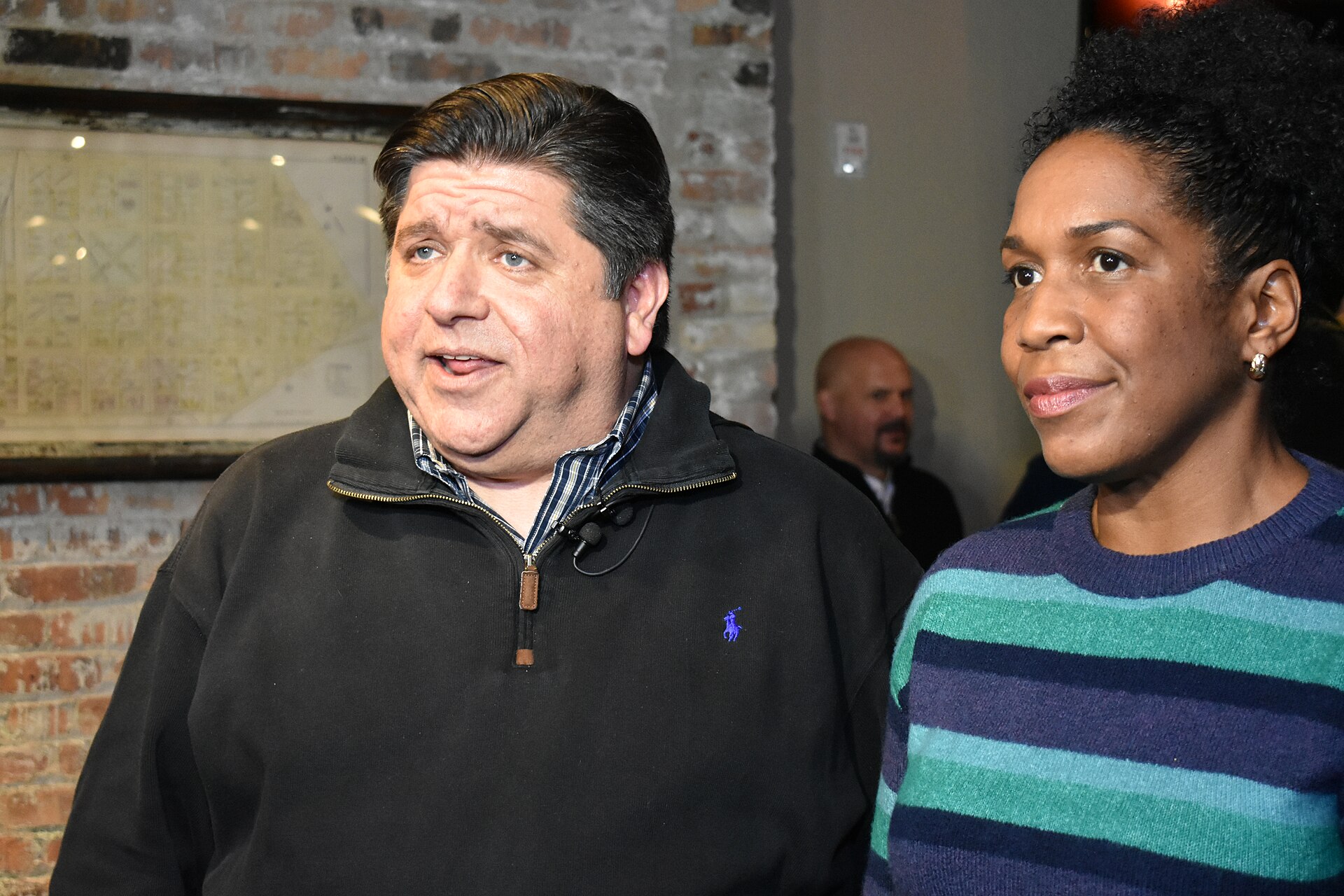
Both Gov. JB Pritzker and Lt. Governor Juliana Stratton cite their fiscal accomplishments in Illinois in their campaigns for higher office. Among many reasons to reject those claims is the unsustainability of what’s been put onto taxpayers’ backs during their administration. That total, which very roughly is $162 billion, has provided some degree of stability to state finances and garnered bond upgrades.
However, the consequence is unaffordable government and a cannibalized tax base that is fleeing.
Three buckets go into that $162 billion estimate. Some of it is imprecise, for the reasons indicated, but the big picture is clear.
First, 57 separate state tax and fee increases a raised $77 billion in total since Pritzker took office in January 2019, That number is quite precise and is detailed in a recent report by the Illinois Policy Institute.
Total tax and fee increases: $77 billion
Second, Illinois governments received some $40 to $54 billion (depending on who is counting) of federal Covid pandemic relief.
That figure includes assistance to local governments that did not all go directly into the state budget. However, that local relief helped take the burden off the state for many of the myriad obligations shared by the state and localities. Moreover, the state also got a huge boost in income tax revenue thanks to the surge in private sector Covid relief. According to Pew Research, Illinois was among the biggest beneficiaries. It was one of 17 states where above-trend revenue accounted for more than half of their total growth during that period. A separate study by University of Illinois researchers also documented the surge as well. We will ignore that surge and just go with the lower number for direct Covid payments to government, which is $40 billion.
Total federal pandemic money: $40 billion
Third, it’s the Pritzker Administration that has mainly benefited from Illinois’ biggest-ever income tax increase.
A reminder of some history is in order. Under Gov. Bruce Rauner, Illinois went without a budget for nearly two years. Rauner handled that impasse horribly, but the Democratic super-majority waited until near the end of his term to do what it could have done all along – pass a budget over his veto. It did that concurrently with the historic tax hike that raised personal income tax rates from 3.75% to 4.95% and corporate rates from 5.25% to 7%.
Revenue from that increase was in full swing by the time Pritzker was sworn in 18 months later. The resulting additional revenue is widely estimated to be about $5 billlion per year. That’s another $45 billion that Pritzker had to work with for the nine budgets he has submitted.
Total additional income tax revenue: $45 billion
Grand total: $162 billion
For perspective, that extra $162 billion collected during Pritzker’s term is over three times his most recent budget proposal.
It should therefore be no surprise that bond rating agencies would think chances of a default decreased, resulting in rating upgrades. Rating agencies love higher taxes. Yet Illinois’ rating are still the worst of any state.
And it should be no surprise that some degree of fiscal stability ensued – at least temporarily.
But what’s the full result? beyond what rating agencies care about?
First, and most obvious, the state is less affordable because taxpayers have to cover every penny of it.
Second, the tax base that’s shattering, with no end in sight. From 2000 through 2023, Illinois lost 780,000 net taxpayers (filers) to out-migration. Adding in those taxpayers’ dependents, Illinois lost 1.6 million net residents to out-migration from 2000 through 2023. Most importantly, since 2000, $94 billion of Adjusted Gross Income left with departing taxpayers. That’s just for the first year after departure. Assuming they continued to work, the true aggregate total is far higher. That’s all according to the most recent IRS numbers on interstate migration of taxpayers, which we wrote about here.
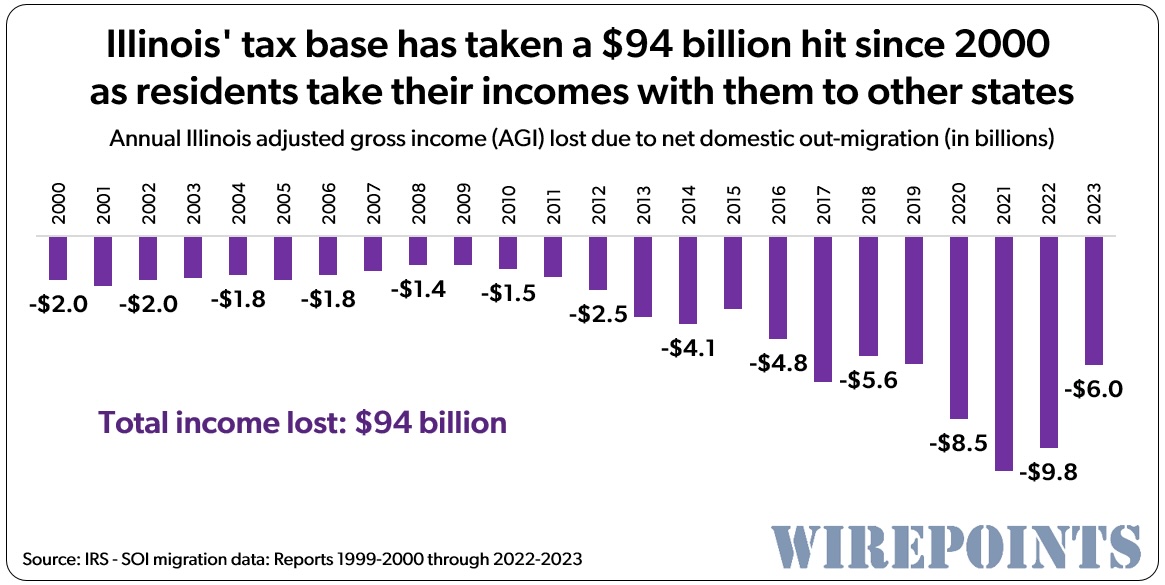
Through it all, not a shred of fiscal reform was made. Dabble with the rough numbers above if you want, but the point is clear: Whatever “improvements” Pritzker and Stratton want to claim about Illinois’ financial health are overwhelmingly due to the massive raid on taxpayers.
And what for the future? The governor’s own budget office projects a deficit of $267 million this year rising to $5.3 billion in 2031.
*Mark Glennon is founder of Wirepoints.

 Audio and summary
  A largely unasked question is becoming glaring: Is Illinois doing all it should to use artificial intelligence to make government cost less and work better? So far, the evidence says no.