
-- Connecting the dots between our economy, government and business --
-- Connecting the dots between our economy, government and business --
 "There’s little precedent for what’s happening in Chicago, and no clear path out. Illinois doesn’t let cities file for federal bankruptcy protection, and that’s unlikely to change because the municipal unions that have so much political power in the Land of Lincoln hate bankruptcy, where contracts can be busted and pension debt cancelled. Still, as economist Herb Stein famously observed, 'If something cannot go on forever, it will stop.' But when, and how?"
 Chicago’s political leadership is floating a pension buyout program as evidence it is seriously addressing the city’s thirty-six-billion-dollar unfunded pension liability, but Mark Glennon, founder of the Illinois policy research organization Wirepoints, said that the proposal moves debt from one column to another rather than reducing it, and that the broader fiscal picture facing the city continues to deteriorate across every measurable dimension. Audio here.
 Expect no retraction or apology. This what they do.
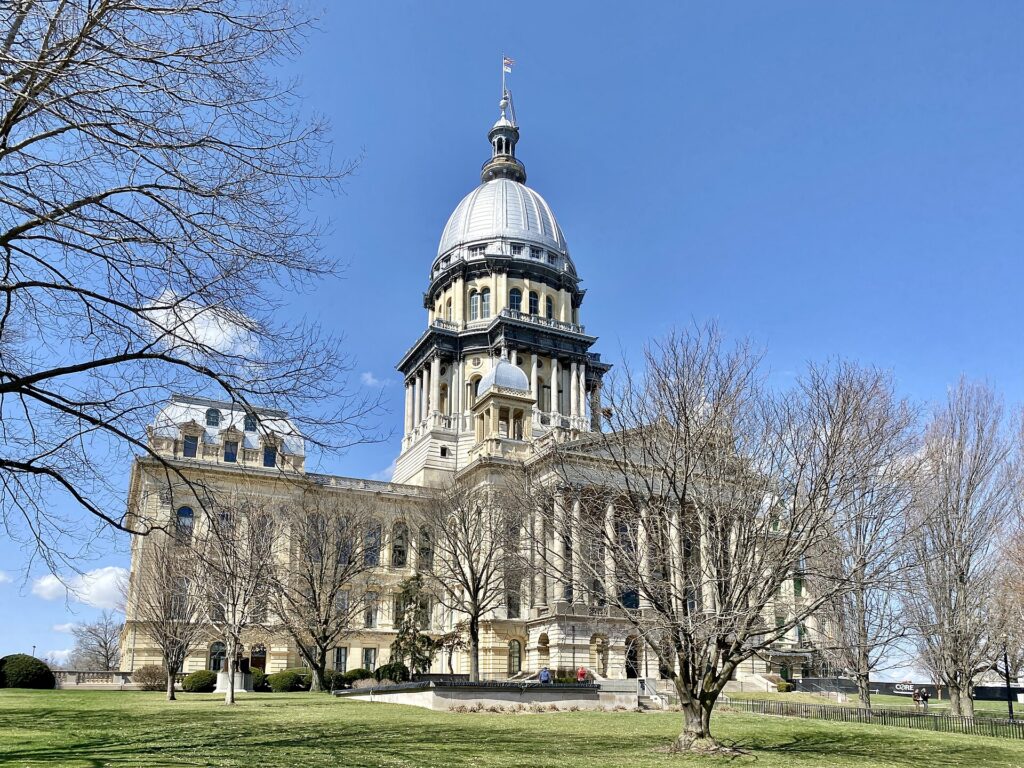 The state’s existing buyout program for its own pensions is the precedent for Chicago, which should be a warning: Look out for similar exaggerated claims and shoddy analysis.
SIGN UP HERE FOR OUR FREE WIREPOINTS DAILY NEWSLETTER
Market risk is still an increasing global constant. It’s just being moved over to the taxpayers and the old bond holders to attract someone new to the ponzi. But the overall risk of anyone loaning Chicago money and expecting to get paid back is still growing. The rating agencies work for the city not the investors or taxpayers, the rating agencies will continue to rate the new bonds above junk. The rating agencies will reward anything that commoditized the taxpayers, and now will reward them for putting the the old bondholders last in line too.
Part of the problem is revealed in the article. To the best of my knowledge they have let the courts actions stand rather then carrying the battle forward in a slow march to the Supreme Court. If you apply the backward logic that allowed private property to be seized under eminent domain, not for public safety or public services purposes but rather just for tax base development. It seems to me you could easily justify terminating unearned/unaccredited future pension obligation under the same public best interest arguments.
On the surface that seems like a good argument, but if the Supreme Court allowed that kind of judgment where does it end? I think it has no end. The “public good” would be allowed to Trump all private property rights.
I don;t think I communicated clearly. The courts already decided in Kelo vs New London that they can seize propriety from one individual and transfer it to another merely for the sake of tax revenue/economic good for the sake of public interest. Then the legislature in 7 states, various local communities and Federal Government worked to change eminent domain laws to afford some protection as a reaction to the Supreme Court ruling. My point is the Supreme Court already decided, so the decision should be leveraged in order to protect the public for a change.
Detroit had a couple “advantages” which are not available to Chicago. First, Detroit owned the City’s art museum that had a very valuable collection and the City was able to persuade charitable organizations to make donations toward pensions in order to protect the art collection from creditors. (City employees and retirees would have been happy to sell “their” cultural heritage to pay their pensions. Heritage doesn’t buy groceries!) Second, the City’s employees and retirees had a legal basis to maintain that the State was responsible for City pensions. That claim was never tested in court — the State was afraid… Read more »