
-- Connecting the dots between our economy, government and business --
-- Connecting the dots between our economy, government and business --
Chicago’s political leadership is floating a pension buyout program as evidence it is seriously addressing the city’s thirty-six-billion-dollar unfunded pension liability, but Mark Glennon, founder of the Illinois policy research organization Wirepoints, said that the proposal moves debt from one column to another rather than reducing it, and that the broader fiscal picture facing the city continues to deteriorate across every measurable dimension. Audio here.
 Expect no retraction or apology. This what they do.
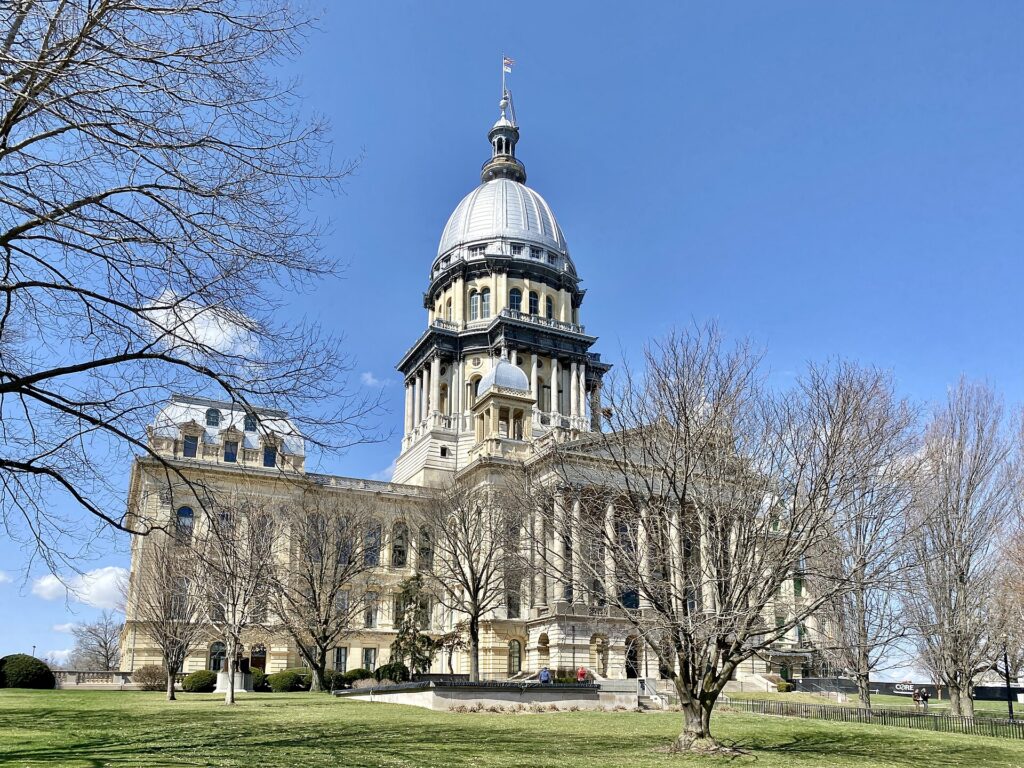 The state’s existing buyout program for its own pensions is the precedent for Chicago, which should be a warning: Look out for similar exaggerated claims and shoddy analysis.
SIGN UP HERE FOR OUR FREE WIREPOINTS DAILY NEWSLETTER
All that “success” but you still can’t to Woodlawn without a police escort — FRAUD!!
Activists: Segregation is bad!
Also Activists: Stay out of our neighborhoods, Caucasians!
Let’s say Woodlawn magically turned into a prosperous, wealthy community occupied entirely by African Americans. Would that be considered a success story? No Asians, no white people, no Latinos. Same exercise with Pilsen. Because it seems like that’s what these equity advocates want: ethnically distinct neighborhoods with zero integration.
Welcome to this week’s edition of Lying With Numbers, the game show where people make stuff up and say it with a straight face in the hope of getting more free stuff from their Uncle Sam.
“That report, released Thursday, credits the national nonprofit group Preservation of Affordable Housing with attracting more than $400 million in federal, state and city funding in that time.” $400,000,000 in investments? That’s nearly half a billion dollars in government cheese – just for one neighborhood. That’s not investment, that’s subsidization. With those investments, the median household income grew from $25,632 in 2000 to $29,728 in 2018, according to the report — an increase of about 16%. 16% in 18 years is far, far less than the rate of inflation. This is not a success. I don’t think that the authors… Read more »
We should have our own guest column on this website.
Seriously, though, I’m glad things are improving in Woodlawn. But context is key. African American population is down in Chicago, so is Woodlawn poaching residents from other neighborhoods? Which neighborhoods? Who employs the typical Woodlawn resident?
What is the dispersal rate of incomes in Woodlawn? Is it still poor with pockets of upper class? Here’s a new Woodlawn development with homes priced $600-750K. The “affordable” homes in the next phase will be around $400K. Keeping everything else constant, a few blocks of these homes will skew any numbers.
https://therealdeal.com/chicago/2022/01/17/new-home-sale-in-chicagos-woodlawn-tops-local-record/
Why is Woodlawn getting so much government subsidy?
Could it be that U of C — and those who would benefit from real estate near U of C — are greasing the wheels for no-strings cash for developers?
And it all started when Toxic Narcissist Obama — crooked Tony Rezko’s silent partner in his real estate racket — decided to steal public land in Woodlawn’s Jackson Park backyard, for his monstrosity — a megalomaniacal monument to his miserable mediocrity.