
-- Connecting the dots between our economy, government and business --
-- Connecting the dots between our economy, government and business --
Chicago’s political leadership is floating a pension buyout program as evidence it is seriously addressing the city’s thirty-six-billion-dollar unfunded pension liability, but Mark Glennon, founder of the Illinois policy research organization Wirepoints, said that the proposal moves debt from one column to another rather than reducing it, and that the broader fiscal picture facing the city continues to deteriorate across every measurable dimension. Audio here.
 Expect no retraction or apology. This what they do.
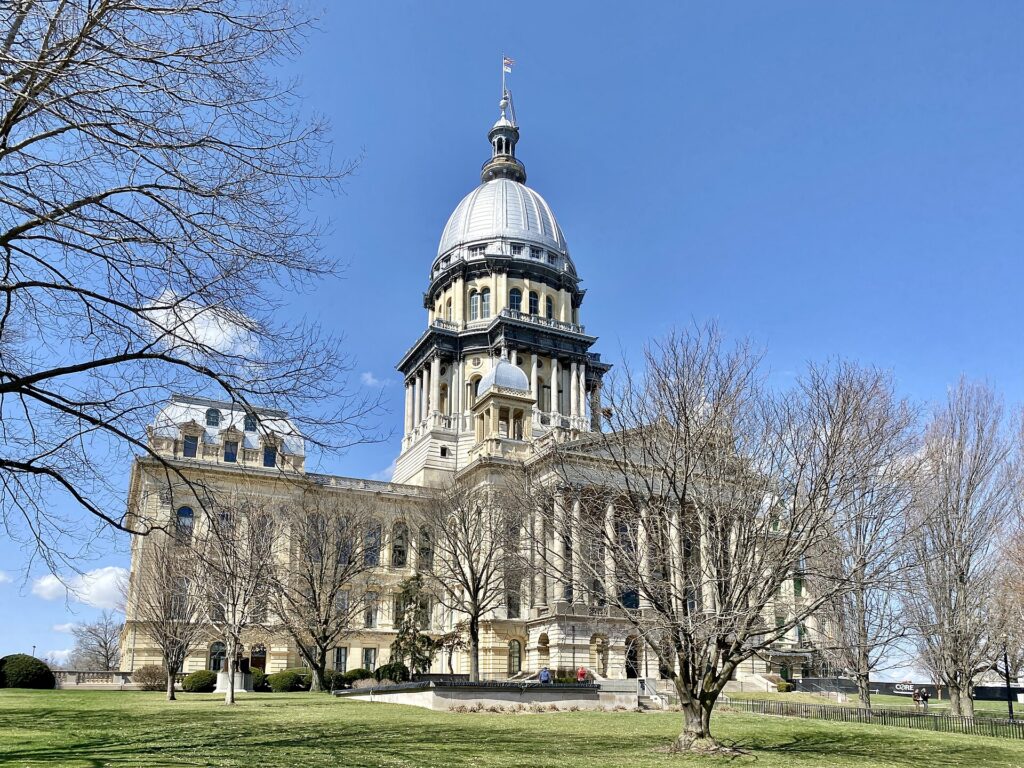 The state’s existing buyout program for its own pensions is the precedent for Chicago, which should be a warning: Look out for similar exaggerated claims and shoddy analysis.
SIGN UP HERE FOR OUR FREE WIREPOINTS DAILY NEWSLETTER
Is this where the city begs us lowly suburbanites to come back? Bad news…you’re competing against 2-3 hours of commute time saved every day by working from home. Over 10 hours per week re-allocated to other things far more enjoyable or productive. Make your own coffee and fix your own lunch and add $20/day saved to that. Good luck, Crain’s!
Whats the motivation to have commercial space at all in Chicago… – foot traffic is down – bums will be urinating in my doorway – I need to constantly sweep the front of the store or get summons from sanitation – taxes are sky high – gangs can come in and steal with impunity – Amazon gets tax breaks, not me – need to leave you car unlocked so they don’t break in, and houses will be next in line for this so called safety precaution. – need to buy new dress down clothes and throw away your business clothes.… Read more »
Well who wants to live or do business where it is illegal to eat in a restaurant? Ghost town city, office buildings are obsolete.
Crains
Use to be a good paper Has not been there in years!!
No kidding, Crains. Chicago’s “premier” business publication has largely veered away from any hard-nosed reporting of politically-sensitive and/or non-SJW affirming news. Perhaps Crains is simply afraid of offending our SJW politicians governing our City and County and State. Crains has largely ignored downtown commercial real estate crisis as it obviously worsened during past two years. Instead, Crains editorially-tailored itself to 90% politically-correct news features versus 10% “real news”, a flip from its prior editorial focus. Now Crains endlessly promotes “equity”, as if to atone for 40+ years of solid race-blind business news coverage. What was once a reliable news source… Read more »
Higher taxes, higher insurance premiums, more maintenance costs due to covid, lower rents, lower occupancy. Seems to me like a pretty strong case for a lower assessed value. How’s Fritz going to explain that to all the homeowners who think all the commercial properties should bear the brunt of the taxes. My building is at 80% occupancy but actual daily attendance is about 10%. What’s going to happen when those leases come up for renewal. Ground level retail tenants have to be sucking wind too. At 8 a.m. Starbucks would have a line of 15 people, yesterday nobody. At lunchtime… Read more »
Fritz is a huge let down Typical cook dem slime ball!
Wake up cook county
Office buildings will be obsolete, not a matter of if but when. Office work and team collaboration is done way better online. Brick and mortar retail as well is obsolete, for anything other than groceries or car maintenance. Why schlep to a store for anything other than your groceries? Malls obviously are dead as well; I can count at least 10 of them already torn down in Illinois. Malls have absolutely nothing of interest for grown Men to buy and are surviving on selling sunglasses and popcorn. Look at the American dream mall in NJ now, what a disaster. People… Read more »
I’m flabbergasted and dumbfounded! Nobody predicted this! Mention Chicago to employers and employees and it’s an immediate NFW! We’ll done Mayor!
Eventually investors and lenders will experience losses. The equity holders in those entities will bear most of the losses: pension funds, IRAs, insurance companies. Thus. the losses will spread through the economy (national and international). Assets (tangible and intangible) will lose their value. Tax collections will fall so that governments will lack the resources to meet obligations or to continue handouts. It’s hard to find models from which one could predict the outcomes of a general collapse. The post-Civil War confederacy comes to mind — where a small group was left with land that couldn’t be productive without labor. Our… Read more »
The everything bubble is popping in real time, slowly, but you can see it. All of that government printed money has to find a home; and most of it went into asset prices. But the assets prices cannot be supported forever. The everything bubble will crash and all those BidenBux will die and go to heaven.
i don’t think BidenBuxs go to heaven but in the opposite direction, never to be seen again. However, a lot of it will shift into real world commodities and assets instead of fantasy story stocks and worthless endless supply of digital coins. This will create inflation.
BidenBux are digital dollars created on a ledger. Some of it is converted to cold hard cash, but most if it was consumed on products, or went into inflated valuations. When those inflation valuations crash, the money disappears into BidenBux heaven. Look how much money was ‘lost’ yesterday when Facebook’s stock crashed. Or when downtown buildings can’t pay the full monthly mortgage note. That money disappears and the government has to print more money to make up for those lost dollars to support valuations. But the last time the government printed so much money, there was serious political fallout. They’ll… Read more »
That’s is asset value disappearance not changes in money supply. Prices can change dramatically for assets destroying wealth, not necessarily money supply.
Easy money drives up prices. The more money floating around, the higher asset prices rise, because that money is looking for a home. That’s why the Fed treats deflation like the plague, it sees too little money to prop up asset prices as a cancer. When the bubble bursts, POOF! That money is disappears, and then the Fed stares into the abyss of deflation, and starts QE again, to print new BidenBux for the ones that disappeared when asset prices crash.
D & D (regarding the Dread D word) although I’m not sure this solves anything. I only had one course in economics from the old-timey Samuelson text. I found the following in a recent Forex posting: Deflation is defined as negative inflation or when inflation rates go below 0%. Deflation leads to a decrease in prices and an increase in the value of a country’s currency. Deflation can be caused by contractions of a country’s money and credit supply, a rise in productivity, or tight monetary policies. Also, deflation often happens after times of artificial monetary expansion. Interestingly enough, some… Read more »
Also, deflation often happens after times of artificial monetary expansion.
Yes, I think that the Fed Reserve buying something like $80 billion in Treasury securities and $40 billion of mortgage PER MONTH. So yeah. As soon as daddy shuts off the credit card, times are going to get really tough.
I am inclined to think this will not be limited to Illinois. Given the dollar’s role in international currency markets and American consumers’ role as the world’s leading buyer of stuff and the U.S.’s role as issuer of debt instruments worldwide, I fear there will be no place to hide. And misery does not want the kind of company we will find ourselves a part of.
The entire freaking world is awash in cash and inflation right now. For years the money flowed into commericial, stocks, bonds but now it’s flowing into commodities, wages, and other assets (art markets, superyachts, incunabula) and all of this is showing up at the grocery store. It’s even flowed ito meme stocks as redditors were using their stimmy checks to pump up gamestop and AMC stocks and then they tried the silver market. There is also raging housing bubble virtually everywhere in the world right now with really high unaffordable prices and loans given to people who can barely afford… Read more »
The inflation deflation debate is endless. It boils down to money supply, it’s velocity, and the supply of goods and services. Crashing stock prices of fantasy story stocks that don’t make money will hurt a lot of peoples balance sheet as the debt doesn’t evaporate.
The debt evaporates when the ability to pay it back evaporates. It’s just a matter of accounting after that. Japan’s problem after 1989 and it’s deflation was because it refused to acknowledge these zombie debts. America on the other hand believes that printing its way out of deflation is the answer. Ben Bernake was called Helicopter Ben because he once suggested dropping pallets of money from a helicopter into crowded below as a last ditch effort to fight deflation and get people spending money.
Detroit couldn’t pay its debts including interest and pension contributions. Bankruptcy ensued and another bankruptcy may soon be needed. Looks like that won’t happen in Illinois any time soon. Individuals and private companies will likely file for or be forced into bankruptcy. Suppliers of goods and services may be among them especially if they’re not able to borrow and if their inventories stack up for lack of buyers. Radical politicians are already trying to modify zoning laws in places where single family structures have consumed most of the available land. Chicago is likely to have lots of vacant land before… Read more »
This might make you feel better: IL housing today is cheaper than most comparable states (with this housing bubble). We have some of the nicest, wealthiest tree lined suburbs and cities you can find in the entire continental US, we have all four seasons with snow on the ground right now covering then entire state, and it will be warm and hot for a long summer, our schools are excellent, our state income tax rate is only 5%, and we have dozens of major corporations and professional firms located in the state. IL’s problem is entirely man made, it’s entirely… Read more »
I have no idea of the fantasy utopia suburb you speak. It must be north of I80.
The landscape is great, but the left-learning freaks living there wreck it! but he asked for positive comments, not negative ones!
Thanks. I was born in Chicago but moved away when I was 3. Two daughters went to Northwestern. 20 years ago we used to look forward to visits to Oak Park and Evanston and downtown restaurants and museums and reunions with cousins. I have similar nostalgia for Detroit in 1960.
Our big cities spawned our suburbs where we now try to recreate the ball games and bike rides of our youth. Wirepoints provides an outlet for lamentation.
I agree certain suburbs are desirable places to live. My mother was raised in Lake Forest, and I was raised 8 miles to the south, barely in Lake County. The public schools were among the best in the country, and my high school remains at that level. Athletic opportunities were superb, so even competing at a national and national championship level was possible. A great place to live. The problem is political economics. So many communities are not sustainable. There are 300k homes in places like Grayslake with over 3 percent of property value in taxes. Paying endless excessive rent… Read more »
“The problem is political economics. So many communities are not sustainable. There are 300k homes in places like Grayslake with over 3 percent of property value in taxes.” That same house in Colorado or Houston would be $475,000 but with lower property taxes. Half your neighbors bought that house with hardly any money down and use up to 45% of their pre-tax income to pay for it. Housing is in a major, major bubble everywhere. The true price of housing was back in 2011, 2012, 2013, when buyers were scare, and lending was tight. Things in 2014 started picking back… Read more »
Chicago and cook county- Who in their right mind would do buisness there!
LOL
Commercial landlords are inhaling a lot of copium. It is a bad idea to throw good money after bad by rehabbing underused buildings. They are at the B in DABDA meaning bargaining, they’re trying to bargain with Mr. Market, believing they can trade new upgrades and faster elevators for a couple of more paying tenants. Of course, they’ll want higher rents to offset the new upgrades, which makes little sense in a market where demand is weak and tenants demand massive concessions.
Fixed the headline for you:
“Loop Real Estate Market Collapsing, As Offices Are Empty, Violent Crime Rises And Businesses/Skilled Workers Are Leaving/Avoiding Chicago”
You’re Welcome!!