
By: Mark Glennon*
Across America, scrutiny is rapidly expanding over taxpayer-funded “NGOs” — nonprofit, non-governmental organizations. Sparked initially by criticisms of federally funded NGOs operating abroad, the movement rapidly intensified as Minnesota’s massive fraud scandal broke.
Now, Illinois is in the crosshairs as federal authorities expand their investigations. Last week, Treasury Secretary Scott Bessent wrote that fraud similar to Minnesota’s “is almost certainly happening in many other states, especially states like California, New York, and Illinois, which impose lax controls on the use of government benefit funds.”
Separately, Wirepoints has learned that the U.S. Department of Justice has been looking at some of the evidence collected so far by private researchers.
That evidence begins simply with lists showing the staggering number of NGOs and money granted through specific line items for each in State of Illinois budgets. The FY 2025 budget alone specifically shows thousands of NGOs granted at least $3.5 billion in the $53.1 billion budget. The FY 2026 budget contains NGO appropriations on the same order of magnitude.**
Those lists have been compiled by various nongovernment researchers who have combed through the budgets. You can find a simplified version of those two lists at Breakthrough Ideas, run by former Illinois State Rep. Jeanne Ives.
Skim through the lists yourself. You needn’t be a forensic accountant to grimace with suspicion about whether the missions of many organizations are appropriate for taxpayers to fund. For example, there’s Healing Illinois, with $4.5 million from the state in 2025. It’s activities are “designed to build community through knowledge-sharing, deeper interpersonal interactions, and intentional spaces for collective healing, including community-wide murals, visual artistic events, exhibitions, storytelling and discussion that advance racial healing.” Just look at their names and their websites — if you can even find a website. Many have none.
Some have already been looked at individually. For example, there’s Centro de Trabajadores Unidos, which state Rep. Adam Niemerg (R-Dieterich) wrote is a group that openly operates a Rapid Response Team to “confront ICE raids and detention and deportations.” Its $1.6 million in state funding should be ended immediately, Niemerg says.
The size of the list of these organizations exploded in recent years, contributing heavily to the state’s soaring budget. In fiscal year 2011, the state handed out about $1.1 billion to nonprofit organizations across the state in the form of 1,636 grants. That was a lot, too, but only about a third of the dollars now granted annually. It’s fair to infer that politicians figured out how to outsource misuse of taxpayer money by pouring it into NGOs that suit their political purposes, if not outright fraudulent.
The enormity of the list and the dollars spent, alone, should set off alarms. It’s inconceivable that the General Assembly could have put any serious effort into reviewing the recipients, with budgets routinely made available to rank and file lawmakers only hours before they vote. It’s likewise impossible to think they are being monitored appropriately.
It therefore should be no surprise to read stories like the one about United Way of Rock River Valley. The fiscal year 2026 Illinois state budget includes two line items totaling $1 million for them. But, when asked about it, the organization’s spokesperson said she wasn’t even aware that state funds had been allotted to her organization this year.
Being nongovernmental, these NGOs are not subject to the Freedom of Information Act or patronage bans, giving lawmakers an opaque, ready source of campaign workers and bodies to show up at their endless protests.
Be certain, however, on two things about the list. First, many of the organizations (perhaps most) may be entirely worthwhile and properly run. You will no doubt see good ones you recognize on the list. Second, this is not necessarily about fraud or illegality, as in the Minnesota scandal. The issues extend to whether the organizations are pursuing political goals or other inappropriate purposes, and whether the grants make sense for a state that’s fiscally crippled.
Therein lies a major part of the problem: Sorting the good from the bad requires an individual look at each organization, which is a daunting challenge. That’s being done only gradually, mostly by citizen journalists. It’s no doubt a challenge for the Justice Department as well. As mentioned, they’ve at least started reviewing the list, but we don’t know what, if any, actions they intend to take, or what kind of resources they have put on it.
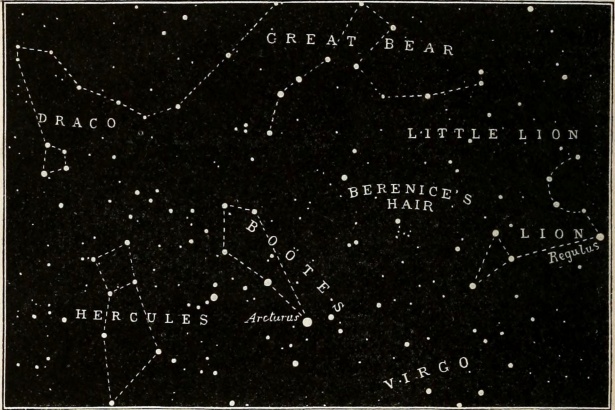 It’s an example of what’s sometimes metaphorically called a “constellation problem.” That’s when many separate but related things form a larger pattern. Some stars, galaxies and grants may be too small to get much attention. Connect the dots, however, between billions of stars or billions of dollars, and you’ll see the big picture.
Maybe the starting point is to ask, given how sloppily the money was appropriated, why wouldn’t we find extensive wrongdoing in Illinois NGOs?
After all, this is Illinois. From recent headlines:
- Hundreds of government employees themselves were recently found to have defrauded the Paycheck Protection Program.
- Auditors reported that the Illinois Department of Human Services failed to conduct any of the federally required monitoring of the Illinois Housing Development Authority’s Homeowner Assistance Fund. About $177 million in HAF money was distributed without risk assessments or oversight.
- Auditors reached a similar conclusion for the Crime Victim Assistance program. The Illinois Criminal Justice Information Authority received an adverse opinion after failing to follow its own risk-based and on-site monitoring policies while passing through approximately $75.3 million in federal funds.
- Billions were stolen in unemployment insurance during the pandemic. The state helped stonewall that story and we still don’t know the full amount of the loss.
None of that, by the way, is part of the NGO problem or reflected in the NGO list of grants.
A clinical summary of where this stands came from the watchdog group Truth in Accounting: “Minnesota is now under intense scrutiny for major oversight breakdowns in federal programs, failures that a new Truth in Accounting analysis shows are far from isolated, with similar red flags already exposed in Illinois.”
Count on this story growing and growing as the light is shown on more and more Illinois NGOs.
*Mark Glennon is founder of Wirepoints
**The lists show much higher numbers of NGOs and dollars appropriated than summarized here because some grants on the list are to government entities like libraries, park districts and public universities. They are technically not NGOs so they were excluded. However, by no means should they be disregarded. Many of those grants are in turn re-granted to NGOs, but those re-grants are not on the list. More work is required to identify them. Second, the excluded grants are in addition to normal state funding for local governments such as the Local Government Distributive Fund, which is a primary means of sharing state money locally. In other words, they are one-off, special appropriations, the rationale for which is usually unknown. The lists are subject to ongoing refinement and may contain some omissions or errors, but nothing that changes the order of magnitude.
 With $162 billion more from taxpayers, couldn’t you deliver a few bond upgrades, too
 Audio and summary
  A largely unasked question is becoming glaring: Is Illinois doing all it should to use artificial intelligence to make government cost less and work better? So far, the evidence says no.
If it weren’t for the DOGE audits, we wouldn’t have found all the shenanigans going on at ASAID and other Federal money pits. Much of this taxpayer largess went right into the campaign coffers of politicians who essentially voted themselves money from the Federal treasury. Such a deal! George Soros didn’t spend his own money on leftist rent-a-mobs. He simply created NGOs with innocuous sounding names and stated benevolent purposes, then funneled the taxpayers’ money to paid protestors and their oddly professionally produced signage, among other things. Chuck-you Schumer has naturally vowed that, if he and his fellow kleptocrats are… Read more »
I was aware that the State funds various nonprofits to do various (mostly good) things, but this list is incredibly larger than I had expected. I looked at a few more or less randomly, and it was difficult to tell from their web sites what they actually accomplished. Perhaps an AI could be applied to analyze the work.
Thanks to the (anonymous?) researchers, and Jeanne Ives, for compiling the list.
“Good” is based on results. If the problem the NGO was created to fix, does not improve (as in most cases), then it’s a grift, plain and simple.
Can’t wait until DOGE comes to Illinois.
Some of them are flat-out fantasy projects, like getting the state to pay for art or amateur psychological counseling that is pointless nobody else will pay for it. The piece points out that some NGOs are legitimate. I know one that I’ve volunteered for. Their mission is sweet, day care and tutoring of kids in a bad neighborhood. But honestly, even the legitimate ones need to feel pressure, on salaries, on total staffing, on facilities. The state government should be miserly and kind of a bad taskmaster, driving these legit organizations to find more private funding. It’s unhealthy for these… Read more »
It should be galling to every taxpayer that our money is, after being filtered through this and that ( and some undoubtedly skimmed off ) going to fund protesters, fraudulent social services and even overseas to fund anti- American organizations.
Time to crack down on all the fraud in corrupt Big Blue states like MN, IL, NJ, CA, CT, etc!!
If you want to join those at the trough, you still have to get your app in by February 22nd to get your drummers and sweat therapy tents up and running and $$$ Funded. There may be some competition:
https://www.dhs.state.il.us/page.aspx?item=171938&newssidebar=126286 — It’s all about Affirming Our Humanity: Playing, Sharing, & Experiencing Inclusive Joy
Thanks for the link- it’s an eye-opening real time example of the type of things Pritzker insists we all need to pay for.