
Audio: Wirepoints’ Mark Glennon says Chicago pension buyout plan mostly shifts debt rather than eliminating it, property tax surge doubles inflation over three decades – Chicago’s Morning Answer
Chicago’s political leadership is floating a pension buyout program as evidence it is seriously addressing the city’s thirty-six-billion-dollar unfunded pension liability, but Mark Glennon, founder of the Illinois policy research organization Wirepoints, said that the proposal moves debt from one column to another rather than reducing it, and that the broader fiscal picture facing the city continues to deteriorate across every measurable dimension. Audio here.
 Expect no retraction or apology. This what they do.
 The state’s existing buyout program for its own pensions is the precedent for Chicago, which should be a warning: Look out for similar exaggerated claims and shoddy analysis.
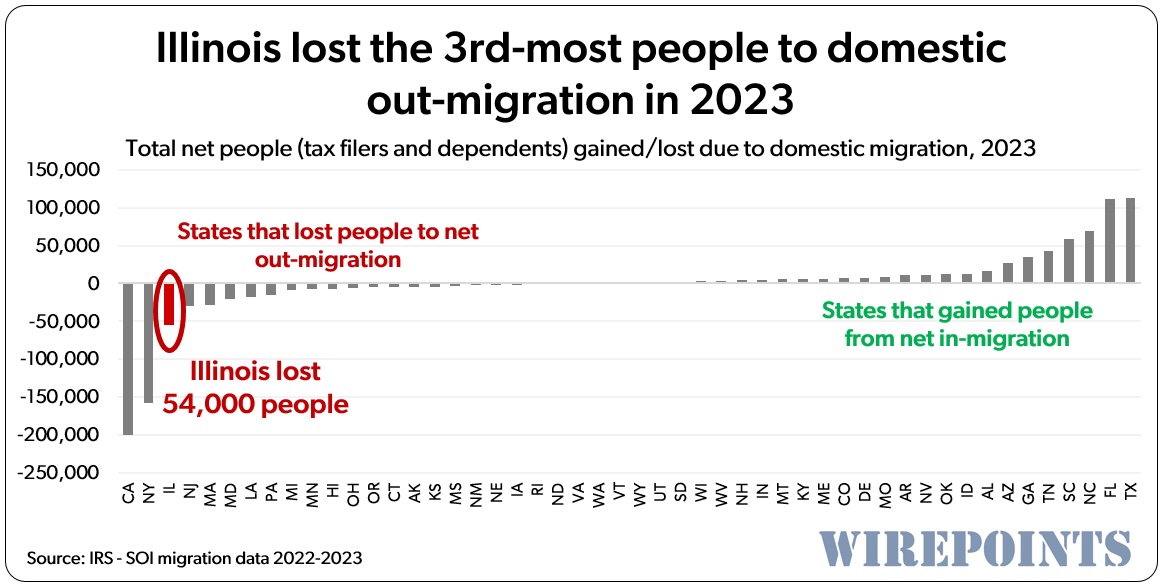 Illinois lost another 54,000 tax filers and dependents, net, according to the IRS. Since 2000, fleeing taxpayers have taken $94 billion of annual adjusted gross income with them.
Shifting taxes one way to another merely changes who the taxes are imposed upon and, if it were done the usual Illinois way, might well have a tax hike embedded in the act. Pritzker’s ultimate solution to this was his proposed graduated income tax that could be raised at will for showering even more entitlements to the populace that doesn’t realize that they are paying for them. The other solution, cut spending, doesn’t seem to play well with the Illinois voters so here we are. In the past the solution was to simply not fund the pension liabilities and while… Read more »
Right. It’s hard to imagine there are IL residents out there who are so naive as to think IL with its thousands of government offices would lower PTs without sticking it to the residents to make up for the revenue loss and then some by creating and/or raising taxes and fees. Therefore, no one should be excited to hear of PT reform anymore, because it wouldn’t reduce the overall burden on the taxpayer/resident. Reducing the overall burden would require reducing mismanagement and its ugly cousin bloat; something IL Dems have been unwilling to do for so many years.
Here’s another option. Stop spending more and more…to get less and less. Shifting tax dollars doesn’t solve the problem, its a shell game. Solve the problem. Too much money is being spent on Education and a large portion is being wasted on duplication of roles, too many districts, too much “Management”, stupid pay programs for teachers based on their education level…ridiculous. The education marketplace (because that’s what it is – a market) demands more and more money forever. School Districts are being forced (in some cases) by the state legislature to be all things to all people, being required to… Read more »
School districts are forced to do things by the state legislature… which is controlled by public employee unions. This is what unions want. They use the argument that they were forced to do everything, so they can’t possibly be expected to actually educate students.
Unfortunately all districts suffer, including those that want nothing to do with the far left.
Building on your comment, selectees right out of school for teaching positions shouldn’t be given higher starting salaries just because they have master’s degrees, if the position descriptions read the same in terms of skill and responsibility levels as those of bachelor-degree selectees.
That makes sense “to a degree” but not beyond. It gets down to whether you think continued education for any job anywhere is an attribute to be pursued or an unnecessary frill. Roughly a hundred years ago very few people thought college was a necessary expense and that the 3 R’s were sufficient to be educated. Is a better educated employee a better employee? Not always, but the odds seem to favor the idea. Gaining both life experience with work and text-book knowledge are desirable attributes individually and together presumably. There are no guarantees that anything employee A does in… Read more »