
Cap the Chaos: Why Chicago Must Rein in Civil Settlements Before the System Collapses – Chicago Contrarian
“No one disputes that wrongful convictions or unjustified police force should be addressed. Nevertheless, when payouts exceed all economic logic — when the going rate for a year of wrongful imprisonment approaches the annual salary of a Fortune 500 CEO — then we’ve moved beyond restitution into redistribution. There is a cost to making public service so legally perilous that no sane person would take the job. We’re already seeing it.”
 After 30 years in the Council, Burnett, who turns 62 next month, said he has maxed out on his city pension and plans to resign his 27th Ward seat — whether or not he gets the CHA job. He hopes that will pave the way for the mayor to appoint his 29-year-old son to fill his seat, continuing a time-honored tradition of Chicago politicians taking care of their kids.
 Demand for downtown office space resumed its post-pandemic plunge in recent months after signs of stability to start the year, leaving landlords wondering still when their streak of futility will end.
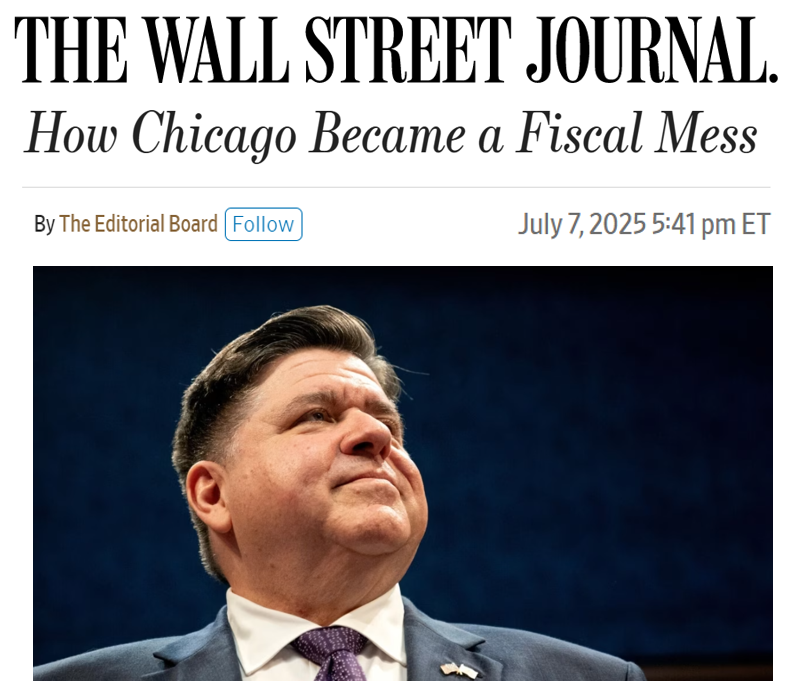 The Wall Street Journal Editorial Board cited Wirepoints’ data on Chicago’s pension crisis – the worst among big cities – in its editorial decrying the city police and fire pension sweetener bill awaiting Gov. Pritzker’s signature.
 Ted joined Ray Stevens to talk about two stories of Illinois taxpayers pushing back against government efforts to raise taxes even higher. In Effingham, citizens rallied to stop their school district from irresponsibly borrowing money without a voter referendum. Meanwhile in Manteno, the ‘big, beautiful bill’ is preventing the federal government from subsidizing the Chinese electric-vehicle battery manufacturing company Gotion. Manteno residents have fought hard against Gotion.