
-- Connecting the dots between our economy, government and business --
-- Connecting the dots between our economy, government and business --
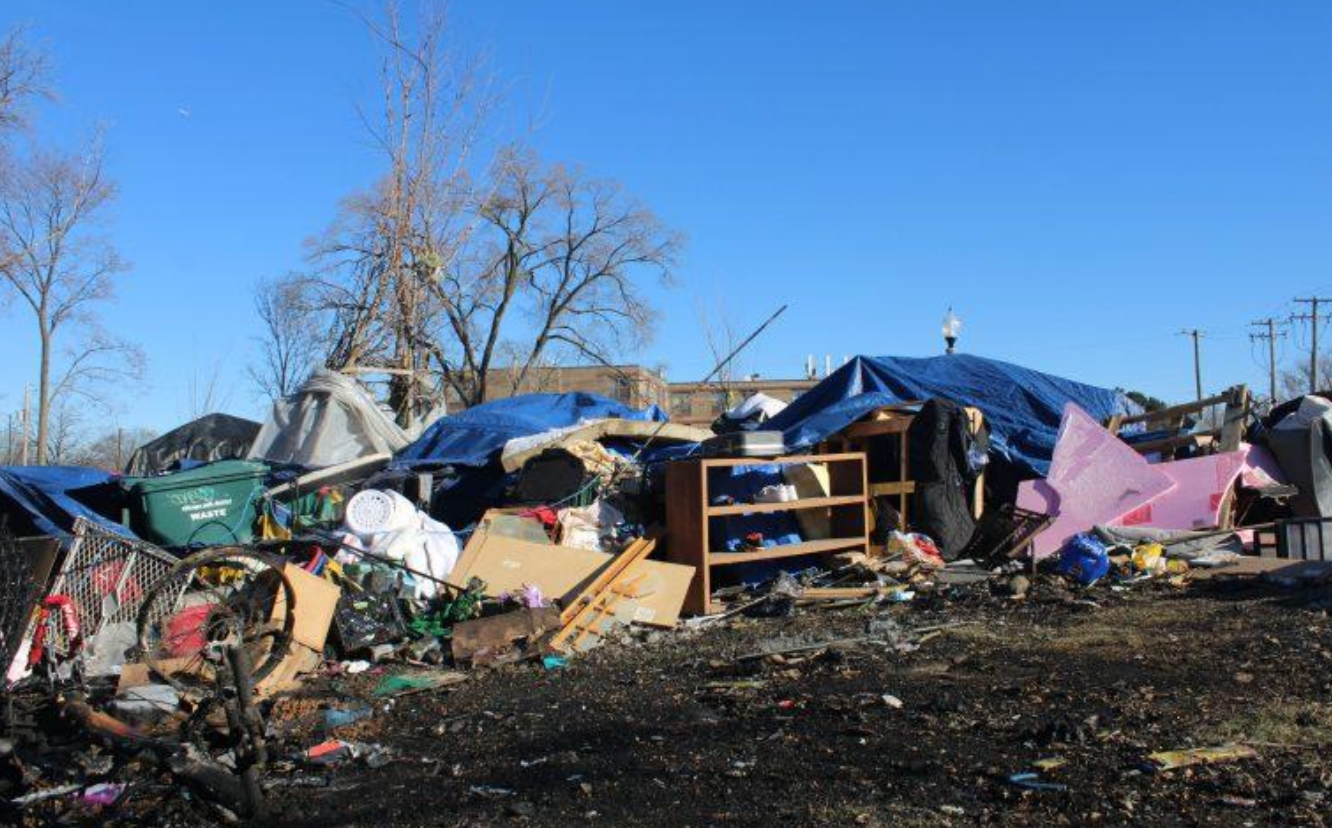 If this bill passes, say goodbye to local control over all Illinois parks and expect to see open drug and alcohol use, needles, no sanitation and fire hazards, but no ordinary park users.
Chicago’s political leadership is floating a pension buyout program as evidence it is seriously addressing the city’s thirty-six-billion-dollar unfunded pension liability, but Mark Glennon, founder of the Illinois policy research organization Wirepoints, said that the proposal moves debt from one column to another rather than reducing it, and that the broader fiscal picture facing the city continues to deteriorate across every measurable dimension. Audio here.
 Expect no retraction or apology. This what they do.
SIGN UP HERE FOR OUR FREE WIREPOINTS DAILY NEWSLETTER
 Audio and summary
If they quit, good riddance. Most really GOOD teachers quit within their first 3-4 years. Those who stick around are mostly pension parasites. “Teachers” are the most overpaid crybabies in America.
Paying them to indoctrinate children with Leftist crapola is an outrage. What percentage of the “teachers” voted for President Trump? I thought so.
Illinois pension debt is here to stay like herpes.
Taxes are going way, way up.
If you do not like it LEAVE ASAP.
Illinois “Land of Slavery”
Florida fears rising luxury home prices as Rich Teachers buy up homes.
Only a idiot would stay in Illinois and get taxed to death- and going much higher.
They retire at age 52 with millions of dollars.
Illinois “Land of Slavery”
The Center Square botched this article. First, they pictured Stevenson High School in Lincolnshire (Lake County), but no indication that a teacher shortage exists in Stevenson, and if so, in which subjects. Stevenson High School is one of the top performing and better paying high school districts in Illinois. Who at The Center Square chose to place the picture of Stevenson High School in the article? Second, the following sentence. “Illinois is dealing with a shortage of teachers, and now the possibility of educators retiring rather than going back into the classroom during the COVID-19 pandemic.” The article does not… Read more »
Allowing teachers to accrue 2 years worth of sick days and apply them towards service years teaching doesn’t help. For the past few decades, we have created so many incentives for teachers to retire early, then we complain when they retire early.
There is no shortage, only in certain teaching fields.The Universities in Illinois graduate numerous qualified teachers every year that can not find employment in the teaching field. There is a shortage of certifiable mathematics and science teaching fields; however, most potential educators choose other areas of studies such as social studies that are not as demanding. Teachers unions bear this out because teacher unions are the method of how teachers get raises. Remove the unions and watch teacher employment rise, salaries decline with the exception of the math and stem teachers, who would get paid more, stimulating more individuals to… Read more »
There is no teacher shortage. Fake news, unless it’s a teacher shortage caused by budget cuts. In that case, it’s no problem. Students sit in study halls and either finish homework or watch DVD’s. There’s no problem until there’s a security guard shortage.
https://www.edweek.org/ew/articles/2011/09/22/05mct_orstudyhall.h31.html
The universities near me graduate many more teachers every year than there are teacher job openings. The real teacher shortage is in the certifications of mathematics and science teachers. Consider if there was an actual shortage teachers would not need unions to get themselves paid more than they are worth in the open market.
This is great, let them retire at 55, that’s why we have a teacher shortage. For all the teachers that want to retire now let’s see who pays for your health insurance once there’s a bankruptcy. Welcome to the reality of what health insurance really costs.
What bankruptcy? Other areas will be cut and taxes will be raised. Rest assured though that pensions will not be reduced and health insurance for retirees will be paid. I think this is the biggest problem I read on this website. People actually believe that money will run out for pensions and healthcare. Money will be gone for almost every area of government before that happens. Welcome to the reality of government debt.
Why do you say this? Because pensions are protected by the state constitution? A balanced budget is required by the state constitution and Democraps just ignore it. So too will they ignore the pension obligations when the political winds change.
Pensions have been underfunded since the constitutional amendment protects were added in 1970. In the last 50 years political winds have shifted but the courts won’t allow the reduction. There is no ignoring it.
Pensions are not unbreakable promises. Neither is free healthcare for retirees. Loads of municipal workers haven’t gotten the pensions they were promised. If the state has to make cuts to fund pensions, then public schools are really going to crumble. They are going to look like the set of a SAW movie.
https://www.law360.com/articles/500141/detroit-retirees-sue-city-over-slashed-health-benefits
One word – Detroit. Do some research on what happened to 55-65 year old pensioners in Detroit when Detroit filed bankruptcy. Retire at 55 now, let’s see who pays your health insurance in three years when the city files bankruptcy. Welcome to the reality of municipal bankruptcy.
I’m well aware of the Detroit bankruptcy. That’s the one where city pensioners received 95.5% of their pension and their health care costs went up. Other than CPS teachers, Illinois teachers are covered by the state. The majority of the unfunded pension liability in terms of dollars is from TRS. No such bankruptcy provision allows them to cut their benefits. Since this article was discussing teachers not sure why you are using the “reality of municipal bankruptcy”.
The more short-term crises the better … to call attention to the longer-term problems. Perhaps there’ll be a rush to retirement by those with sufficient age and service. Why? Because the funds are running out of money. Get my health insurance and pension before the fund runs dry. For school districts it’s not all bad either because they can hire younger teachers with fewer health problems and at lower salaries. My sense is that the upper echelons of administrators understand the funding problems and can do the numbers fairly readily. Get out the door and to the retirement buffet before… Read more »
You think if a district goes bankrupt then they can change the retirement benefits of tier 1 employees? Absolutely adorable. It doesn’t matter if a district goes bankrupt. It doesn’t matter if the pension funds run completely out tomorrow. The state (CPS possibly excluded) is on the hook for these teacher pensions regardless of money set aside. There is no bankruptcy on the horizon that is going to save you. Only higher taxes.
You are correct about the statewide system as far as accrued benefits go. However Chicago maintains its own plan and a court could cut back benefit expectations as happened in Detroit. Further, bankruptcy at the district level could toss out or modify collective bargaining agreements as well as any district obligations to pay into the state system for pensions already accrued. Also compensation and current benefits could be curtailed and seniority provisions etc. could be modified. Litigation about age discrimination, gender discrimination, class size etc. could be stayed by the bankruptcy court and all of the threats to make trouble… Read more »
“You are correct about the statewide system as far as accrued benefits go.”
It’s not just accrued benefits but also all future years of employment teaching in the state of Illinois. File bankruptcy if you would like to cancel the current contract but as far as how pensions are calculated your scenario would not offer up any relief. Bankruptcy court also does not offer up a way to fire striking teachers. That would need to be changed as the state level concerning strikes and collective bargaining. As you accurately stated at the end, its a fantasy.
Interesting observations but I think there are open questions. 1) as to accrued benefits, a district has a large unfunded obligation to contribute for benefits already accrued. I am assuming that’s a contract obligation and that a bankruptcy court can extinguish that obligation, possibly under the union contract or perhaps under some state law. It gets into the weeds as to whether it’s one that can’t be discharged and I’m not that much of a bankruptcy expert. 2) If the union contract goes away the district can theoretically reduce salaries or fire those who strike or stop work. There’ll be… Read more »
The district does not have a large unfunded pension obligation for benefits already accrued. The district is not on the hook for the pension benefits other than the amount set by Illinois legislature. Why do you think school districts offer the 6% sweeteners for teachers to retire? It’s because the district pays the 6% for a few years but the state is on the hook for the pension. The district now hires a teacher at 45k instead of paying 120k. Cost the district an extra 40-60k over the last few years but they get that savings back immediately after the… Read more »
1) Is that 6% of current payroll and can that percentage be increased? I’m looking a district that’s operating at a deficit, has no credit in the bond market and has to cut personnel and compensation – you didn’t say (and I don’t know) whether the unfunded past service portion of the obligation can be discharged. 2) District should bargain to impasse and if there’s mandatory arbitration they should go through the process. If teachers refuse to work, all the better. At some point hire new ones. It was a while back but I think it happened at the Crestwood… Read more »
Many school districts offer up an incentive for teachers to retire early. Current state law allows for a max 6% increase before the district is on the hook for the additional pension cost. 6% max increase for the individual not total payroll. There is no unfunded past service charge. The state is responsible for the pension and the district required to pay a certain percentage set by the state. This would not be subject to any form of bankruptcy. Yes if a contract is tossed out and bargaining came to an impasse then teachers could strike. They can’t be fired… Read more »
Further debate is likely to require too much research, but an online source on Chapter 9 states “Perhaps one of the most controversial, yet beneficial, aspects of Chapter 9 is a municipality’s ability to reject onerous collective bargaining agreements (CBA) with its unionized workforce. In the landmark case In re City of Vallejo, California, 403 B.R. 72 (Bankr. E.D. Cal. 2009), aff’d, 432 B.R. 262 (E.D. Cal. 2010) the Eastern District of California held that a municipality in Chapter 9 bankruptcy was empowered to reject and, hence, renegotiate an onerous CBA. The Court held that because the US Constitution gives… Read more »
There is no need for extensive research. This is basic stuff. Why are you stuck on municipal bankruptcy when the majority of the problem is funded and owed by the state not the district. Yes bankruptcy can throw out a collective bargaining agreement. A CBA is just another way of saying a contract that was negotiated. The contract itself could be thrown out but that would just leave the teachers without a contract. A new contract would need to be negotiated. Bankruptcy would not dissolve the union nor its’ ability to negotiate a new contract. They would just be starting… Read more »
“a new contract would need to be negotiated ..” It takes two to tango or to bargain. “When the employer and union reach a deadlock in the negotiations over mandatory subjects of bargaining, it is referred to as impasse. When impasse is reached, the duty to negotiate is suspended and an employer is permitted to unilaterally implement the terms of its final proposal. In other words, an employer may implement any changes to working conditions that it had proposed to the union during negotiations without the union’s approval. However, an employer is prohibited from offering its employees greater benefits or employment… Read more »
“When impasse is reached, the duty to negotiate is suspended and an employer is permitted to unilaterally implement the terms of its final proposal.” Not in Illinois. Rauner tried that with AFSCME in 2016 and the courts shot him down. They sent him back to the bargaining table. All he tried to do was increase health care cost and freeze their pay for 4 years. You want to use it as a tool to fire senior employees. Not for cause but because they are too expensive. Pretty confident that a judge would rule that’s not negotiating in good faith. Even… Read more »
Fred, Truth Hurts is generally right, though you are too. Ch. 9 can cancel all contracts and reduce debts including unfunded pension liabilities, but that leaves open the question of what comes next. Would the same unions and the same incumbents just put back in what was in place before? At Wirepoints we support giving Ch. 9 option to municipalities but it does have to be accompanied by other reforms, including pension and collective bargaining rules. Same goes for who controls the bankruptcy process. Some kind of emergency manager rule would be key, but if the incumbents controlled that selection… Read more »
My premise is that reform-minded candidates will campaign for board positions on the basis of taking a confrontational approach with the unions with the rationale that the board does not have current or prospective revenues to continue things as they are. So a new board that is not in the unions’ pockets would make the case to voters and to the bankruptcy judge. I suspect that’s about where we are now in terms of the revenue – expense ratio, even adjusted for wishful thinking. Other premises is that the district has no material revenue streams other than property taxes plus… Read more »
Well argued. I for one will keep an open mind about that.