
By: Ted Dabrowski and John Klingner
Kenilworth officials want to create a controversial TIF to redevelop the village’s 0.6 mile-long business district along Green Bay Road. With the TIF, village officials would be able to redirect property taxes away from other local governments and spend more than $23 million on improvements and subsidies for property developers.
A TIF is complex and non-transparent financing tool that was created for blighted areas that have little chance for redevelopment. They are areas that property developers won’t touch without significant taxpayer subsidies and incentives. For good TIF candidates, think of places like the city of Harvey or dilapidated parts of Chicago or areas in the state that need environmental clean-up.
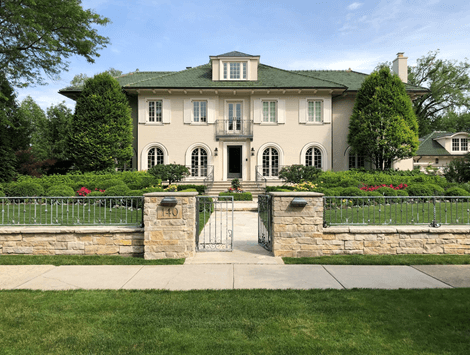 AAA-rated Kenilworth, on the other hand, with a median household income of $204,000 and average home values of $1.4 million, has no business setting up a TIF. Its business district is nowhere near blighted nor does it lack investment.
But that hasn’t stopped Kenilworth village trustees from trying to get a TIF designation anyway. Officials and their consultant are doing everything they can to prove that the village’s business district is at risk of “blight” and that investment won’t come “but for” the existence of a TIF.
New Trier Township residents should oppose TIFs and here are five good reasons why:
1. TIFs give city officials oversized, non-transparent control over tax dollars to be spent on property development. TIFs funnel property tax dollars away from other local governments and into a special fund controlled by the city to be used for improvements and subsidies for private developers.
TIFs typically last for 23 years. Unsurprisingly, that’s led to all kinds of abuse in Illinois. See the Atlantic’s CityLab piece, the Trouble with TIF.
2. Kenilworth’s TIF will hurt school districts most since they’re heavily dependent on property taxes. The TIF would divert future property tax dollars away from the Sears and New Trier High School districts until the TIF expires. That’s a big reason why both districts have come out against the trustees’ proposal.
If Kenilworth gets a TIF, then officials in the other nearby villages may want to get their hands on TIF development dollars as well. That would hurt school district revenues even more.
3. The village consultant’s claims in favor of a TIF don’t hold water. Kenilworth’s business district is far from suffering any potential “blight.” And there is no need to create subsidies for private development or maintenance work – businesses are still investing in the area. For example, the Fenner building has been upgraded and successfully repurposed and The Last Detail has renovated a run-down body shop.
Many should ask: Does Kenilworth really need to hand out subsidies for development that’s likely to occur without subsidies?
4. Kenilworth officials want to spend $23 million in the TIF district – including up to $10 million for land and property acquisition – but they don’t even have a plan. Village manager Patrick Brennan recently admitted in a Crain’s interview that officials have “no specific plans in mind” for what to do with the new TIF funding.
5. The TIF district puts home and business owners at risk of losing their properties through eminent domain. Current trustees may promise not to seize properties now, but the possibility will exist throughout the TIF’s entire 23-year life.
New Trier residents should call out Kenilworth trustees’ TIF district push for what it is: a power grab over property taxes and an unnecessary foray into the realm of property development.
For full detail from Wirepoints on Kenilworth’s TIF proposal and an assessment of the city consultant’s claims, read:
Only in Illinois: Ultra-rich communities like Kenilworth want TIFs
 With $162 billion more from taxpayers, couldn’t you deliver a few bond upgrades, too
 Audio and summary
  A largely unasked question is becoming glaring: Is Illinois doing all it should to use artificial intelligence to make government cost less and work better? So far, the evidence says no.