
By: Ted Dabrowski
I recently ran across Amusing Ourselves to Death, a book written by Neil Postman in 1985. His thesis, captured in the book’s four-paragraph foreword which I’ve copied below, was simple: That between the two famous depictions of a dystopian future, Aldous Huxley’s Brave New World was far more likely to occur than George Orwell’s 1984.
In other words, it’s not the Orwellian oppressors we should worry about. The real fear should be our obsession with technology. Our demise will come because we’re simply amusing ourselves to death.
In the book, Postman lamented the decline of print and the ascendancy of television. But if he thought we were doomed by TV, imagine what he’d think of today’s culture, obsessed with reels, TikTok and binge-watching. All you have to do is watch people walk down the sidewalk with their phones in their faces and you know Postman has a point.
On the other hand, we’re not too far off from 1984, either. Draconian covid restrictions showed just how quickly government can become authoritarian…and how quickly ordinary people are willing to police and punish others based solely on the word of “the authorities.”
Rather than one future or the other, it feels like we’re experiencing the worst of both apocalyptic visions. A Brave New 1984, if you will. We’re increasingly being told what we can and can’t do, say and can’t say… and at the same time, too many people are too distracted to care.
Read the foreword for yourself. It’s short enough for those of you already living in Huxley’s world.
Foreword to Amusing Ourselves to Death, by Neil Postman
We were keeping our eye on 1984. When the year came and the prophecy didn’t, thoughtful Americans sang softly in praise of themselves. The roots of liberal democracy had held. Wherever else the terror had happened, we, at least, had not been visited by Orwellian nightmares.
But we had forgotten that alongside Orwell’s dark vision, there was another—slightly older, slightly less well known, equally chilling: Aldous Huxley’s Brave New World. Contrary to common belief even among the educated, Huxley and Orwell did not prophesy the same thing. Orwell warns that we will be overcome by an externally imposed oppression. But in Huxley’s vision, no Big Brother is required to deprive people of their autonomy, maturity and history. As he saw it, people will come to love their oppression, to adore the technologies that undo their capacities to think.
What Orwell feared were those who would ban books. What Huxley feared was that there would be no reason to ban a book, for there would be no one who wanted to read one. Orwell feared those who would deprive us of information. Huxley feared those who would give us so much that we would be reduced to passivity and egoism. Orwell feared that the truth would be concealed from us. Huxley feared the truth would be drowned in a sea of irrelevance. Orwell feared we would become a captive culture. Huxley feared we would become a trivial culture, preoccupied with some equivalent of the feelies, the orgy porgy, and the centrifugal bumblepuppy. As Huxley remarked in Brave New World Revisited, the civil libertarians and rationalists who are ever on the alert to oppose tyranny “failed to take into account man’s almost infinite appetite for distractions.” In 1984, Huxley added, people are controlled by inflicting pain. In Brave New World, they are controlled by inflicting pleasure. In short, Orwell feared that what we hate will ruin us. Huxley feared that what we love will ruin us.
This book is about the possibility that Huxley, not Orwell, was right.
 Audio and summary
 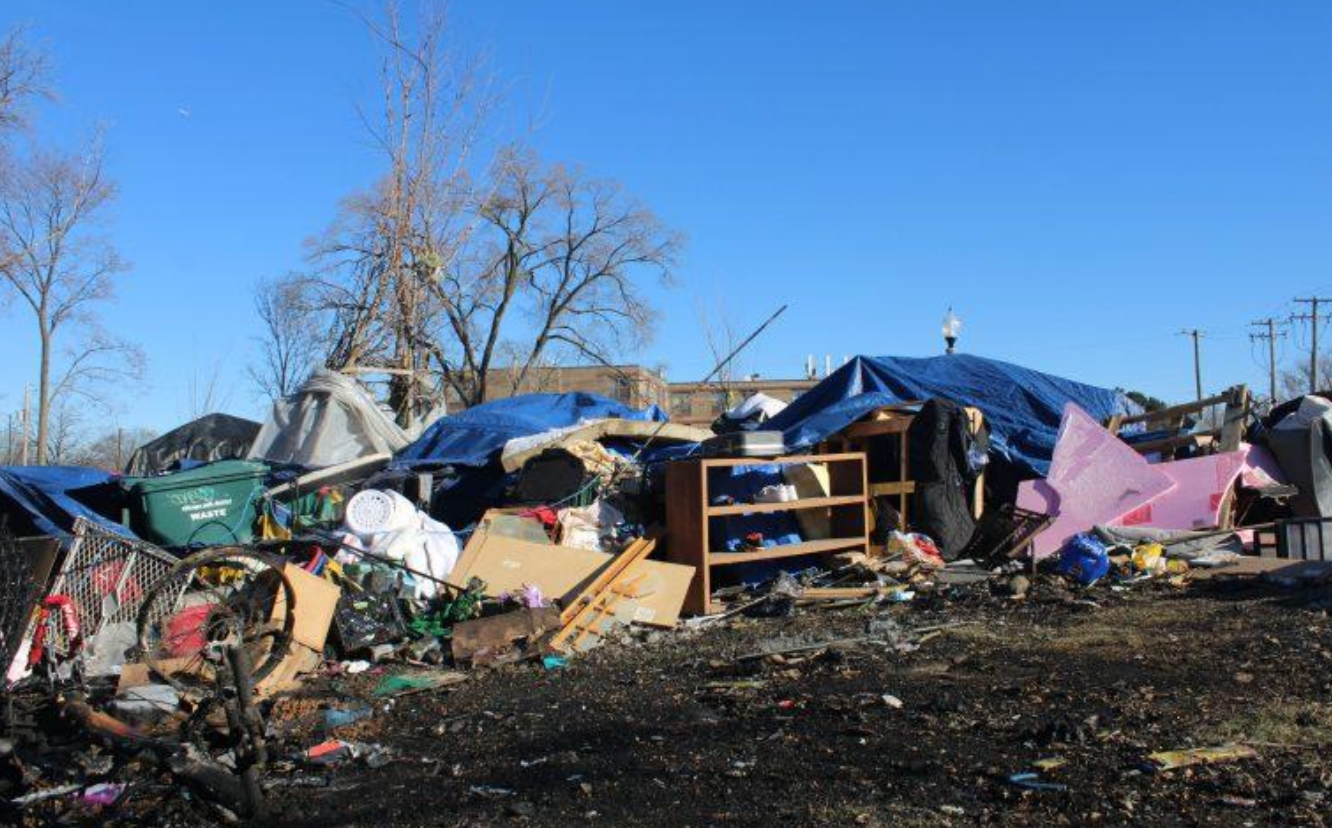 If this bill passes, say goodbye to local control over all Illinois parks and expect to see open drug and alcohol use, needles, no sanitation and fire hazards, but no ordinary park users.
I fear the Orwellian oppressors more than technology. I think we are closer to Orwell because of how both parties like big government and have a penchant to want to regulate most everything we do in our lives. We have one presidential candidate who is publicly threatening one company with severe penalties if that company doesn’t do what he wants them to do. This is to be feared more than technological advances. Brave New World was written in 1932. Who would like to go back to our technological world as it was 90 years ago versus the world we live… Read more »
Ted,
Your commentary is spot on. I have believed and shared with others that smart phones are the ‘soma’ of present day. One can always find immediate gratification using their phone.
Excellent analysis and sad reality. Can we stop it?
Okay, now I’m rethinking everything I’ve ever thought, said or done. Thanks.
I wouldn’t make too much of the small differences between Huxley and Orwell as does Neil Postman. Huxley’s mom was the reforming niece of the great critic Matthew Arnold, who famously said the critic’s goal should be to “learn and propagate the best that is thought and known” — an ambition that certainly spurred Huxley, Orwell, Dewey, Trilling, and many others. Postman and Huxley would have agreed with Orwell’s assertion that “Almost everything that goes by the name of pleasure represents a more or less successful attempt to destroy consciousness.” Fwiw, the essay that I think deserves re-reading is Robert… Read more »
Who said that occasionally, the tree of liberty needs to be watered with the blood of patriots?
I always thought that cannabis should be legal, but when the state governments took control of the industry, all I could think of was Soma.
we each get one life. most humans have some relatiuonship with truth and at some point must answer this: my life, and those lives I have affected, would have been better off with/without me.
While I’m pondering responding to Susan and not offending others (not Susan) I’ll just add this.
What kind of idiot wouldn’t think that making cannabis even easier wouldn’t end up with kids vaping in the bathroom at school? It’s a word my wife yells at me for using it starts with R…
We cannot control others’ actions, but we can control our own actions and our own responses to others’ actions. We can learn much from game theory mechanisms underlying crypto projects. America, like crypto, is a network. Participants in a network are rewarded by mechanisms to provide mediums of exchange of value. Value is defined as ‘proof of work’ (expenditure of personal resources such as time, effort, money) or ‘proof of stake’ (risk of personal resources). Most humans in America rely upon some adherence to Network ‘guidelines’ (by themselves and others) in order to survive and thrive. But, if Network participants… Read more »