
By: Mark Glennon*
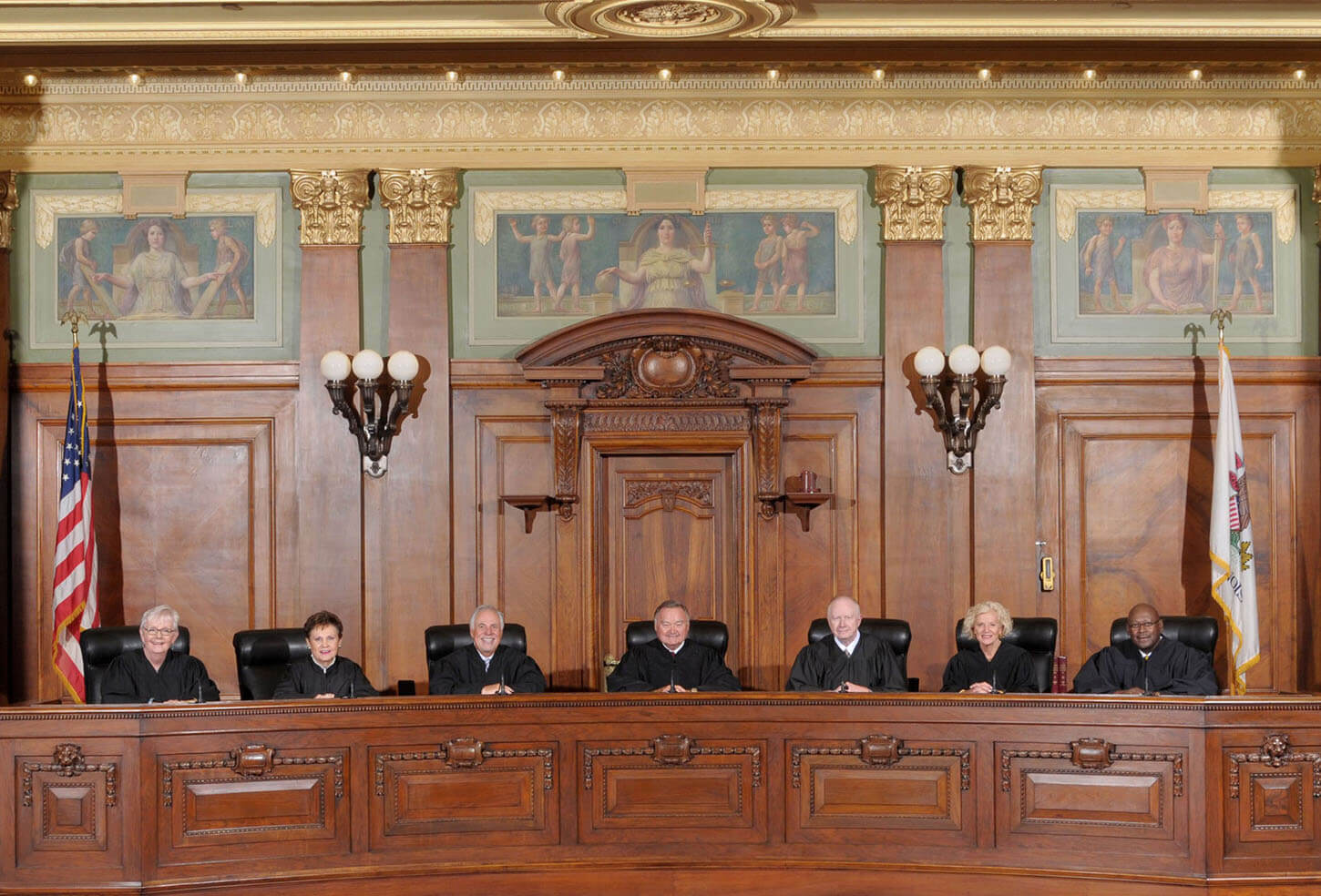
The Illinois Supreme Court on Thursday unanimously rejected a lawsuit on the constitutionality of certain general obligation bonds issued by the state. The court’s opinion is here.
The suit was brought by John Tillman, CEO of the fiscally conservative Illinois Policy Institute, though it was based on his status as an ordinary citizen and taxpayer. It alleged the bonds were issued in violation of state constitutional debt limitations, which we wrote about earlier here.
The case was not decided on the merits, but on a doctrine known as laches. Laches is basically a common sense rule against claims where the plaintiff waits too long to bring a lawsuit, harming the defendant and creating additional complications from the delay. Though Tillman sought to prohibit only payments going forward on those bonds, the court said too much time had passed since the bonds at issue were sold in 2003 and 2017.
That result is no surprise and laches is part of why we and most others have said the lawsuit had little chance of success. The state had a range of defenses that could be raised before even getting to the merits of Tillman’s claim.
However, it’s disappointing that the case was disposed of solely on the idea of laches. We had hoped that a teaching moment was at hand — that the court would provide some interpretation of how the constitution’s restrictions will be enforced. Those restrictions are reproduced below.
Laches may well have been a proper doctrine to apply, but Tillman’s claims did, on the merits, raise fair questions. Indeed, the supreme court chose not to base its ruling on the notion that Tillman’s claims were frivolous, as the state had argued. The lower appellate court, too, had said the claims were not frivolous or malicious.
So, big questions remain unanswered:
What, if anything, do the limitations on debt in the Illinois Constitution mean? Is sky is the limit for state borrowing as long as the three-fifths voting requirement is met?
Is the state free to spend whatever it chooses, letting the unpaid bills run up, to be refinanced by bonds similar to the 2017 bonds challenged by Tillman?
Can the state simply claim the “specific purpose” required in the constitution is to refinance payables, just as it did in 2017?
Can the state just run up pension debt indiscriminately, then borrow to fund them in unrestricted amounts?
Those are reasonable questions but the court avoided all of them, so the state will probably go on borrowing with no concern about them.
*Mark Glennon is founder of Wirepoints.
From Article IX of the Illinois Constitution:
SECTION 9. STATE DEBT
    (a)  No State debt shall be incurred except as provided
in this Section. For the purpose of this Section, "State
debt" means bonds or other evidences of indebtedness which
are secured by the full faith and credit of the State or are
required to be repaid, directly or indirectly, from tax
revenue and which are incurred by the State, any department,
authority, public corporation or quasi-public corporation of
the State, any State college or university, or any other
public agency created by the State, but not by units of local
government, or school districts.
    (b)  State debt for specific purposes may be incurred or
the payment of State or other debt guaranteed in such amounts
as may be provided either in a law passed by the vote of
three-fifths of the members elected to each house of the
General Assembly or in a law approved by a majority of the
electors voting on the question at the next general election
following passage. Any law providing for the incurring or
guaranteeing of debt shall set forth the specific purposes
and the manner of repayment.
    (c)  State debt in anticipation of revenues to be
collected in a fiscal year may be incurred by law in an
amount not exceeding 5% of the State's appropriations for
that fiscal year. Such debt shall be retired from the
revenues realized in that fiscal year.
    (d)  State debt may be incurred by law in an amount not
exceeding 15% of the State's appropriations for that fiscal
year to meet deficits caused by emergencies or failures of
revenue. Such law shall provide that the debt be repaid
within one year of the date it is incurred.
    (e)  State debt may be incurred by law to refund
outstanding State debt if the refunding debt matures within
the term of the outstanding State debt.
    (f)  The State, departments, authorities, public
corporations and quasi-public corporations of the State, the
State colleges and universities and other public agencies
created by the State, may issue bonds or other evidences of
indebtedness which are not secured by the full faith and
credit or tax revenue of the State nor required to be repaid,
directly or indirectly, from tax revenue, for such purposes
and in such amounts as may be authorized by law.
(Source: Illinois Constitution.)
 Expect no retraction or apology. This what they do.
 The state’s existing buyout program for its own pensions is the precedent for Chicago, which should be a warning: Look out for similar exaggerated claims and shoddy analysis.
I reviewed portions of this court decision and it is complete insane. Petitioner only asked for future relief, did not ask to invalidate older bonds. Court says it didn’t matter.
pretty obvious that the courts are in cahoots with the democrats,illinois is an effing mess and dont count on the ” supreme court” to correct anything,the so called ” justices” are in on the scam,this crappy state is doomed
Laches is the legal argument preferred by frauds and the intellectually lazy.
The state can borrow because there are lenders eager to “invest”. And the reason they consider it safe is because the laws are written to make the people be the collateral. The reason they consider it attractive is because the rating agencies are in bed with the lawmakers. Illinois debt remains safe and attractive to institutional investors. That human taxable collateral will one day dry up become too small to cover, then further debt will have no backing, and the house of cards will fall.
Human Collateral that can pick up and leave providing reduced collateral.
Illinois luck will run out some day. Some day there will be no more willing lenders and no more bailouts. The courts will be overwhelmed with lawsuits. That’s what happens when the other parts of state government completely fail to do their jobs.
Not sure if Illinois’s luck will ever run out. We just got a nice nick o’ time bailout from our friends. As long as taxes are modulated so as not to drive away the Chicago financial center or the Abbott/Abbvie complex, there will be super-high incomes and valuable property to tax. The people here have been voting for this kind of government for 100 years. Corruption, legal and otherwise, has been the norm here since the turn of the 20th century at least. Like the Trib said years ago, they don’t report on corruption because it isn’t news here. Vote… Read more »