
By: Mark Glennon*
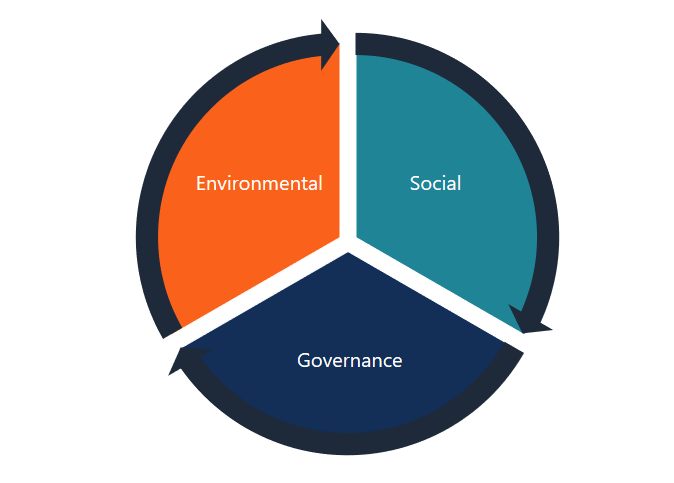
This fall, Chicago will sell its first bonds designed to attract investors concerned about environmental, social and governance issues. That’s called ESG investing, and the city will be labeling between $100 million and $200 million of bonds as ESG bonds. Details are in a recent Bond Buyer article.
That amount of ESG bonds isn’t a big a deal in the grand scheme of things; it’s not a large part of the city’s financial picture. But the topic is interesting as a marketing strategy — one that has become common in finance.
We are harsh critics of ESG investing when done by the government using your tax money. See the egregious examples just from Illinois linked below. This is different, however, because the shoe will be on the other foot with the government taking the money, so keeping an open mind is in order. This may be a matter of giving the customers – bond buyers – what they want.
The ESG bonds will be part of a larger sale tied to funding for the $1.2 billion Chicago Recovery Plan, which the city has described here, all of which is just part of Chicago’s much bigger borrowing plans.
The Chicago Recovery Plan will be funded partly with federal money that has been showered on states and cities under the guise as pandemic relief, and partially with money borrowed through the bond offering. That plan is heavily focused on social justice goals. “We want to structure an ESG bond issuance that really truly fits the heart of ESG, as bond proceeds will go toward projects the city considers critical to social issues,” Chicago’s CFO told The Bond Buyer.
Labeling some of the borrowing for the program as ESG bonds therefore appears to be appropriate if that plan unfolds as visualized.
The far more important questions are the underlying ones which are not about how the bonds are labeled and marketed. Instead, the real issues are about whether the underlying plan is properly conceived – how the money will be used and whether the spending is an unsustainable misuse of federal assistance leveraged with excessive borrowing.
But our discussion of those questions will have to wait until August when the city holds its annual meeting with the municipal bond community. A separate Bond Buyer column describes some of the questions the city will face. “What I’m hoping to hear is the impact of the COVID-19 pandemic on the city’s current economy and what they expect going forward and are they really being careful about using the federal money for one-time expenses and not creating a recurring expense,” said Howard Cure, director of municipal bond research at Evercore Wealth Management to The Bond Buyer.
His “long list of questions range from the city’s efforts to combat crime given the harm negative headlines pose on the city’s appeal for residents, tourists, and business,” says the Bond Buyer. “The potential long-term pandemic impacts on the commercial real estate market, especially downtown where a lackluster return to the office could damage property assessments and cut into sales taxes, also worries Cure. How are they budgeting for that” Cure asked.
We, too, look forward to hearing those answers in August, and we are not optimistic.
On the surface, the city will be going into those meetings with seemingly good news. Last week the city released its 2021 Comprehensive Annual Financial Report. In stark contrast with recent years, it showed modest progress on the city’s negative net position, which improved by almost a billion dollars to negative $29.5 billion.
However, that’s largely thanks to about $3.6 billion in direct federal assistance to the city during the pandemic and tax receipts bolstered by federal aid to the private sector.
Setting aside all those big questions on the fundamentals, the ESG bonds are notable because they reflect a bigger trend in finance and how many investments are being sold.
For better or worse, the market for investors who want to feel good about their investments is truly enormous. Global ESG assets are on track to exceed $53 trillion by 2025, according to a Bloomberg analysis, representing more than a third of the $140.5 trillion in projected total assets under management. According to an Ernst & Young survey, 39% of investors are invested in an ESG product of some kind, and one in five investors say they decided not to invest with a manager because their ESG policies were inadequate.
Arguably, therefore, Chicago is doing pretty much the same thing as the financial firms that have flocked into ESG to make a buck on the growing demand. Nothing is wrong with that if it works for the city by enabling it to sell bonds at a higher price with lower interest cost and if the borrowing is sensible.
The city plans to market the bonds aggressively to Chicago residents, its CFO told The Bond Buyer. It is considering radio advertisements, public service announcements, and prioritizing orders from some zip codes.
 Cynics may suggest prioritizing zip codes with the most yard signs like “Hate has no home here,” BLM, “Science lives here.” And perhaps the city will offer new yard signs to buyers: “I bought Chicago ESG Bonds.” A little extra proof of virtue never hurts. Actually, the city hasn’t chosen a name yet for its ESG bonds, so suggestions are welcome.
I don’t like the ESG concept in general for the same reasons it has been getting substantial pushback in recent months. Many supposed ESG investments have been said to be “greenwashed” – made to look like they are following ESG principles when they are not. The SEC has now moved to control that. Furthermore, the social justice goals are subject to the political winds of the day. Tesla in May was thrown off S&P’s ESG index, supposedly for management reasons, but it’s widely suspected that the left’s new contempt for Elon Musk had something to do with it. And industries are sometimes blacklisted by ESG that shouldn’t be. Boycotting fossil fuel producers, for example, has been an ESG staple and that folly is helping drive up gas costs. Many ESG investors have also been criticized for remorselessly investing in Russia and China. And what a mess we will have as conservatives start doing the same to promote political goals that may be opposite to ESG.
It also seems particularly wrong of ESG proponents to claim, as they often do, that ESG does not mean sacrificing the goal of earning the highest returns. That claim is illogical on its face because, if it were true, there would be no such thing as ESG investing. Anybody seeking to maximize returns would be an ESG investor.
But those are matters for buyers to consider, not sellers, so I sincerely hope the bond offering works out for the city, provided that it somehow comes up with an overall financial plan that makes sense. If it has found a way to get investors to feel good about themselves as they hand over money, fine. Go for it.
*Mark Glennon is founder of Wirepoints.
Earlier pertinent articles from Wirepoints:
- As markets tank, Illinois prioritizes social justice for investing public money
- City Of Chicago Shunning Fossil Fuel Investments. Who Benefits? Russia.
- In-Kind Retaliation, As Expected: Fifteen States Demand Banks Ignore Illinois-Style Threats Favoring ‘Woke Capitalism’
- Illinois’ Latest Use Of Taxpayer Money As Political Club
- A Bill To Prohibit Illinois Pension Investment In ‘Wall’ Contractors
- Illinois Treasurer Shoots Self In Foot Defending Activist Social Investing
- Illinois Treasurer playing activist shareholder again with stock not his; wants new Facebook chairman
- Illinois Treasurer Frerichs Playing Activist Shareholder With College Savers’ Money
 A mess of uncertainty and litigation is sure to follow.
 With $162 billion more from taxpayers, couldn’t you deliver a few bond upgrades, too
Chicago’s ESG Bonds will be heavily discounted, as the city is drowning in red ink, just like the state.
Remember, there are people who bought crypto…
Even ivy league endowment funds are selling investments in companies that are linked to fossil fuels, while debating observation of BDS. I have seen it all from municipal plans insisting on Buy America and private sector plans removing from permitted investments any securities of companies that donate to planned parenthood. Second or third mortgages on casinos and hotels are not unknown to carpenters’ pension trustees (to keep carpenters on the job). These are among the least logical but so are the multi-employer plan trustees who trade pay increases for reduced pension contributions — to facilitate re-election of union officers. Much… Read more »
What difference does it make how you market it? All you need to know is these 2 formulas.
Borrowing = Bad
Saving = Good
It must be dressed accordingly for Lori to sell. Even Herself can’t sell a steaming turd as an Eclair! Lori’s definition of Green is stealing cash.