
“This is a concept that was born in sanctimony, nurtured with hypocrisy, and sold with sophistry all the way.
–Prof. Aswath Damodaran, New York University Stern School of Business
By: Mark Glennon*
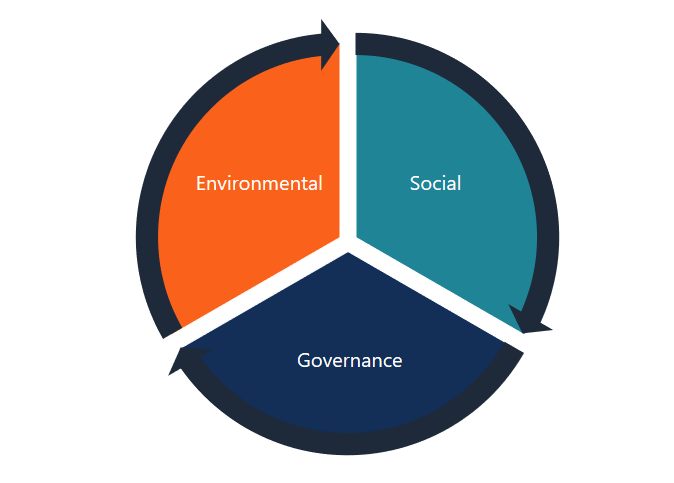
This has been a tough year for Environmental, Social and Governance (ESG) investing. Aside from increasingly harsh criticism like that above, ESG funds have suffered unprecedented withdrawals, their performance for investors has lagged the broader market and most elected officials who support it fared poorly in the recent election.
Illinois’ progressive establishment is undaunted, however. In Springfield, Washington and the City of Chicago, they continue to support use of trillions of dollars that aren’t theirs for investments they claim serve social justice goals. Those goals are being increasingly exposed as political, if not outright fraudulent, as seen in the unfolding FTX scandal.
ESG investment principles shun investments in sectors progressives deem undesirable such as guns, tobacco and fossil fuels in particular. They tend to favor tech companies, supposedly because they are environmentally friendly, though most of Silicon Valley is far left.
But those scorned sectors have been the better investments this year, and tech companies have been hammered. Only 31% of actively managed ESG equity funds beat their benchmarks in the first half of 2022, compared to 41% of conventional funds, according to Refinitiv Lipper, as Reuters recently reported. So far this year, 19 of the 20 best-performing companies in the S&P 500 are either fossil-fuel producers or otherwise connected with fossil fuels.
 Consequently, ESG funds “have been hit by unprecedented outflows in the market downturn, as investors prioritize capital preservation over goals such as tackling climate change,” wrote Reuters.
Predictably, the issue has become political since state and local officials invest trillions of dollars owned by taxpayers. Republican candidates generally oppose ESG investment of public funds, and five positions — in Kansas, Iowa, Missouri, Nevada and Wisconsin — flipped from Democratic to Republican in recent races for state auditor, controller or treasurer. Of the 50 directly elected positions, Republicans won 29 and Democrats won 19, according to a recent Roll Call report.
Illinois Treasurer Michael Frerichs, however, is among the Democratic officials not backing off on ESG. “We are in it for the long term” is the title of an open letter he recently signed along with 13 other Democratic state financial officers criticizing efforts to stop ESG use of taxpayer money. The letter is astonishingly hypocritical. It says those who want to ban ESG investment of public money are “blacklisting financial firms that don’t agree with their political views.” That, of course, is precisely what ESG does.
We’ve written often about Frerichs’ long history of using Illinoisans’ money for transparently political grandstanding, and those stories are linked below.
In Washington, Illinois’ Congressman Sean Casten has taken a different tack defending ESG. He has been trying to blacklist the State Financial Officers Foundation, a nonprofit that’s critical of ESG, by browbeating even the companies that support that foundation. That’s effectively an attempt to dictate to private sector companies what political positions they can take.
The foundation, Casten claimed in House hearings, “is a dark money group that has been weaponizing state treasurers and lawmakers against climate-related financial risk management by coordinating to cancel contracts and otherwise sever ties with financial firms that consider climate change in their business strategies.” Casten went on demand that Wells Fargo and JP Morgan end sponsorships of the organization.
In Chicago, just in the past year, both the city and its teachers’ pension fund formally moved to divest from all investments in fossil fuel companies. The city has also authorized borrowing expressly labeled as “ESG Bonds.”
The enormous harm being done by ESG investing is nicely summarized in a Friday op-ed by Utah’s attorney general.
ESG is jeopardizing an increasing amount of American investment assets. This includes the $20+ trillion dollars (more than the entire U.S. GDP) managed by BlackRock and other Big 3 funds and the nearly $6 trillion managed in state pension funds belonging to working class Americans. These investments are not only risky but often made without the full understanding or approval of their own beneficiaries or shareholders – many of whom would object to the progressive orthodoxy of net-zero environmentalism…. ESG as a movement is an ill-defined, elusive construct; a subjective standard masquerading as objective criteria. Not primarily merit-based, it thrives on coercion and cancelling.
That foolishness is made all the more infuriating when ESG investments are made not with one’s own money but with our money being managed by politicians.

Last but not least are the jaw-dropping admissions of Sam Bankman-Fried, the 30-year old founder of now-bankrupt FTX, which is shaping up as the biggest financial scam on record. FTX was the darling of the cryptocurrency world thanks, in no small part, to Bankman-Fried’s efforts to also make it a darling of the ESG crowd.
Bankman-Fried’s scam was powered by a pseudo-philosophy called ‘effective altruism,’ as Newsweek wrote, “of which he was the popular face.” Massive donations to progressive causes, commitments to zero-emissions and huge contributions to Democratic politicians drove the imaging for FTX’s initial, seeming success.
But it was all a fraud, which Bankman-Fried now admits. “You were really good at talking about ethics for someone who kind of saw it all as a game with winners and losers,” said a Vox reporter to Bankman-Fried, to which he responded, “ya, hehe… I feel bad for those who get fucked by it. By this dumb game we woke westerners play where we say all the right shiboleths so everyone likes us.”
He added, “ESG has been perverted beyond all recognition.”
But for ESG with Illinois taxpayer money, it’s full speed ahead.
*Mark Glennon is founder of Wirepoints.
Earlier pertinent articles from Wirepoints:
- As markets tank, Illinois prioritizes social justice for investing public money
- Woke Capitalism Or Smart Marketing? Chicago To Issue ESG Bonds.
- City Of Chicago Shunning Fossil Fuel Investments. Who Benefits? Russia.
- In-Kind Retaliation, As Expected: Fifteen States Demand Banks Ignore Illinois-Style Threats Favoring ‘Woke Capitalism’
- Illinois’ Latest Use Of Taxpayer Money As Political Club
- A Bill To Prohibit Illinois Pension Investment In ‘Wall’ Contractors
- Illinois Treasurer Shoots Self In Foot Defending Activist Social Investing
- Illinois Treasurer playing activist shareholder again with stock not his; wants new Facebook chairman
- Illinois Treasurer Frerichs Playing Activist Shareholder With College Savers’ Money
 Audio and summary
  If this bill passes, say goodbye to local control over all Illinois parks and expect to see open drug and alcohol use, needles, no sanitation and fire hazards, but no ordinary park users.
from todays WSJ “Workers will have to cover 401(k) shortfalls if ESG strategies don’t pan out. That means they may have to increase their contributions or retire later. In the case of union pension plans, taxpayers might bear the cost. Democrats authorized some $86 billion in their Covid relief bill last March to shore up distressed multi-employer pension plans. Since these pension plans enjoy a taxpayer backstop, unions will be more inclined to leverage worker retirement savings to promote progressive causes even if they result in lower returns. In sum, the Administration is politicizing retirement savings and putting taxpayers and… Read more »
If there is any justice the FTX scandal will do in the deep state. Ukraine is the most corrupt government that ever existed and full of Nazi racists, to a large degree so is Poland, thats why the deep state knows it could use Ukraine to launder our tax money directly back into its political friendlies on both sides of the isle. All they needed was a mechanism like FTX. Tom Brady used to be a hero of mine, now I’m glad to see him wiped out, surely this was the real reason for the divorce. To make Super Bowl… Read more »
Whether one believes the crypto space ( crypto coins, tokens, blockchain, decentralized finance, nft’s, stablecoins) represents rat poison, or the tool for non-political-elite society to save itself from government corruption, the FTX fraud should make everyone wake up. Crypto has been asking for regulatory clarity for quite a while. Is such unambiguous regulation being slow-walked by Sec and cftc because they can’t figure out how to draft regulations which will not devastate the legacy banking, brokerage, and insurance too-big-to-fails?. The leverage ratios at ftx were far lower than fractional reserves requirements at traditional big finance. And the same lack of… Read more »
The pension funds don’t care. They are guaranteed a risk-free rate of return. When they suffer a low rate of return or even bankrupt their funds with bad decisions the taxpayers will make up for what the fund manager’s incompetence lost
Instead of circling the wagons and trying to figure out how the lame brains they put in charge let all of this happen and assessing their self inflicted wounds, the Democrats have sent their wagons everywhere to accuse and prosecute everyone else of something else entirely unrelated to their own screw ups. They are playing a game of “Squirrel”. This will do them in, just watch.
Which is the greater scam, ESG or DIE? One rapes the economy, the other our social fabric. There are so many movements seeking to remake our country into something unrecognizable to our founders. We need to rally and force action to change course, to preserve our freedoms.
The collapse of FTX illuminates a few horrifying realities about the traditional banking system: fractional reserves as low as zero percent, unmonitored deals using leveraged public funding ( loans to unqualified-insider borrowers), and complete non- transparency of books. And finally, ( inflationary) bailouts to complicit actors at the expense of taxpayers who stood to gain nothing if the bets paid off. Compare and contrast crypto banking : reserve ratios immensely higher than ” real ” banks, and complete transparency of books ( wallets) whereby every transaction may be viewed online by anybody. And finally, no bailouts …those who took the… Read more »
Sorry, Susan, but I totally disagree with you on most all of that. Yes, it’s good that taxpayers won’t be forced to cover the FTX mess, but what a mess of non transparency it was, in contrast to what you say. And sorry to all crypto fans out there, but I’m not among you. Crypto has no purpose beyond money laundering, blackmail and the naive hope that somehow a currency can be maintained free of all the usual issues that pertain to traditional currencies. All cryptos have zero value, and the entire concept has zero utility.
Last night we watched the Nova episode on crypto and block chain. Two entrepreneurs are starting up ‘equity coin’ by soliciting investor dollars with the ultimate goal of rehabbing derelict property. If they’re successful, the value of the coins (shares) will increase; if not they will decrease. If the project is successful, investors will benefit (with more equity coin?). Stepping back, it sounds an awful lot like an unregulated stock market. What Susan posits is that because everyone in the block chain can see what’s being transacted, it’s safer. How so? If there are irregularities, to whom do you plea… Read more »
Pat, that sounds like a straight up securities law violation unless they have an elaborate disclosure and registration plan in place. It sounds like it represents some of the naive and oversimplified thinking that’s too common in the crypto world — that somehow, if you do things through crypto, all laws and issues don’t apply.
To the contrary, all laws apply in cases of fraud, unlike when legacy banks commit fraud and are protected by government crony influence.
I don’t know whether you are purposefully missing the point, or actually have a viewpoint supported by law and knowledge. Could you support your opinion with legal citation?
I am well aware of what law applies to crypto. My point was about the seeming attitude among many in the crypto world that there can be a whole new world separate and apart from what we have.
My original comment was to the point that legacy finance is rife with corruption. Crypto was born as a response to that problem! You are reading the wrong stuff if you think that is the “crypto world”! That would be like reading capital fax and thinking that is Illinois world! (Oops, I take that analog back, maybe it is 😉 The attitudes in crypto world are nose-to-the-ground problem solving. For starters, Blockchain and crypto have already revolutionized cross border payments remittance fees( see destruction of intransigent ” Swift”), have provided decentralized mechanism for massive cloud storage at a fraction of… Read more »
Don’t conflate crypto with blockchain. And the problems with crypto go far beyond fraud issues. The Fed’s primary mandate is price stability, for good reason. Horrible a job as it has done with that, here’s Bitcoin’s record: https://twitter.com/JohnArnoldFndtn/status/1593997912085766145/photo/1
You are conflating a bitcoin price volatility chart with blockchain and cryptography? That is your argument?
Btc is the first popular use case of blockchain and crypto “medium of exchange” conceived decades earlier.
It is the tool, if people are willing to put in the work necessary to use it, to decentralize work/value-in-exchange-for-tokenized-store-of-value.
How? By being human-proof. A well-constructed computer algorithm cannot make special exceptions for big donors or relatives or friends of the regime.
??? I was comparing bitcoin volatility to regular currency volatility. Obviously.
I guess I am a fool to miss an obvious comparison. OK.
BTC is a store of value that isn’t meant as a “currency ” in traditional terms.
If you want to make a meaningful comparison, look at a stablecoin like usdt or usdc vs currency (fx as well?) Volatility.
You feel comfortable because when a family owned bank like Pritzker Superior Bank conducts itself in a similar fashion, depositors will be paid up to $250k FDIC with freshly minted taxpayer dollars (increasing money supply and thus inflation).
Can you rationally argue the difference between that attitude and the attitude of thise voting for Pritzker for governor?
Susan, do you think fraud when it occurs is precedent that should be expanded by reducing the tools in place for limiting it, or do you think it is a bad precedent that should be fixed by perfecting those tools?
Let me think about your question. We have a history to study, compare and contrast: 1. Enron 2. Madoff 3. Worldcomm 4. LTCM ( an extinction-level event managed by supralegal intervention) 5. Wells Fargo and other mortgage lenders, and Lehman Bros, all participating pre- and post- 2008 crash (6. Hasn’t been publicly known crisis yet but wait: electricity trading along the disparate regions of grid). These were subject to full regulation. All these systems suffered catastrophic failure. The reactions to all these crises involved MORAL HAZARD ( bailouts, do-overs, rewarding bad behavior with resources from those of good behavior). There… Read more »
??? How on earth can you claim that crypto is trying to improve anti-fraud measures? There is nothing in crypto that attempts that except, arguably, the security of using blockchain, but blockchain is useable where needed for conventional currency transactions.
Crypto is created because antifraud measures do not work. They are incestuous and corrupt. See list of a few cases ( worldcomm enron madoff superior bank wells Fargo Lehmann long term Capita management…)
Blockchain and cryptography represent a novel and unique access for people to crowdsourse “oversight” by looking into the books.
Naturally, this means people involved must be less lazy than those who desire a socialist or nanny state.
That’s just crazy. Antifraud measures do work, however imperfectly. If the individual initiative that you think protects crypto from any problems is truly sufficient, it would be working with conventional currencies as well. Basically, your argument is that if a medicine only works X% of the time, the best alternative is no medicine.
I must be a horrible writer. Your restatement of my message is so far off point. I believe crypto needs regulation. It can exist beautifully under regulations which are uniformly applied and enforced. If you actually researched you would know this is a common opinion in crypto world. I know crypto is re-creating existing centralized businesses in a decentralized manner on a parallel track, and people who become comfortable at some point will switch. Much like people needed to develop trust in that new-fangled thing called internet. I am so disappointed to think that you’re risking your own credibility in… Read more »
The Fed does not mint FDIC payments. They are covered by bank contributions. I have enormous criticisms of the Fed but crypto free of any central bank control is a ticket to chaos. The supply of many crypto’s is determined by “mining” — sucking up enormous amounts of energy. That makes no sense whatsoever. Money supply must be targeted based on smarter criteria.
You are confusing money supply with use cases that have utility tokens related to their own products (think s&h green stamps or chuckee cheese tokens).
Mining…you are talking 18 m9nths ago now. BTC mining is primarily done by electric generation which wouldn’t occur but for a breakeven price on the mined product.
Money supply of btc is limited by its own charter…only 22 million can ever exist.
It cannot ” inflate away” it’s own debt.
Many other crypto have specifically limited supply, or limited based upon usage algorithms
Sorry, but I often just don’t follow you. I’ve said nothing about tokens related to their own products. And as for what the supply of money should be, it certainly should not be either mined or set by some cap. It should be set using conventional tools, adjusted often and subject to the debates we always have over that.
The supply amount of most crypto tokens is set at inception., then the value will rise and fall based upon supply and demand. Mining ( like in btc) is known as ” proof of work”. Staking ( something of value)(as ethereum recently transmitted to) is known as “proof of stake”. It helps me understand by thinking of these analogs: people in society work for money. They prove that they worked for an hour, and get some money. They can exchange that money for something else of value to them. That other thing of value cost somebody else somewhere…work. Staking is… Read more »
“Crypto has no purpose beyond money laundering, blackmail and the naive hope that somehow a currency can be maintained free of all the usual issues that pertain to traditional currencies”. This is what they said about internet in late 80’s. What do you base this opinion on? How depthful is your research? You sound like those whom you column is dedicated to expose as self-dealing hypocrites. “All cryptos have zero value, and the entire concept has zero utility.” You sound like those for whom you have zero respect: parroting an unresearched, unsupported position because it makes you feel more emotionally… Read more »
I have followed the crypto debate closely enough to say that I have never seen any justification for their existence but multiple problems with them. I see no purpose in them that is not served by conventional currency, notwithstanding the flaws with conventional currency.. It’s incumbent on crypto supporters to say why we need it.
Research use cases of disruption. It is as poorly reported as a conservative POV in Illinois.
At the very least, don’t memorialize deliberate ignorance in writing. You’ll lose future credibility. We need it because it establishes a parallel track, funded by users, while the diseased and crumbling traditional track is still moderately functional.
Like an arterial bypass.
You totally disagree that legacy banking operates with
“fractional reserves as low as zero percent, unmonitored deals using leveraged public funding ( loans to unqualified-insider borrowers), and complete non- transparency of books”???
Of course not. What kind of straw man is that? Sometimes that happens and sometimes not.
That was my original post!!! And you chose to respond to my original post by stating you disagree with most of it!!! Jeez, don’t treat me like an enemy, I don’t pull that strawman crap.
I don’t really understand the difference between crypto currency and stocks other than one is digital and the other is paper. Stock certificates really have no value by itself. If you have one share of say Berkshire Hathaway valued at now $468K in paper form in your safe see if you can buy anything. You can show the certificate to a real estate sales agent and try to buy a house but to them it’s worthless. You have to jump thru hoops to cash it in pay taxes on any capital gains.go thru brokers,have accounts set up with brokerage houses,… Read more »
I agree with your assumptions.
I believe the best store of value a person may acquire is developing a skill set of practical applications (medical, food and water sourcing, financial literacy, etc. )
And I agree that the nature of survival skills needed will alter as different variables present (technology, climates, regions of inhabitants, economic environments).
Freddy, what’s important to know about crypto that it has absolutely no intrinsic value other than what people choose to place on it. Crypto is 100% fiat currency. There is no asset backing it up of any kind. Stocks certainly do have value and are entirely different, with their value being set by pretty efficient market each day. You are right that other assets are sometimes used as a sort of currency such as gold, silver, diamonds and, at one time, salt. But the issue here is what should be embraced for use as an everyday currency. The dollar is… Read more »
“Freddy, what’s important to know about crypto that it has absolutely no intrinsic value other than what people choose to place on it. Crypto is 100% fiat currency. There is no asset backing it up of any kind. ” Just like US dollars, which aren’t asset-backed since we went off the gold standard, crypto tokens’ perception of value are backed by faith of its users. “Stocks certainly do have value and are entirely different, with their value being set by pretty efficient market each day. You are right that other assets are sometimes used as a sort of currency such… Read more »
“Just like US dollars, which aren’t asset-backed since we went off the gold standard, “ Other than the might and trust that the world puts into the United States and the military that ensures it will be worth something. You’re right that money only has value because people believe it will continue to hold value. Crypto is clearly a higher risk than the US dollar. Maybe some day that won’t be the case but the rest of the world flocks to the US dollar and that’s why it’s still considered the reserve currency for the world. For all the complaining about… Read more »
On that farm thing, I don’t know how that compares to cryptos, but let’s think: Farm gets the cash and cannot sell crops to anybody but token holders. Farm’s incentive to maximize crop or produce any crop at all is obliterated. Pity anybody who would buy such tokens because they will go hungry. Re crypto, I think one reason for our broad disagreement is that you seem to have a very specific viewpoint of its purposes and how it should work. However, I’ve gotten entirely different viewpoints from others I have spoken to or read who are strong believers in… Read more »
The farm analog : THE OBLITERATION OF INCENTIVES ONLY EXISTS IN YOUR CENTRALIZED, BUFFETT-OWNED MODEL! I am not describing the venture capital model of take-investor-money-and run! Please wrap your head around that, and ask for clarification from whomever is planting that perverse idea in your brain. The crypto- derived co-op farm exists by and for AND IS ESSENTIALLY OWNED BY the users who either perform ” work”, or take risk of value “stake”. The risk reward incentive remains and is the only carrot and stick for invested parties. Tokens may be created, traded for other currency from other farms producing… Read more »
I’ve had this long exchange with you because I think you’ve provided a representative view on how many in the crypto world think.
I really appreciate your attention! I wouldn’t waste my own time otherwise! And, your blog is a force multilpier: it can send concepts out into the wider universe, to be torn apart, expanded or shredded, by a big audience of critical thinkers. Time will tell whether crypto survives and thrives like internet. I just want to maintain an open mind, and consider all evidence which my mind can bear, and not serve as an unwitting useful tool for a perverse master. I am only pointing out “pro” crypto aspects exclusively because you adaped such a staunch ” anti” crypto position!… Read more »
Let’s apply this model to local conditions with which you are familiar. Using the “bus token ” analog, compare and contrast to CTA: Assumptions: A local Chicago neighborhood needs reliable, safe, affordable public transportation. A monopoly and monopsony of current provision exists= CTA. A bus costs $700,000 and has assumed 12 life years. ($58000/ year straight line amortization). Annual costs of operation (fuel, maintenance, driver, insurance, admin) are assumed $200,000 per bus. Ridership is assumed 443 daily, at $1.6 USD per rider. This assumption indicates current CTA pricing model,….except CTA gets massive additional subsidies from national and local governments .… Read more »
As with your farm analogy, this bears little resemblance to typical cryptos. And the typical rider does not have the extra money to pay for a token that covers both the marginal cost of his ride plus the startup/ownership costs of the system.
Great article here on the FTX/Crypto mess by Niall Ferguson. I realize that you are not defending FTX and have not addressed other issues with the exchanges, but I think the problems with the exchanges are unavoidably intertwined with crypto’s potential: https://www.bloomberg.com/opinion/articles/2022-11-20/niall-ferguson-ftx-kept-your-crypto-in-a-crypt-not-a-vault
With due respect, one last attempt to be a better writer so I can make the poi nts more clearly: (I know about what is described in that linked article. It is not relevant to disussion of a particular use case start-up utility token). Startup costs are funded by token sales. Like an ipo, people buy tokens in advance using usd. (People buy condos before ground is broken, this is not a novel concept). Ownership of real world assets is now commonly tokenized using nft smart contracts. Operating costs of a user-“owned” entity wouldbe lower, not higher, than of a… Read more »
Good morning if people realize how bad Democrats and most Republicans are there’s need to be a switch in our thinking and people you need to be diligent and who you vote for no hope for all annoy lost cause sorry I feel that way. When more people in the state wake up.
Huh?
What language is this? I agree with bad Dems and Republicans after that you lose me.
Voice recognition – no punctuation and substituted words (annoy for Illinois).
Probably should have read:
Good morning. When people realize how bad Democrats and most Republicans are there needs to be a switch in our thinking. People, you need to be diligent with whom you vote for. No hope for Illinois; it is a lost cause.
Sorry I feel that way. When will more people in the state wake up?
As understood by a former proofreader/editor.