Big Tax Cut For The Rich Sought By Illinois Progressives In Congress – Quicktake
 Hypocrisy is everywhere in politics, but three of Illinois’ self-styled progressives are going for broke by pushing to repeal the cap on SALT deductions.

-- Connecting the dots between our economy, government and business --
Hypocrisy is everywhere in politics, but three of Illinois’ self-styled progressives are going for broke by pushing to repeal the cap on SALT deductions.
 “We no longer are talking about children being at risk because they are being raised in single-parent homes,” Mitchell wrote last week, but she dared to do just that.
Mark Glennon was on WJPF’s Morning Newswatch with Tom Miller warning about the new teaching standards about to be imposed by the Illinois State Board of Education.
 What’s really scary is that the same guy is responsible for managing some $35 billion of taxpayer money.
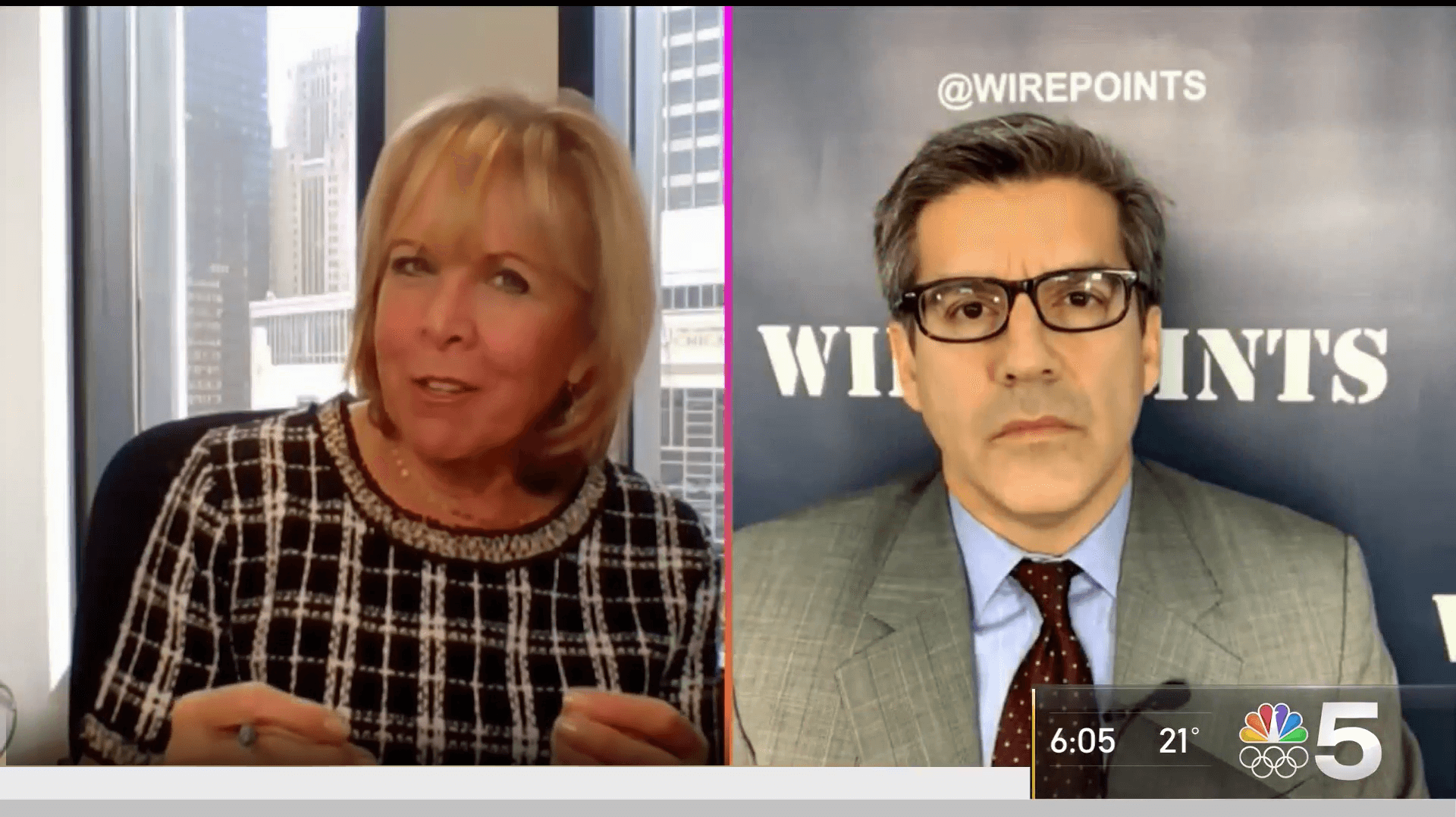 Wirepoints President Ted Dabrowski told Mary Ann Ahern of NBC5 that the CTU has simply too much power over the lives of Chicago’s children.

It would have been easy – yes, easy – to build a simple system that people could understand for making appointments to get the vaccine. That wasn’t done, so the predictable mess has ensued.

Lightfoot should be calling the CTU’s bluff. Call it a strike. Dock their pay. Start the layoffs. But its twice now this week she’s let the union off the hook. That’s how you enable bad behavior.
Ted Dabrowski was on AM 560’s The Morning Answer talking about how Illinois’ job losses compound on themselves, what the failure of the progressive tax amendment says about voters, why Illinois’ wealthiest school districts remain closed to in-class learning, and why the proposed proposed progressive requirements are so dangerous for education.
Natasha Korecki was promoted last week to White House correspondent for Politico. It’s emblematic of what’s been happening in the national press.

Board members of Township District 113, made up of two high schools serving more than 3,500 students, have shown no signs of wanting to open up even as nearby districts increasingly add in-person learning options. Not surprisingly, that has many parents in the north shore suburbs of Deerfield and Highland Park more than frustrated.

A sweeping, radical rule is pending for Illinois K-12 teachers that should prompt everyone, of all political stripes, to fear about the fundamental roles that teachers and classrooms are assigned to fulfill.

Ted Dabrowski was on WJOL’s Slocum in the Morning talking about how Illinois’ last legislative session failed to tackle the items hurting residents the most: COVID-19 and the economy. Instead, politicians passed a slew of bills that will increase the cost of government.
The home-value gap for blacks is particularly big for Chicago — 37% — which is higher than the ten other largest cities in America and well above the national average gap of 16%.
Ted was on AM 560’s The Morning Answer this week talking about how Illinois can save more lives by giving the elderly the COVID vaccine before any other group, the inconsistency of Illinois’ destructive lockdown rules, and how Illinois’ leadership doesn’t appear to have any real plan to bring the COVID crisis to an end.

Ted was on Black and Right with John Anthony this week talking about the how the Biden stimulus will ultimate force taxpayers in well-run states to pay for Illinois’ self-inflicted crises, how Madigan’s departure might hasten Illinois’ decline because big-spending politicians have more power, and lawmakers’ failure to pass Pritzker’s $500 million tax hike on businesses.

Now that vaccines are finally available, Pritzker is including a host of “essential workers,” at the same level of priority as the elderly and calling it an “equity-centric vaccination approach.” It’s a huge mistake to give all those groups equal priority.

Those who don’t learn from history are doomed to repeat it, it’s often said. But what can we say about undoing a history lesson already learned?

Mark was on the Steve Cortes Show this week talking about Mike Madigan’s historic fall from power, the continued destruction wrought by the state’s overly-restrictive COVID lockdowns, and the potential size and impact of Biden’s stimulus plan.
President-elect Joe Biden on Friday provided some details on his proposed $1.9 billion pandemic relief bill, called The American Rescue Plan. It includes $350 billion for state and local governments.

Tragedy should beget solace, but not silence.

Mike Madigan’s tenure as House Speaker is over after nearly 40 years at the helm. In his place, Democrats have elected Hillside Democrat Emanuel “Chris” Welch to lead the chamber. Madigan’s loss of power is a monumental change, but just because he’s gone it doesn’t mean Illinois’ problems are over.
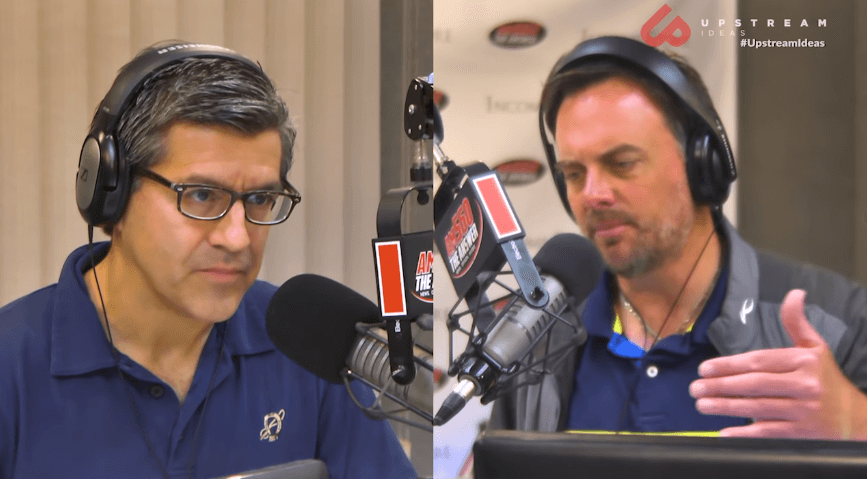
Ted was on with with Dan Proft and Amy Jacobson discussing Madigan’s chances of being reelected Speaker, how a federal bailout of Illinois will only makes things worse for the state and how pols are passing their equity agenda instead of reforms.

It’s difficult to believe, but guess what the Illinois General Assembly was quick to move on — after not meeting for over seven months.

House Speaker Mike Madigan’s iron grip on Illinois could be nearing an end. While that’s a cause for celebration, the party should be brief. Ending Madigan’s personal patronage machine is one thing, but unwinding the infrastructure he’s built over three decades is another.

If the current surge of authoritarian suppression persists, so too will violent opposition to it. That violence must end, and the best way to end it is by assuring robust, free expression of political opinion.

Ted was on with Mary Griffith of WTAD talking about the loss of population in the Quincy area and across Illinois as a whole. Illinois competes with its neighbors for people, jobs and businesses, and right now it’s losing. In all, the Quincy area has lost over 5 percent of its people since 2010.
There’s so much at stake you’d think lawmakers would act with urgency to help Illinoisans struggling under the weight of lockdowns and the state’s general malgovernance. Forget it. This legislative session will likely be full of drama, but little substance.

Pop quiz: 176 billion is the difference between Wisconsin and Illinois by what measure?
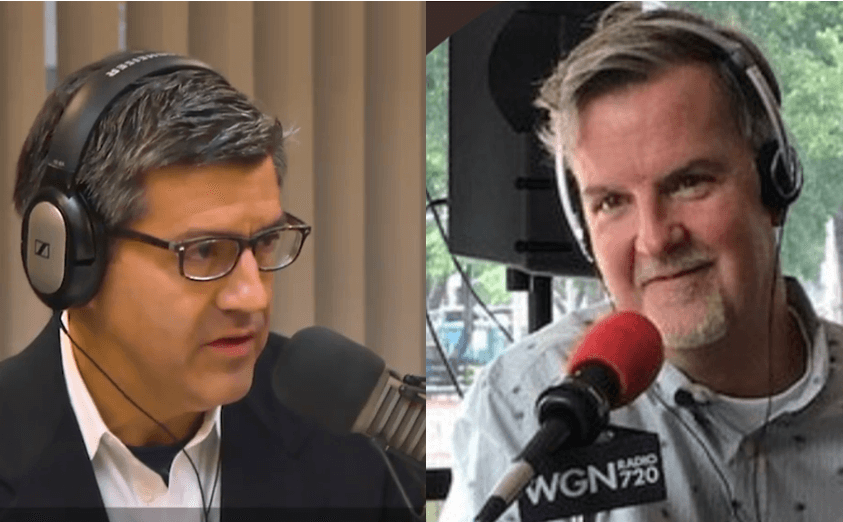
Ted was on WGN Radio 720 discussing why Illinois is losing more people than any other state in the country. Illinois used to be a destination state. Now it has shrunk seven years in a row.
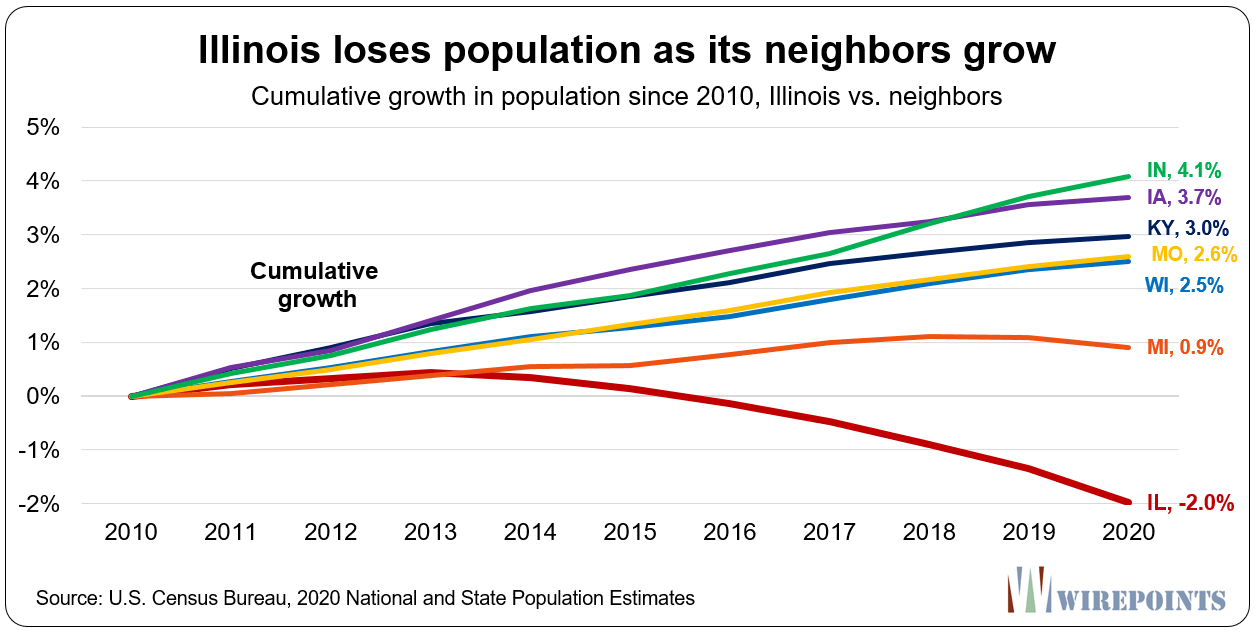
You’d think we’d be past this, but we are not. The same voices that have denied Illinois’ horrendous trajectory for years are still at it. The latest example is Tuesday’s article by Greg Hinz on the state’s population loss.
Democratic control of the United States Senate had barely become apparent at 11 P.M. last night. But Anne Caprera, Gov. JB Pritzker’s Chief of Staff, knew exactly what it meant.
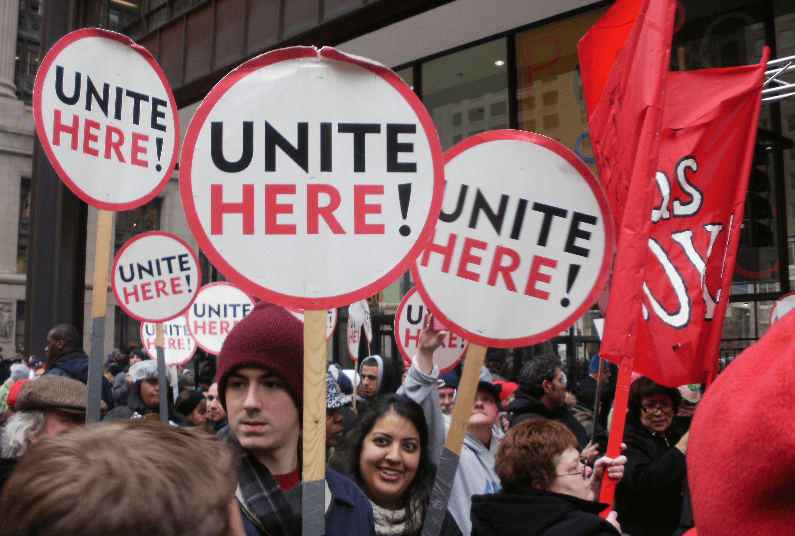
The Chicago Teachers union continues to prove itself as the most extreme and militant union in the nation. After nine months of failed remote learning, CTU is now openly threatening to strike as early as mid-January to keep teachers out of classrooms.

Excess deaths are now more frequently being attributed to “deaths of despair.” A new study projected that excess deaths resulting from the economic strain of the pandemic will amount to 900,000 over the next 15 years.

For Chicagoans under the age of 40, death by homicide has been more likely than death by COVID, and in many cases, far more likely.

Sarah Chambers, who was also part of that “solidarity delegation” with other CTU members that went last year to communist Venezuela.
Ted was on with Terry Martin talking about how the COVID-19 crisis exposed to the nation just how much of an outlier Illinois really is, how politicians on both sides of the aisle have no plan to fix Illinois, how Mike Madigan’s possible end as House Speaker won’t likely change Illinois’ status quo, the reforms that Illinois needs to turn itself around, and more.

CPS teachers haven’t been in the classroom for nearly nine months and the CTU is hinting they’ll strike for the fourth time in less than a decade to stop any reopening from happening. In contrast, Catholic school teachers have been teaching in-person, five days a week, to 34,000 city students since the beginning of the 2020-2021 school year.

“As you’re connecting with close family and friends virtually, here are some suggestions on how to get the conversation started.”

They cut in front of those who are at far greater risk, particularly those who are over age 70.
You’d think Gov. JB Pritzker would start worrying about being branded as entirely unserious, partisan and dishonest about Illinois’ problems.
Ted was on with Amy Jacobson and Paul Vallas this week discussing Illinois’ continued failure to protect retirement home residents from COVID and the LaSalle Veterans Home scandal.
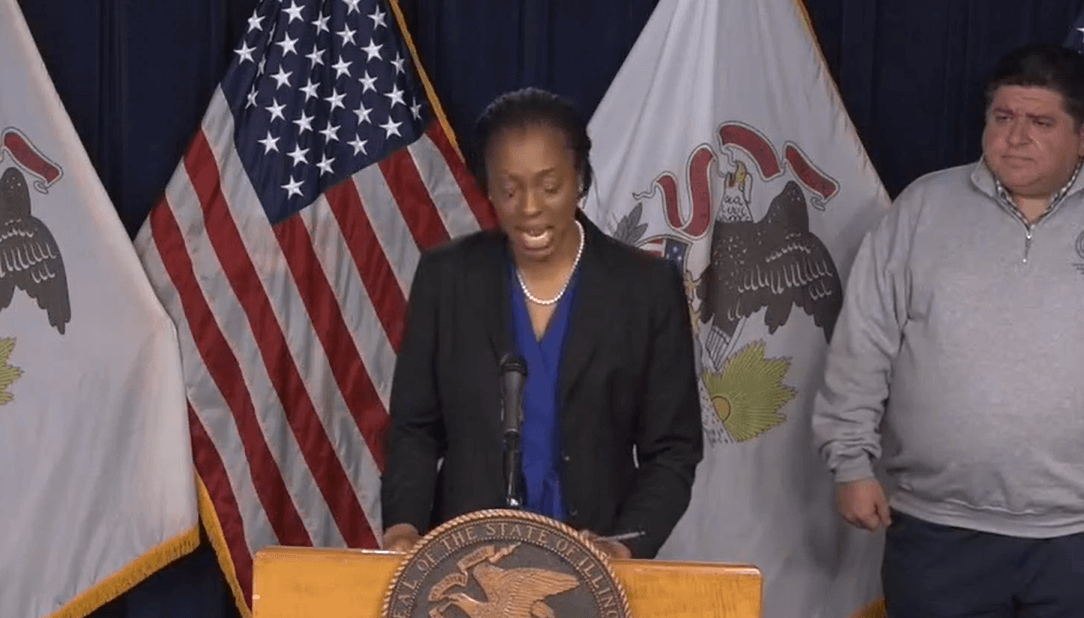
The concentrated effort to find out what went wrong at the LaSalle Veterans Home begs a broader question: Why aren’t state officials paying the same elevated attention to all Illinois retirement home deaths? Today, we’re at more than 7,500 retirement home deaths – the equivalent of 220 LaSalle Homes.

New U.S. Census Bureau data shows Illinois has cemented its place as the nation’s extreme outlier in population losses. When measured since 2010, the Prairie State’s population has dropped by 250,000, the most of any state in the country.
With the end of the COVID-19 in sight, and having let the governor micromanage the state under an emergency order, it appears the General assembly may now seriously consider authorizing itself to meet remotely.

“Who really threw those victims under the bus?” This is about a policy debate poisoned by noxious, politicized hyperbole that has twisted science and discredited much of science and media.

Ted was on with Tom Miller this week talking about how Illinois is shrinking more than any other state in the nation. “When you lose your population as Illinois is, restaurants can’t stay open, small businesses can’t stay open, companies can’t hire enough high-quality people…you can’t maintain your tax base, you can’t maintain quality of life, it becomes a death spiral.”
How the rest of the process will play out is unknowable, but it will be long and painful. Budget cuts and structural reforms have long been inevitable for Illinois. But the same powers and interests that crippled the state hold the scalpel. Their blame game and incrementalism will continue until they are forced to stop.

Illinois’ population has dropped by nearly 170,000 since 2010 and few of the state’s counties have been spared. In all, 93 of the state’s 102 counties shrunk between 2010 and 2019.

A huge portion of Illinois is now immune to COVID-19, probably just over half. That’s a direct and simple implication of government numbers, though officials don’t say so outright.

On the surface, a new report on Illinois’ state-level pensions is bad enough: The official unfunded liability of the five state pensions grew to $144 billion in 2020 – a record high, and a $7 billion increase in just one year. But it gets worse.
O’Hare and Midway bars and restaurants feast while in the city they struggle for survival.
The CTU recently hinted another strike is in the offing if CPS continues with its plan to reopen schools in January. Look for the administration to cave. It’s been that way over the past three strikes and there’s no reason to think it will be any different this time.

The damage inflicted by school shut-downs on Chicago’s youth, particularly minority youth, is already horrifying. Despite no meaningful risk whatsoever, the Chicago Teachers Union is now seeking an injunction against reopening.

Americans better wake up now and turn this around. These are not isolated incidents.
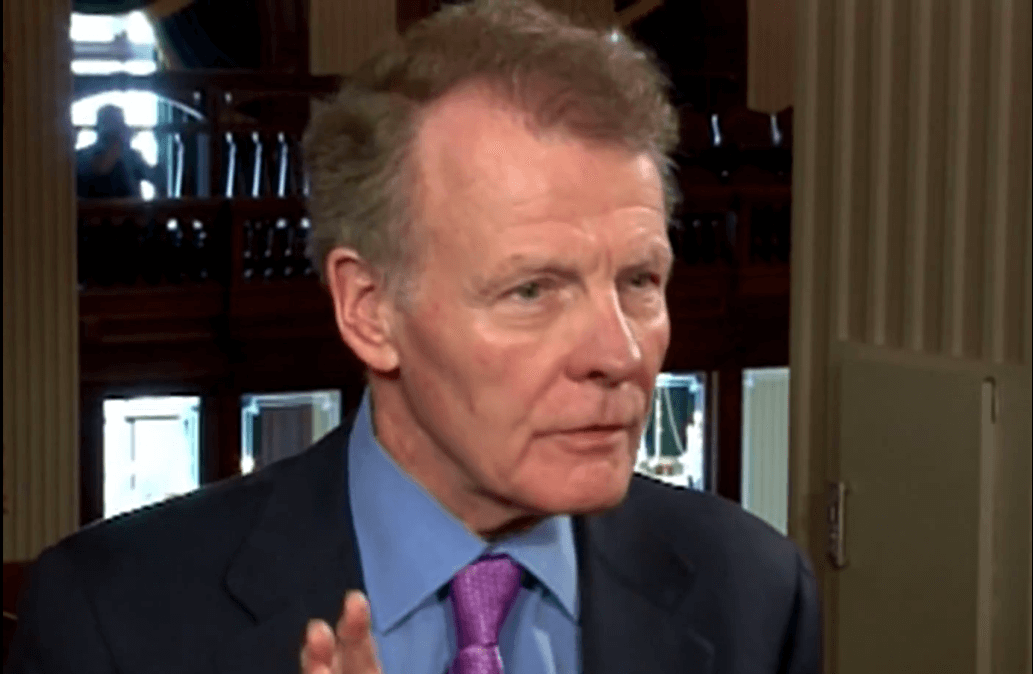
He sure seems to have missed the memo about Illinoisans wanting reforms instead of taxes.

As of December 1, four Chicago youth have died from COVID but over 90 have died by homicide. That’s 25 children dead from homicide for every COVID death.
An analysis of data from Dec. 2, Illinois’ single-deadliest COVID day, shows the elderly continue to dominate the state’s fatalities.

Governor JB Pritzker’s administration on Tuesday announced two new programs to encourage home ownership.
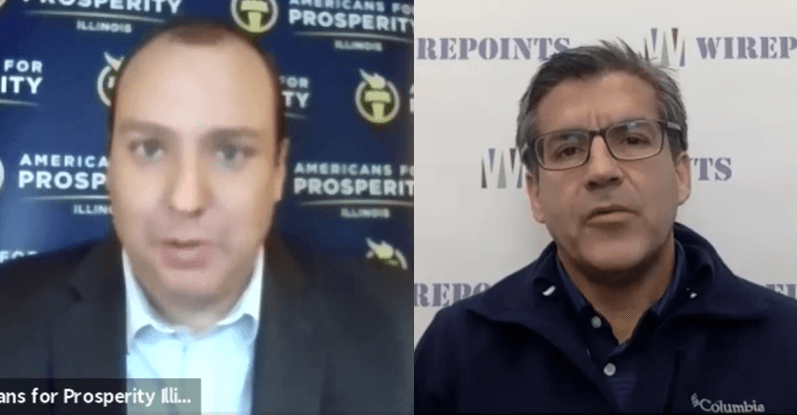
Last week, Ted was on with Brian Costin of Americans for Prosperity discussing Illinois’ worsening financial crisis and what it means now that the election is over.

Our answer never seems very satisfying so now we are putting it on you. Have at it.
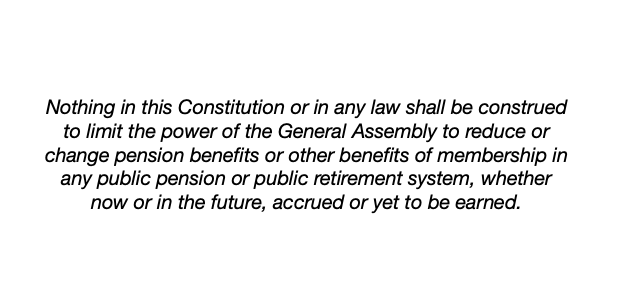
Priority No. 1 couldn’t be more clear. Pensions are Illinois’ biggest problem and they cannot be fixed without an amendment to the state constitution. Proceed now.
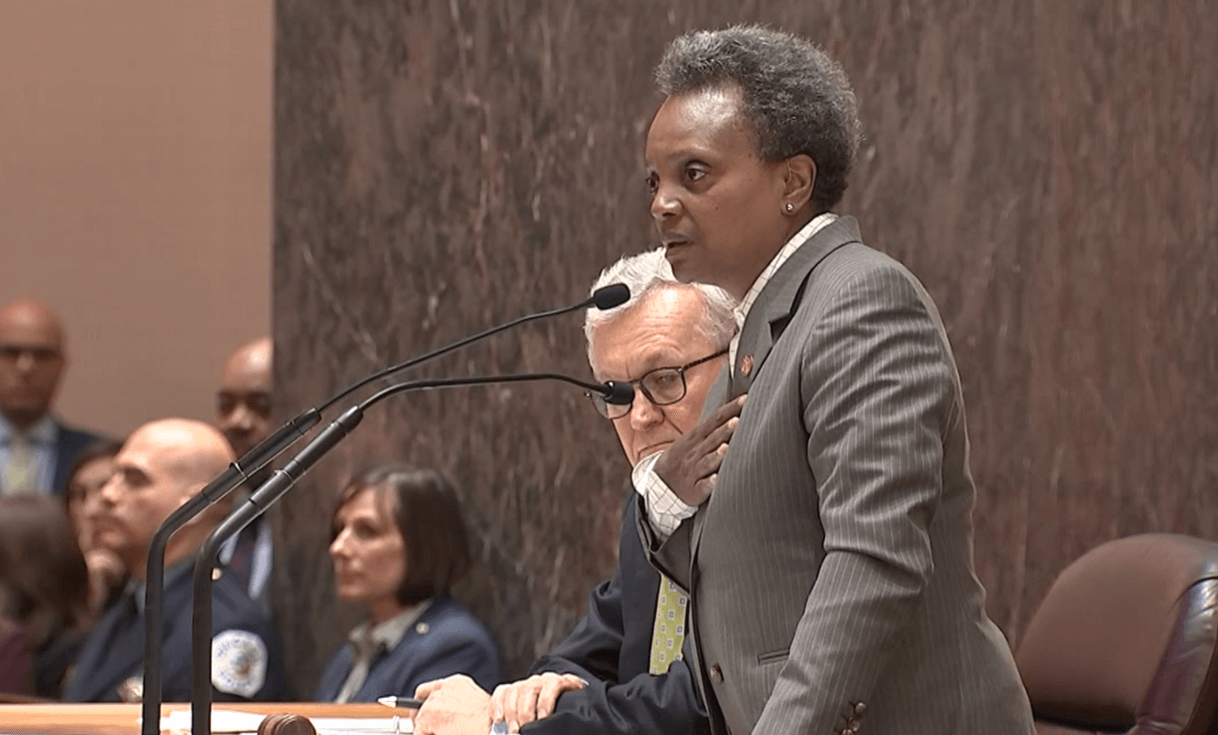
Have Chicago’s financial advisors ever shown the mayor and her city council what an extreme national outlier Chicago has become? Do the city’s top officials have any idea just how poorly the Windy City stacks up against the nation’s other major cities? Do they have any clue how much stress Chicagoans live under?

That’s separate and apart from loans by the Federal Reserve Bank to the state that we recently wrote about, which will increase to $3.2 billion when Illinois completes a recently announced addition to its Fed loans.
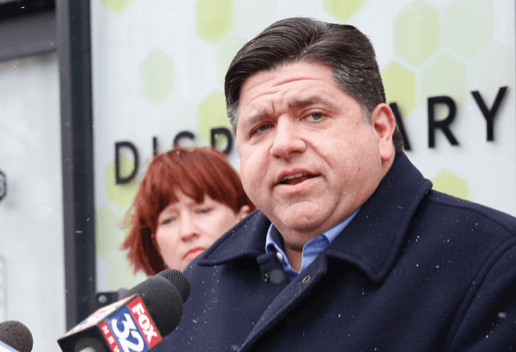
Illinois has announced $2 billion more in additional borrowing from the Federal Reserve. Only one state or city in the entire country has borrowed from the facility since its inception: the state of Illinois. All others have successfully raised billions from the traditional markets during the pandemic.

Obsess about those at risk. Keep them alive until the vaccine arrives.

The subversion of democracy by suppression of the free exchange of information and opinion is no longer just a threat. It’s here.
The strategy of shutting much of the state down – from lockdowns to school closings – has done far more harm than good, in part because it’s taken health officials’ eyes off of the elderly and the infirm.
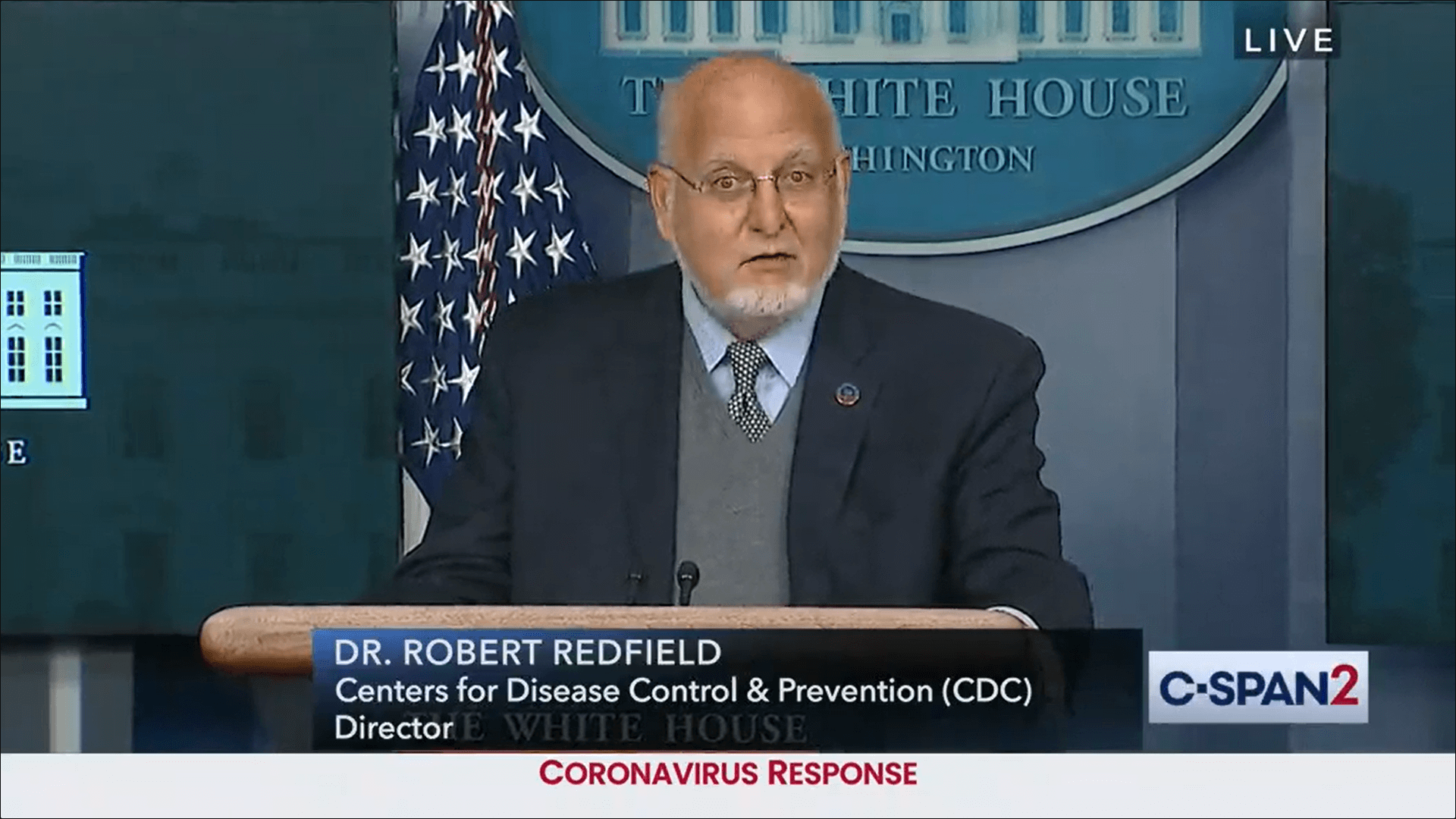
While school openings have become heavily politicized in recent weeks, the good news is that more experts on all sides agree schools should strive to reopen and stay open.

Mamie Cosey and her family are victims of a growing malaise impacting cities across Illinois, where residents are taxed out, services are being slashed, police and firefighters are losing their jobs, and public pensioners are losing their retirement security. A recent law that garnishes city tax revenues to pay for pensions is making things worse.

Wirepoints found that 351 of Illinois’ 643 downstate public safety pension funds did not receive their full contributions in FY 2019. Without pension reform, local funds will either end up closer to insolvency, or city services will go unfunded in an attempt to keep failing public safety pensions afloat.
Props to the reporters who pestered the city into finally coming clean.
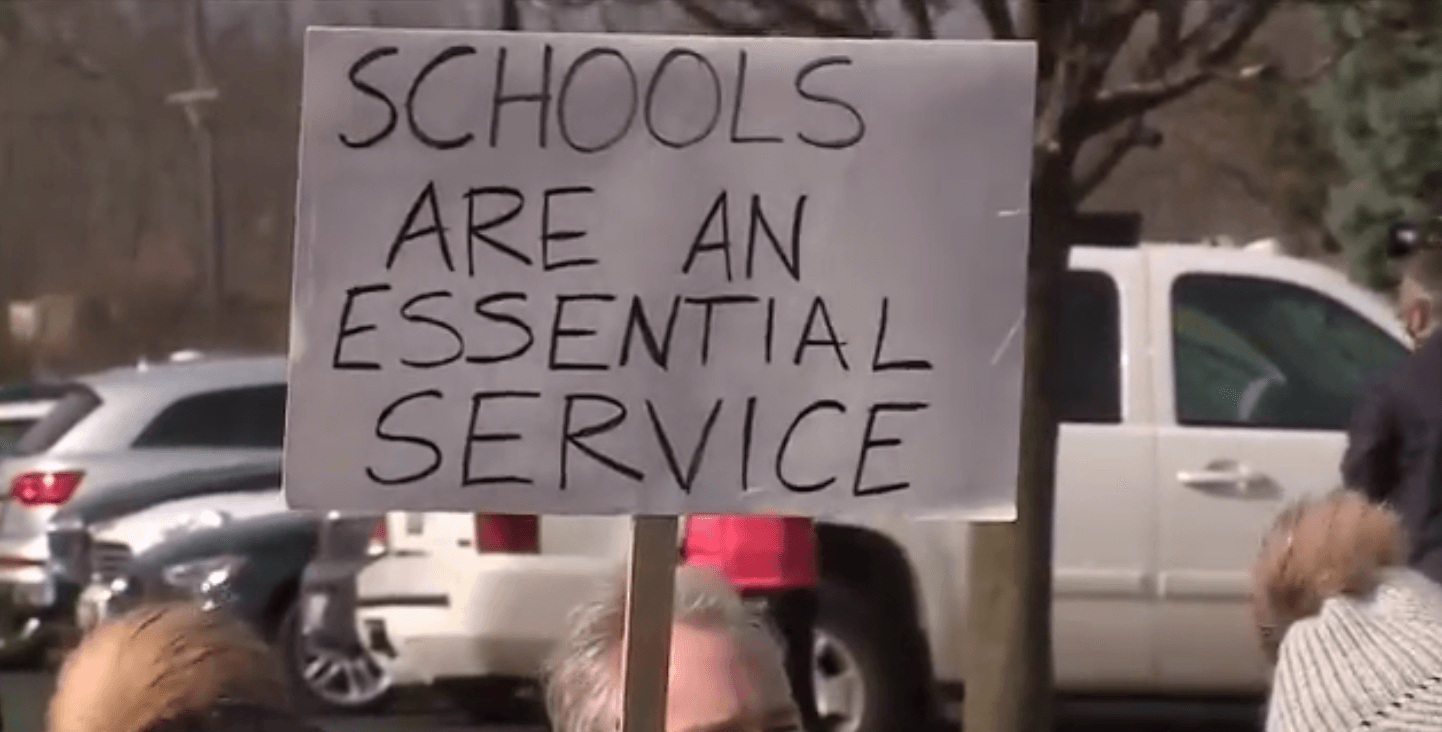
Many Illinois school districts are reverting fully to online-learning due to the jump in COVID-19 cases, but another set of numbers argue that schools should stay open – and in fact, open even more. The survival rates since the beginning of the pandemic for those 20 years and younger is 99.99%.
Ted was on with Tom Miller this week talking about the state of Illinois’ fiscal crisis now that the progressive tax failed and a federal bailout seems less likely. The rundown: Illinois has $7 billion in unpaid bills, a budget $6 billion in the red, 5-year projected deficits of $4 billion each year, over $300 billion in state retirement debts and the state is rated just one notch from junk status.
Stay stoned, Chicago. The tax hikes will be painless.
The revised cash-based deficit projection for the current year is $3.9 billion, but with a total bill backlog of $10.2 billion remaining at the end of the year.
Make no mistake. The pending rule would be another major step in the conversion of education into state-controlled autocracy. It is a direct assault on free society.
Ted was on with Amy Jacobson and Paul Vallas talking about the collapse in the state’s case fatality rates. Illinois’ COVID crisis is still centered in retirement homes. Over 40% of all deaths between September and November were linked to Long-Term Care facilities.
Say, haven’t we heard that “critical juncture” thing before?
Regardless of your views on the status of the election or of the candidates, are these appropriate front pages for news sources?
Lost in the attention over Illinois’ massive spike in COVID-19 cases is the collapse in the virus’ case fatality rate, or CFR. The latest COVID data is quickly revealing how less fatal the coronavirus really is, and that has major implications for lockdown policies and, in particular, for school shutdowns.
A lesson in how lacking the data and analyses are that health officials have provided to the public on COVID-19.
Thanks to Kerry Lutz for having Mark Glennon on to discuss the potentially historic flight from big cities to smaller communities.
What do Illinois’ top politicians know now that they haven’t always known that would cause them to throw House Speaker Michael Madigan under the bus?
You’d think they’d have at least have tried to spin up some pretext.
Illinoisans know the state faces a massive budget hole., though they rejected the “Fair Tax increase. What do they want instead of higher taxes? We don’t know, but we know what they should want: reforms.
Ted was on with Tom Miller this week talking about the clear rejection by Illinois voters of Gov. Pritzker’s progressive tax hike.
Everything was aligned in favor of the amendment. And yet, it failed. The reason why likely boils down to one word: trust.
Last month’s COVID-19 data reveals just how flawed Illinois’ response to the coronavirus continues to be. The recent spike in cases has the government shutting down large parts of the state again in a brute-force approach, when its efforts should, instead, be hyper-focused on the elderly and opening up the economy for everyone else.
The betrayal by the American media of its essential role in democracy will perhaps be remembered as more consequential than this election, and the Illinois media aren’t helping.
Mark was on the Coffee and a Mike podcast last week discussing the flight from America’s big cities the Hunter Biden laptop scandal, and the corruption of the federal government.
BLM is a poor label for the movement, which should distance itself from BLM the organization because the organization does not represent the views of any race.
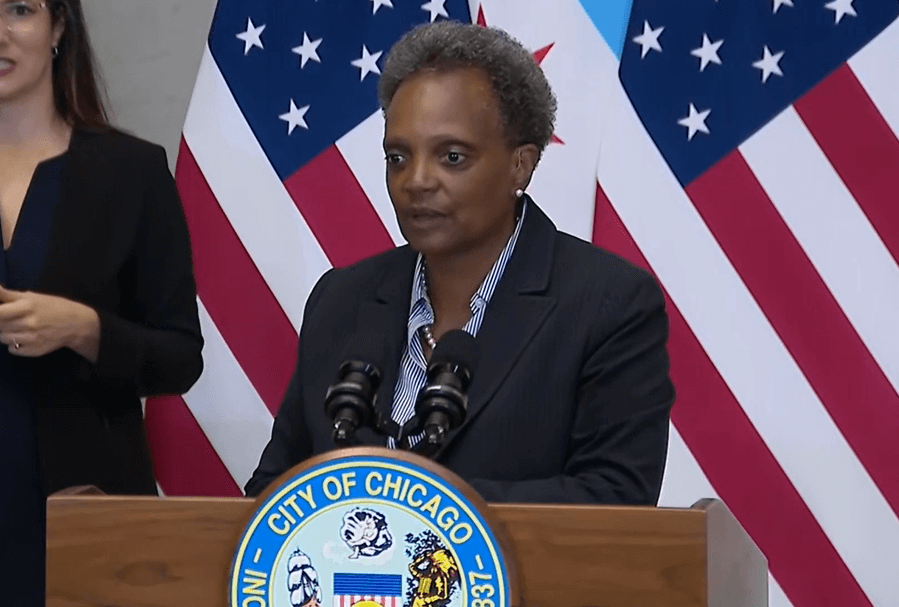
While Chicagoans share many concerns over the city’s policing practices, 79% want the police to spend the same amount of time or more in their neighborhoods. That’s one of the key findings of a new Wirepoints/Real Clear Opinion Research poll that looked at a range of attitudes in Chicago on policing, race and Mayor Lori Lightfoot’s performance.
The Biden family’s influence peddling may end up ranking among America’s biggest political scandals, but the blackout on coverage of it is already the media’s biggest. The Illinois press is part of it.
It’s beggar-thy-neighbor policy at its stupidest. Instead of banning it, the state participates in it through its EDGE program.
Here’s something you don’t see every day: A politician providing excruciating details on tax increases.
Which amendment should be on the ballot, the progressive tax increase or pension reform? The silence of Fair Tax supporters tell us why they aren’t asking.
Jefferson’s views about cities were not embraced by the nation for 230 years, but that may be changing. Most of his other views were held sacred, but that, sadly, is also changing. Time will soon tell which ones prevail.
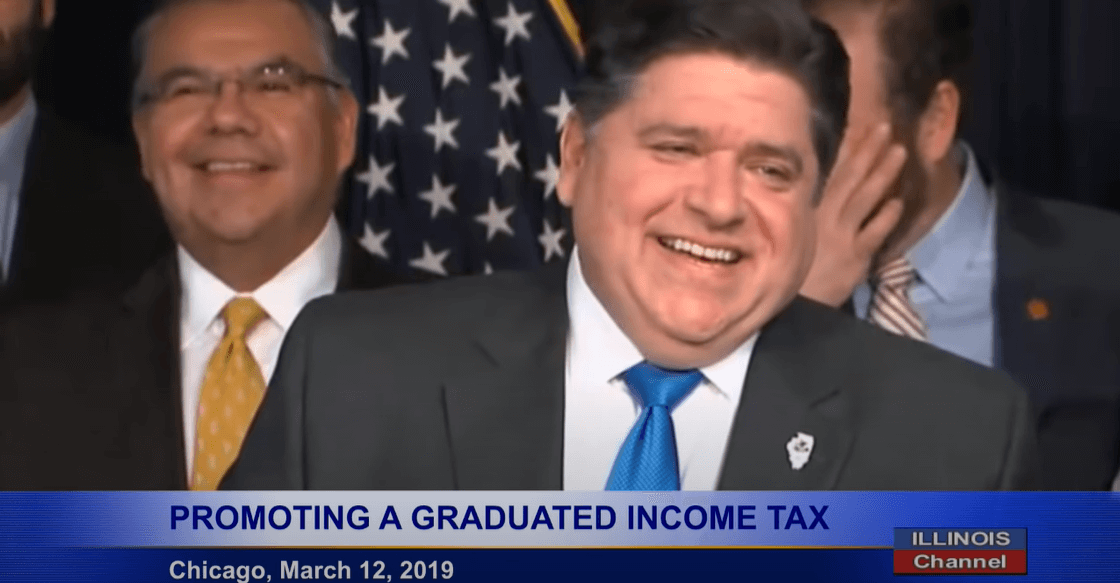
The airwaves are being bombarded with emotionally charged ads for and against the progressive tax. Still confused? Here are the 20 facts you should know about the progressive tax amendment.
Illinois’ wealthy don’t need defending. They know how to take care of themselves just fine. But don’t assume that a tax hike on them will be a free lunch for the rest of us. If too many wealthy leave, our reform-shunning legislature will only have one place to make up for the loss in tax revenues: Illinois’ middle-income earners.
Ted was on the Coffee and a Mike podcast earlier this week discussing Pritzker’s announcement that he’ll tap the Fed’s borrowing program a second time and Chicago’s continued financial desperation.
Northwestern University President Morton Schapiro has had more than enough of his students’ means of protesting for abolishing campus police. His words are unequivocal and scathing.

Illinois residents pay some of the nation’s highest taxes. One of the big reasons – Illinois has 7,000 units of local government. That’s by far the most in the nation. Consolidation would help ease the outrageous tax burden on the average Illinoisan.
Mayor Lori Lightfoot is considering a slew of one-off actions to help close what city officials claim will be a $1.2 billion shortfall in next year’s budget – including a $94 million property tax hike. Absent in the list of savings is anything that can be considered a structural reform.
It’s always fun to compare what governments say in bond documents, where falsehoods can lead to fraud charges, to what the general public has been led to believe. Illinois newest bond offering is no different, and what might be more interesting is what’s not written and is between the lines.
It’s tempting to dismiss this as just another instance of media censoring views it doesn’t like, but it’s about far more. It’s about the entire “conversation” we supposedly are having on race in America, and why it’s no conversation at all.
Gov. Pritzker has no problem hitting up Illinoisans with a tax hike, but he won’t reform one of the richest public sector benefits in the country – Illinois’ automatic, compounded, 3-percent cost-of-living adjustments for pensions.

Illinoisans bear one of the nation’s heaviest tax burdens. Kiplinger, the personal finance company, calls Illinois the “Least Tax-Friendly State” in the country.

Illinois is set to borrow from the Federal Reserve for a second time if a new stimulus package and a progressive tax hike scheme for Illinois don’t come through. Illinois is the only state in the nation to resort to borrowing from the Fed.
Is there really too much stuff in the House’s bill to find agreement on? Take a look.

That means about 520,000 Chicagoans have been infected, which is over six times more than the 83,500 officially reported number of cases, and those individuals likely have significant immunity.
Moody’s estimates the shortfall in Illinois’ five state-run pension funds will jump to $261 billion in 2020
Mark was on the Coffee and a Mike podcast earlier this week discussing the highlights of Wirepoints recent article on the CDC’s new COVID-19 case fatality data.
The report’s final warning shouldn’t be ignored: “Were the proposed graduated-rate income tax adopted, Illinois would trail its peers in just about every aspect of its tax code. If businesses and individuals are leaving the state now, these policies can only make the problem worse.”
Wisconsin is undergoing a true surge in COVID-19 but the reasons are unclear.
Governor JB Pritzker and Lt. Governor Juliana Stratton announced on Tuesday Illinois’ “Healing Illinois Initiative to Advance Racial Healing.”
Ted was on NBC 5 this week explaining why Illinois politicians will inevitably use the progressive tax to hit the middle class. He was interviewed for a news segment on IPI’s lawsuit against the misleading language on the progressive tax ballot.
Can you walk across a river with an average depth of five feet?
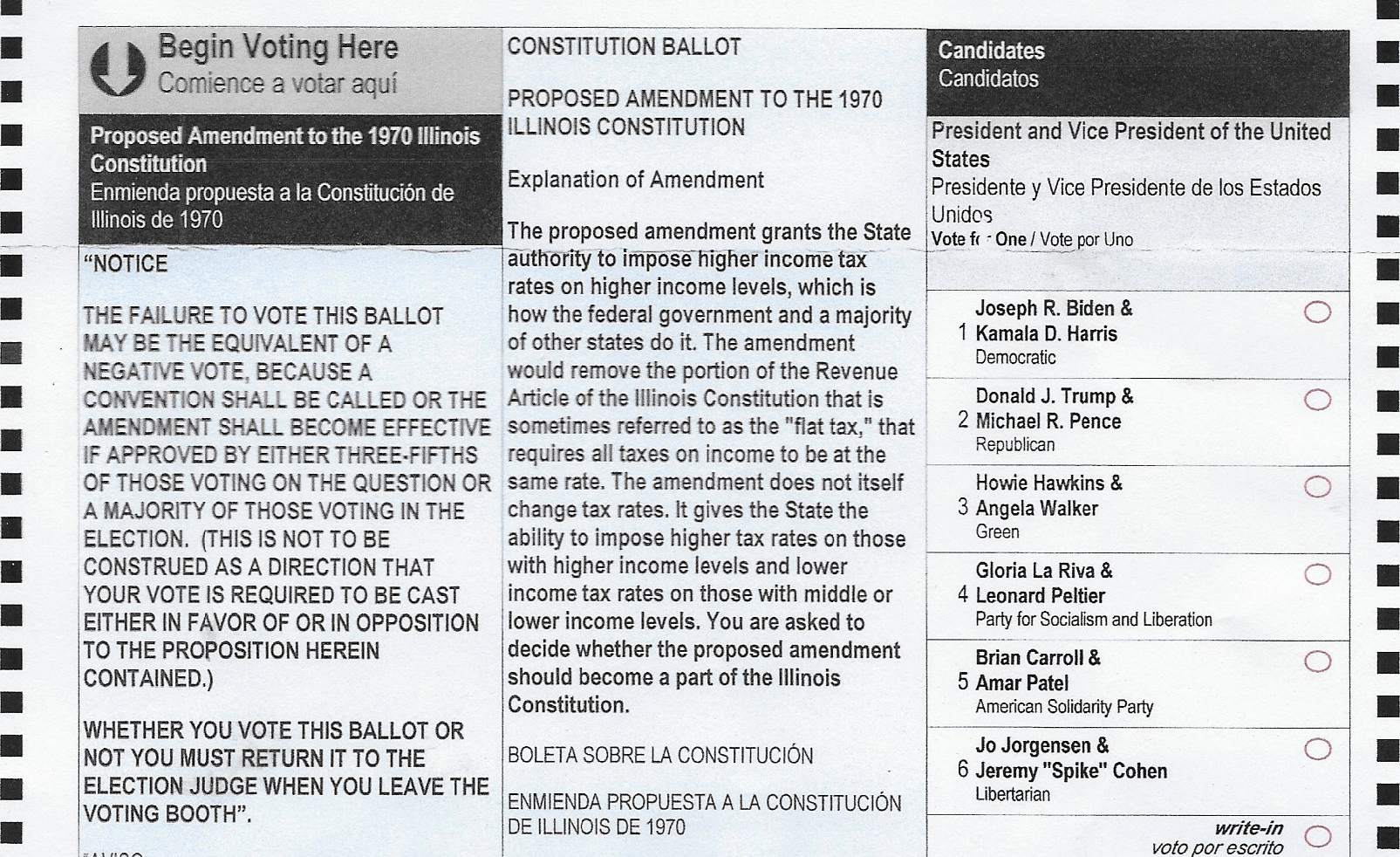
Illinoisans voting on the “Fair Tax” constitutional amendment who have not already studied it probably will be duped into the wrong choice because the ballot is deceitful and incomplete.

Justice delayed is justice denied. That goes for both Pritzker and the people of Illinois.

Ted was on Univision warning Illinoisans about the negative impacts of tax hikes like the progressive income tax. He warned that giving billions more to the most corrupt politicians in the nation would only make things worse.
Mark was on with Mike Flannery of Fox 32 Chicago last week discussing why reforms are needed in Illinois, not a progressive income tax.
Earlier numbers, which were far more frightening, got extensive press coverage. Very little media attention, however, has gone toward the new numbers.
Mostly due to the pandemic.
It’s a scandal unto itself about the organization that’s supposed to be looking out for Illinois consumers in utility rate-making. But the story’s significance goes beyond that scandal. It should also seal the case against CEJA, the Clean Energy Jobs Act.
What Illinois needs is a road map to reform that’s readily available when the state’s finances finally break down. At Wirepoints, we’ve laid out a path for fixing Illinois’ biggest problem: pensions.
No substantive response, just name calling and labeling.
Mark was on with with Dan Proft and Amy Jacobson discussing Wirepoints’ new report on the need for comprehensive pension reform, the push for a progressive tax and the potential for a federal bailout for irresponsible states like Illinois.
Wirepoints’ plan immediately cuts the state’s official unfunded pension and retiree health liabilities by over $70 billion, dropping debts to $120 billion from $192 billion. That reduction saves the state an average of $5 billion a year in retirement costs and reduces retirement costs as a share of the state’s budget to 17 percent from 26 percent.

Stopping the growth in accrued pension promises is the only way Illinois can guarantee an end to its public retirement crisis. Wirepoints’ reform plan protects state workers’ retirement security and ensures Illinois’ most vulnerable citizens no longer suffer from ever-higher taxes and a lack of core services.
Wirepoints lays out a baseline restructuring for Illinois’ five state-run pension plans and the retiree health insurance plan for state workers. The plan significantly reduces Illinois’ retirement debts, helping Illinois escape its downward spiral. By reforming pensions, we can avoid tax hikes and reestablish a competitive level of services, tax rates and economic growth for Illinois.
Laughable hypocrisy, however, is the currency of the realm in today’s politics.
“You don’t raise taxes during a recession.”
“Other states were prepared for a rainy day and we weren’t. Pritzker has to look at payroll because that’s the biggest part of the expense. The bottom line is that with unemployment so high, with the economy struggling, he’s got to make government more efficient and less costly for the taxpayers.”
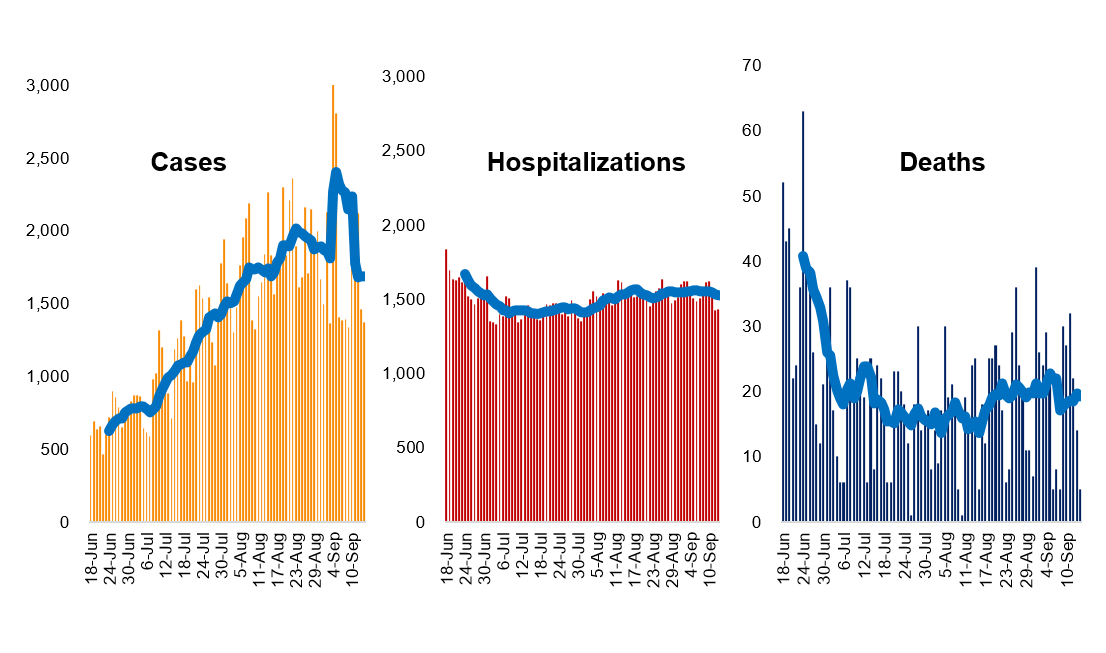
It’s not cases that matter, but hospitalizations and deaths. That’s important because there’s been no real increase in hospitalizations or deaths for three whole months. Cases have tripled since their lows on June 18, yet the average daily death rate has actually fallen from 50 then, to about 19 today.
And after months of learning to deal with the coronavirus, Illinois is in far better shape for reopening schools than it was just three months ago. Here’s what New Trier parents should know about returning to in-person schooling.
Pritzker is wrong to say pension reform is a “fantasy.” Well-established federal law says he is wrong. Precedent from other states show why he is wrong. And Pritzker’s own lawyers have effectively explained why he is wrong.
It’s partly because Illinois has shown no willingness to cut even a dime that Washington has been unable to agree on a federal relief package for states.
State and federal case law is clear. Amending the Illinois Constitution and passing comprehensive pension reform is both possible and essential. Only a lack of political will stands in the way.

Gov. Pritzker’s declaration of comprehensive pension reform as a “fantasy” is wrong. Case law and other states’ experiences show reforms would survive federal constitutional challenges.
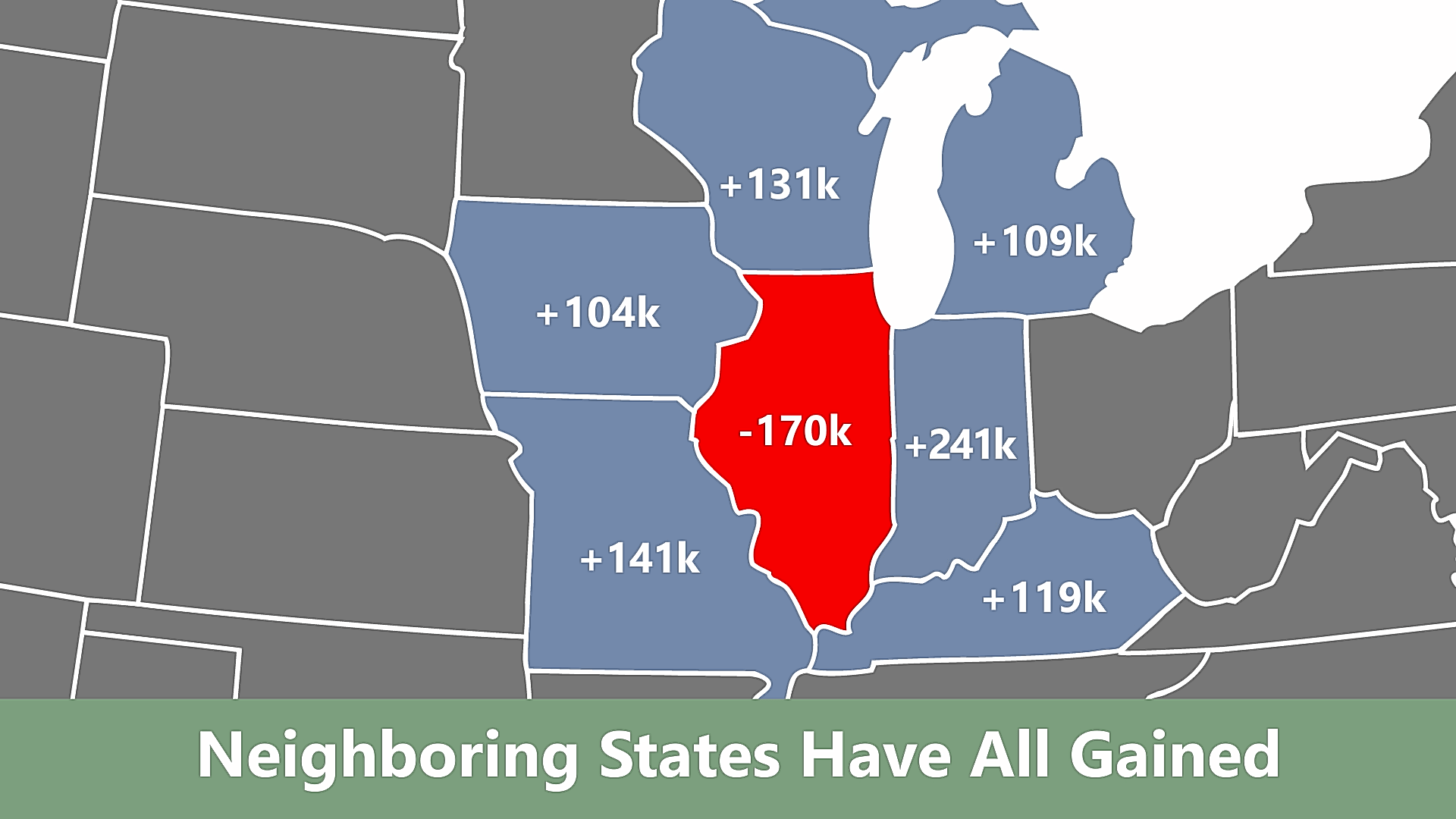
Illinois is the extreme outlier nationally when it comes to losing people. Illinois is one of just four states to shrink over the past decade and no state has lost more population during that time period. It doesn’t have to be that way.
There is nothing about rates in the what you will vote on. Springfield would be free to increase rates at any time on any income group if the measure passes.
Illinois may be in somewhat better shape to avoid the fiasco likely in many other states, but serious trouble still looms.
Watch live at noon, a graduated income tax discussion hosted by Illinois State Representative Joe Sosnowski.
Part 2 of Wirepoints’ 4-part series in the Chicago Tribune.
Ted was on WJPF radio this week talking to Tom Miller about the total pension promises made to government workers for the state’s five pension funds.
We will soon start marking with an asterisk those that might require a subscription, but we will continue to link to them, for several reasons.
Underfunding isn’t the problem. The true cause of Illinois’ crisis has been the dramatic overpromising of benefits.

Wirepoints’ new report shows how overpromised and overgenerous benefits have created Illinois’ worst-in-nation crisis.
A response to their recent op-ed in the Chicago Tribune.
The latest progressive tax ad claims Illinois has “one of the most unfair tax systems in America,” ignoring that 35 states actually have tax structures similar to Illinois. The ad also says 97 percent of Illinoisans will pay the same or less under the progressive tax. That certainly won’t be true in the future.

Illinois is the nation’s extreme outlier. We have the largest pension debt burden. The worst population losses. The highest property tax rates. The worst political corruption. And we’re the ‘least tax-friendly state’ in the nation, according to Kiplinger. More tax hikes will only make those problems worse. Illinois needs pension reform instead.

Glennon: “Instead of pension reform, the state’s political establishment has chosen to focus on a misguided and false alternative — a progressive income tax, which Illinoisans will vote on in November. Recognize the progressive tax proposal for what it is: just another tax increase.”
Illinois faces a “seismic disruption” of its economy, Lightfoot said. Unfortunately she offered no seismic response or reforms, just vague aspirations and stronger rhetoric.
Press Release: “Illinois is the Nation’s Extreme Outlier” includes a 50-state analysis detailing Illinois’ outlier status and the negative impact that status has on people’s lives and livelihoods.
The Strategic Operations Center of the Cook County Sheriff’s has distributed a warning to Chicago area police of a possible alliance among area gangs to shoot officers making arrests.
The real problem downstate is, and continues to be, the failure of the state to protect nursing home residents. A new analysis shows that between 68 to 73 percent of COVID-19 deaths downstate are tied to retirement homes.
You’d think the primary point of that speech — his call for a peaceful reaction — would be honored and quickly echoed by his party after police shot Jacob Blake in Kenosha on Sunday.
Not so.
Average revenue losses of 20% to 30%.
Georgia just borrowed $1.1 billion at an average cost of 1.5 percent, the lowest interest rate ever for the state. Near-junk Illinois last borrowed from the market at a rate of 5.65 percent.
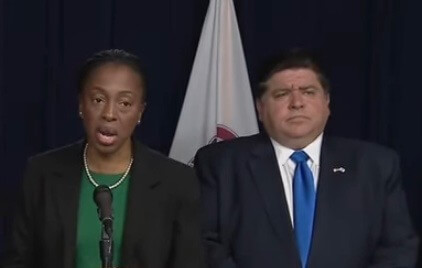
Not only did the state fail to effectively protect retirement home residents from COVID-19, but in its rush to manage the situation it failed to protect them from neglect and abuse as well.
That words so simple, so innocuous and so true could raise as many core issues as they do says so much that’s extraordinary about the circumstances we are in. Those issues go far beyond Lightfoot and Chicago.
Not only did the state fail to effectively protect retirement home residents from COVID-19, but in its rush to manage the situation it failed to protect them from neglect and abuse as well.
Americans have been “blinded from science” according to a recent research report about their understanding of COVID-19. And it’s not about the controversial aspects like treatments and lockdown policies. It’s about ignorance of fundamental, undisputed facts on who is at risk.
If the lawsuit is successful, it could hurt Illinois’ ability to borrow its way out of the current crisis. But even if it fails, the fact that it’s moving forward could cause problems for the state.
Chicagoans terrified about the city’s future will take no solace hearing their mayor put national politics over their interests.
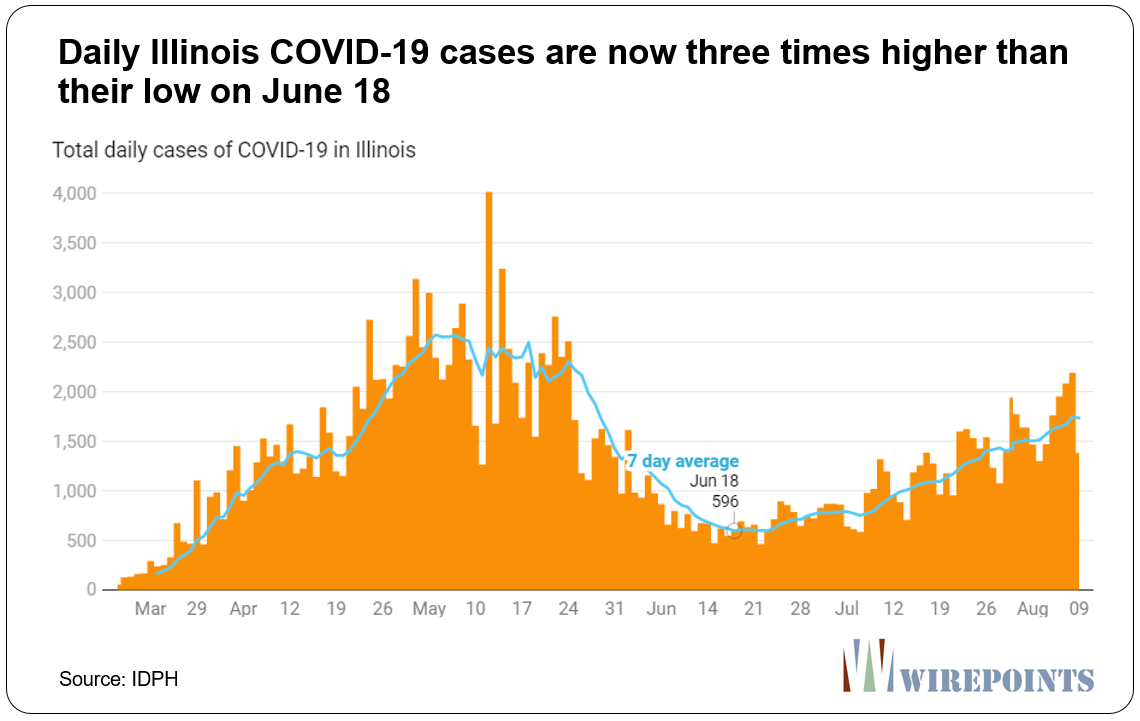
The persistent reporting of rising cases and high positivity rates invoke fear, but the public should know that cases alone don’t matter. What really matters are hospitalizations and deaths. And those have yet to rise in Illinois, even if cases have risen significantly for more than a month and a half.
For a change, it seems like almost everybody is calling Sunday night’s riot in Chicago what it was — a riot. Almost everybody. Not Black Lives Matter Chicago.
New York, Illinois and Massachusetts, in that order, were were the worst off for net loss of that group of the population.
The blame game may work, but that doesn’t mean the funding will come through.
This is correctly decided for reasons we wrote last year.
Ted Dabrowski said the state had problems long before COVID-19 and now is an opportune time to get reforms in places to shore up how the state spends the taxpayers’ money. “This is a big chance for him to actually be the guy that fixed Illinois, he’d be the first guy to actually solve Illinois’ problems. Right now we don’t hear any of that at all.”
It’s only natural for parents and teachers to be worried about the impact of returning students to the classroom. But it’s important to look at the science and data of the coronavirus. The reality is children are far less likely to get infected with COVID-19, are far less likely to get seriously ill, and are far less likely to spread the virus to adults and other children.
You cannot claim that Illinois has an unfair balance of payments deficit with the federal government if you also believe that progressive federal tax rates are fair.
Videos and pictures don’t lie. But if you saw those videos then surveyed the news Sunday morning you’d think you woke up in a different city.
Ted was on with Tom Miller of WJPF this week talking about ComEd, Speaker Madigan and the Illinois machine. “If Madigan is gone tomorrow Illinois’ legalized corruption machine is still there. It’s not just Madigan, it’s the machine that must be deconstructed.”
It’s perhaps the most vicious effort to date in the cancel culture’s assault on journalism, and it’s based on a charge that’s entirely fabricated.
It’s no accident that his warning is forgotten as the city struggles for its life. And the tiger is still hungry.

School reopenings have become the next major political football in America, and the opening of Chicago Public Schools is no exception. But how risky is it really for CPS children to return to school? And how risky is a reopening for teachers? Let’s look at the data.
Mark was on with Steve Cortez this week. “Some say it’s the movement I support, it’s just a phrase, I don’t care about the organization.’ But that’s the problem, by using that phrase, you are supporting that organization, giving them credibility.”
Ditch the BLM yard signs. Find a better slogan than Black Lives Matter. Defund its network.
Has the cancel culture infected your kids’ school? A parent group may have a partial remedy.
As long as the mayor continues to ignore the city’s slide toward bankruptcy, she won’t “eliminate inequalities” or “expand economic opportunities” for Chicago’s minority communities. Broken cities have little to no chance of helping those most in need.
The sanctity of contracts shoe apparently fits depending on who is wearing it. It fits public workers but not those randomly forced to provide free housing.
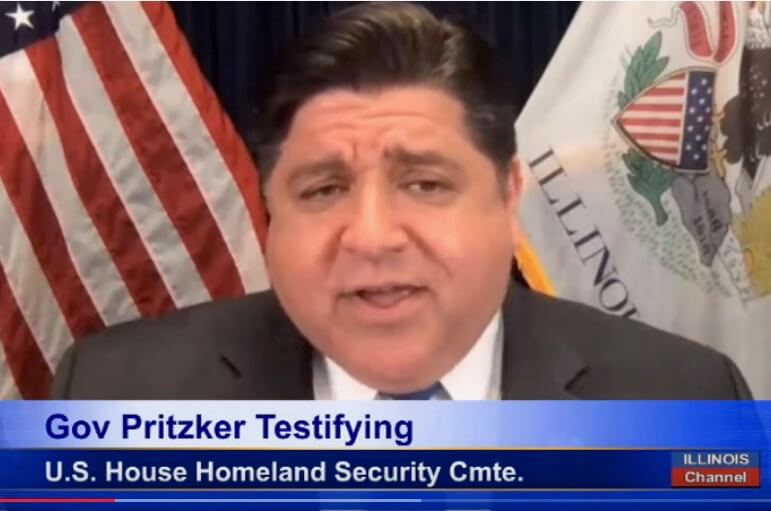
Let’s hope that, when this is over, a quality review is undertaken that produces a useful assessment akin to the 911 Commission’s report. Hopefully, it will be free of self-aggrandizing politicians who have plagued the debate so far.

Evidence shows the mental and emotional harm done to children by not being in school is outweighing the potential harm of the coronavirus. The good news is the risk of a full-time, in-class reopening is far lower than originally feared. But don’t expect the teachers unions to make reopening easy.

Best of all, the city was able to cobble together a diverse coalition of private sector donors and philanthropists to pay for at least the first two years of the program.

Come on, PNC. Financially smart people will read your release. They know.

First Amendment rights are unclear, but policy is a different matter.
The state projects that pension costs will devour more than a quarter of the budget for the next 25 years. The problem is, Illinois’ pension crisis is far worse than even the state’s official numbers show. In reality, the state needs to devote half its budget to retirements just to get the crisis under control.

The short-term data for Chicago home prices is bleak, and the longer-term picture captures just how badly the Windy City area has done since the new Millennium.
It’s not often that we’re on the same page with Tom Tresser of CivicLab and Ben Joravsky of the Chicago Reader. But on the central problem with tax increment financing in Chicago – their abysmal lack of transparency — we’re on common ground, along with most everybody else.
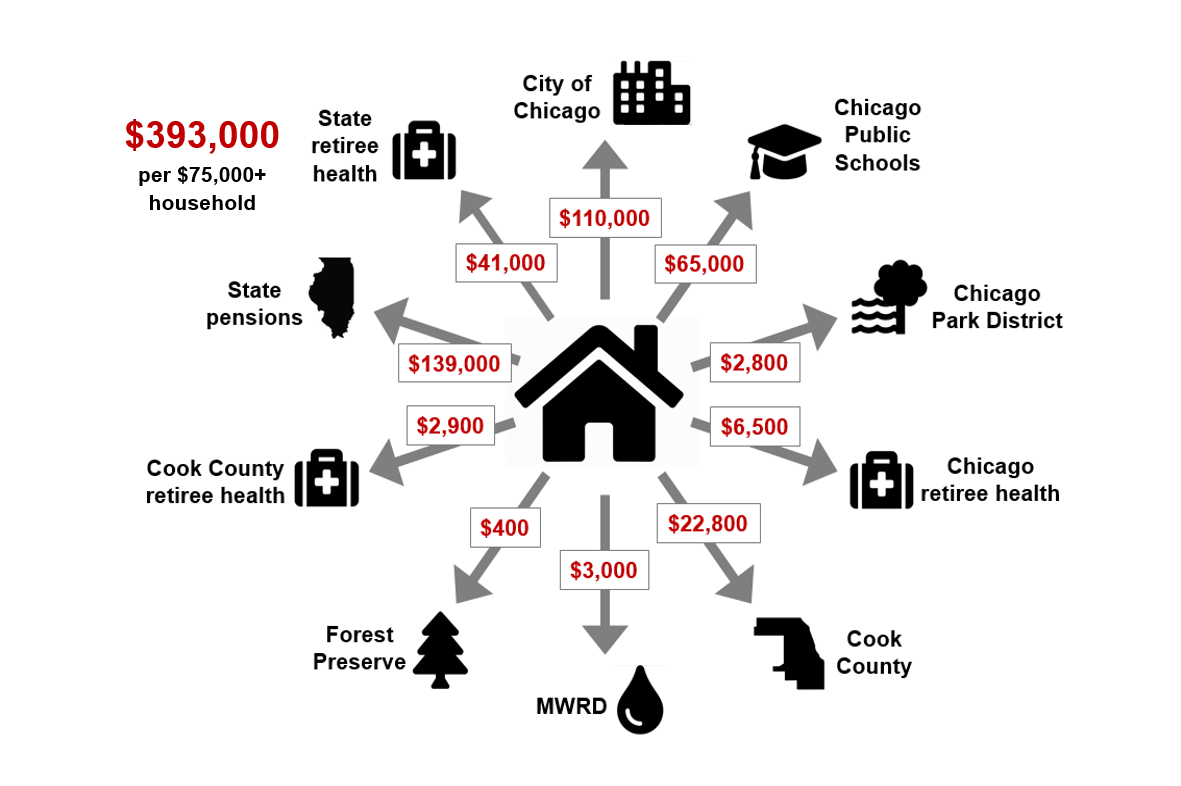
The state is drowning in public pension debt and anyone living here will be forced to pay that debt down over the next two to three decades. For many considering a move, that’d be reason enough to avoid this state.
Antibody testing results from around the country are showing the actual lethality of the virus is far lower than originally feared. CDC findings suggest that the true number of U.S. cases total 24 million, not the 2.4 million reported officially. That would drop the virus fatality rate to 0.5 percent from the known-case death rate of 4.9 percent.

Illinois homeowners should count on higher property taxes next year to be one of the many negative outcomes of COVID-19. As commercial property assessments drop due to the economic consequences of the coronavirus, residential property owners will be forced to pick up the slack and pay a larger share of local government tax bills.

Does he assume (as he probably can) that nobody in the press will question him?

If the two-thirds of Americans who believe all lives matter continue to remain silent, expect more violence from many causes.
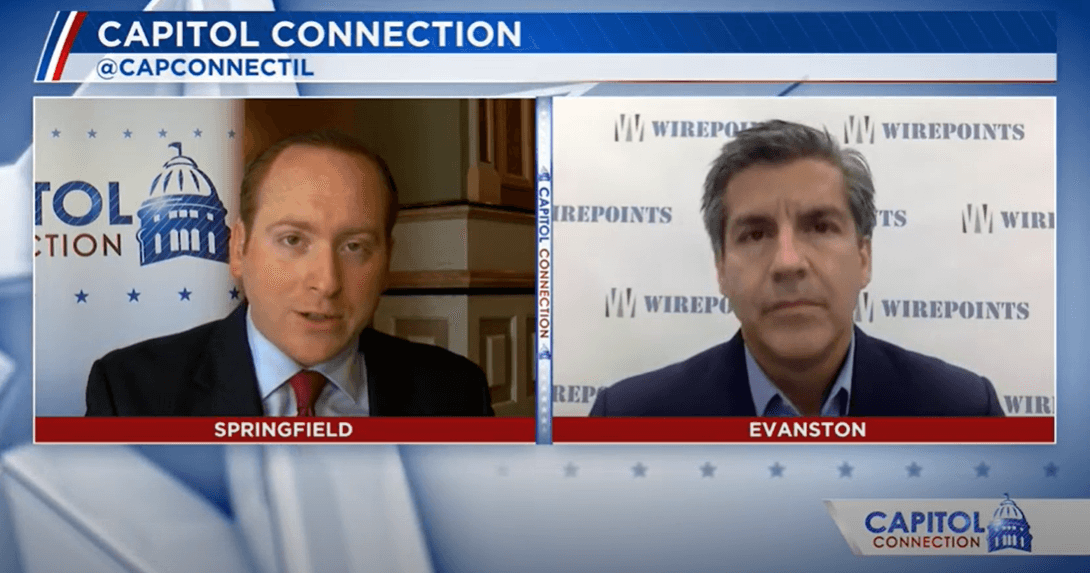
Ted was on Capitol Connection last week talking with Mark Maxwell about the impact of COVID-19 on downstate Illinois and how a progressive tax is a terrible idea, especially when Illinois faces the worst economic crisis since the 1930’s.

It’s inexcusable for Illinois to be ignoring antibody testing.

Under Gov. J.B. Pritzker’s own COVID-19 metrics, Illinois’ downstate regions should have entered Phase 4 of his reopening plan weeks ago. The data supporting that claim is overwhelming, especially when the downstate numbers are compared with those of the Chicagoland region.

Most people acted sensibly even though their governor wasn’t micromanaging their lives.
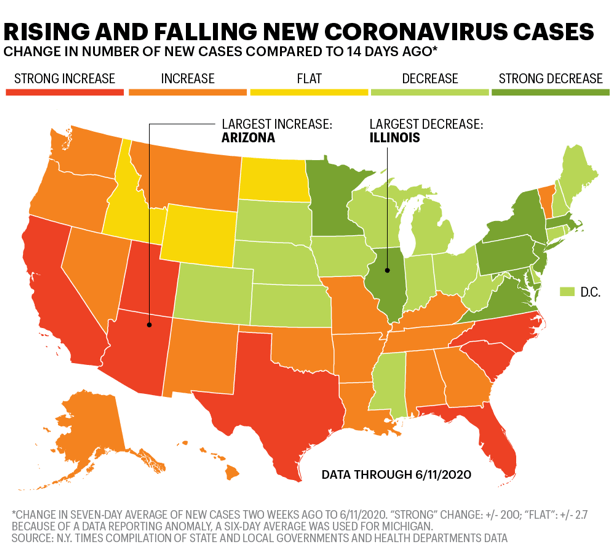
Ironically, Illinois actually does have genuinely good news to report on the virus, but it may convey a different lesson, so it’s a good time to consider a broader perspective on Illinois’ shutdown rule.
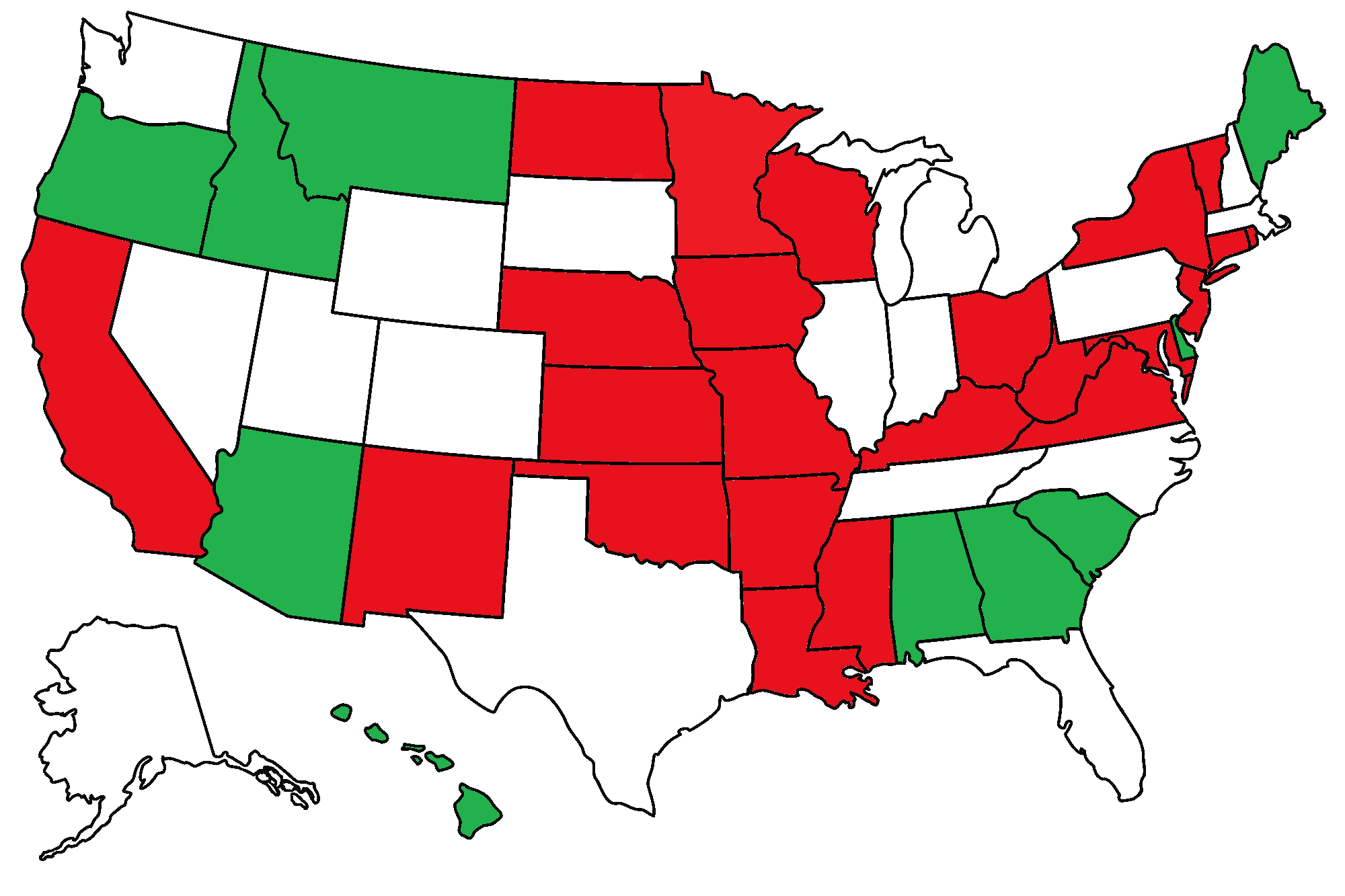
Flat and no-income tax states are beating out progressive tax states in the contest for people and their incomes. The nation’s seventeen flat and no income tax states won a net 1.9 million residents and $120 billion in Adjusted Gross Income (AGI) from progressive tax states during the 2000-2018 period.
If you are among the two-thirds of Americans opposing calls by Black Lives Matter to defund the police, think twice about saying so in public.
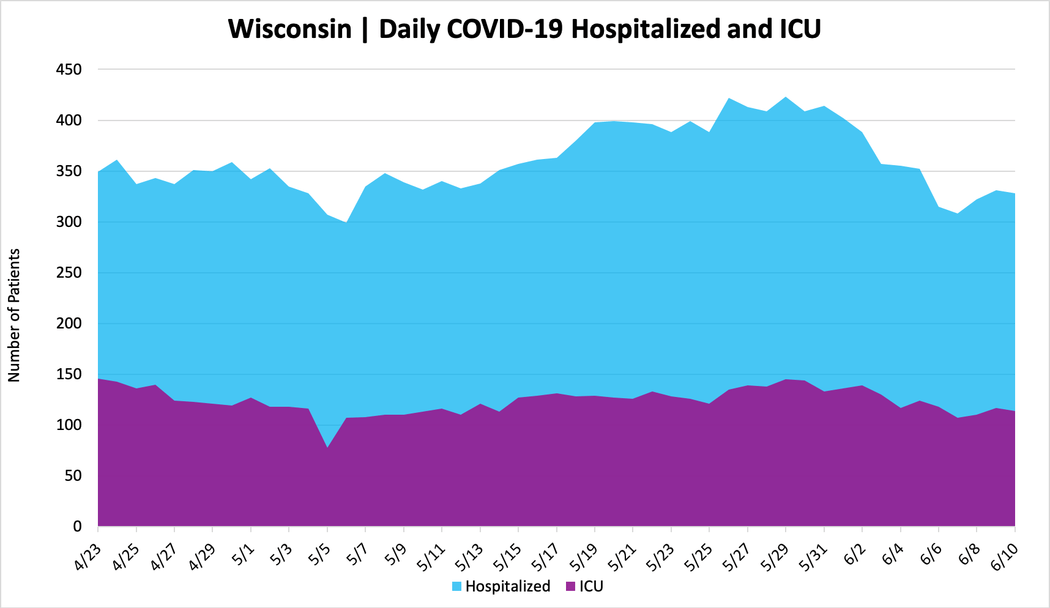
Most people, it turned out, behave responsibly even when their governor isn’t micromanaging their lives.
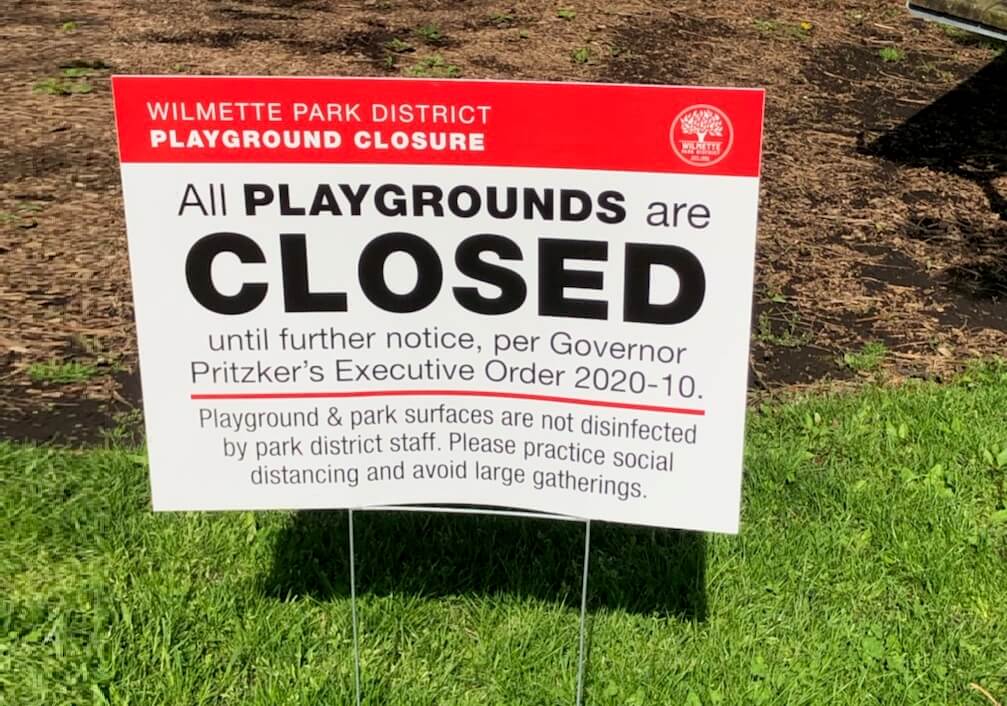
Gov. J.B. Pritzker’s justifications for maintaining one of the strictest reopening schedules in the country are falling by the wayside. Even his own science and data are working against him.
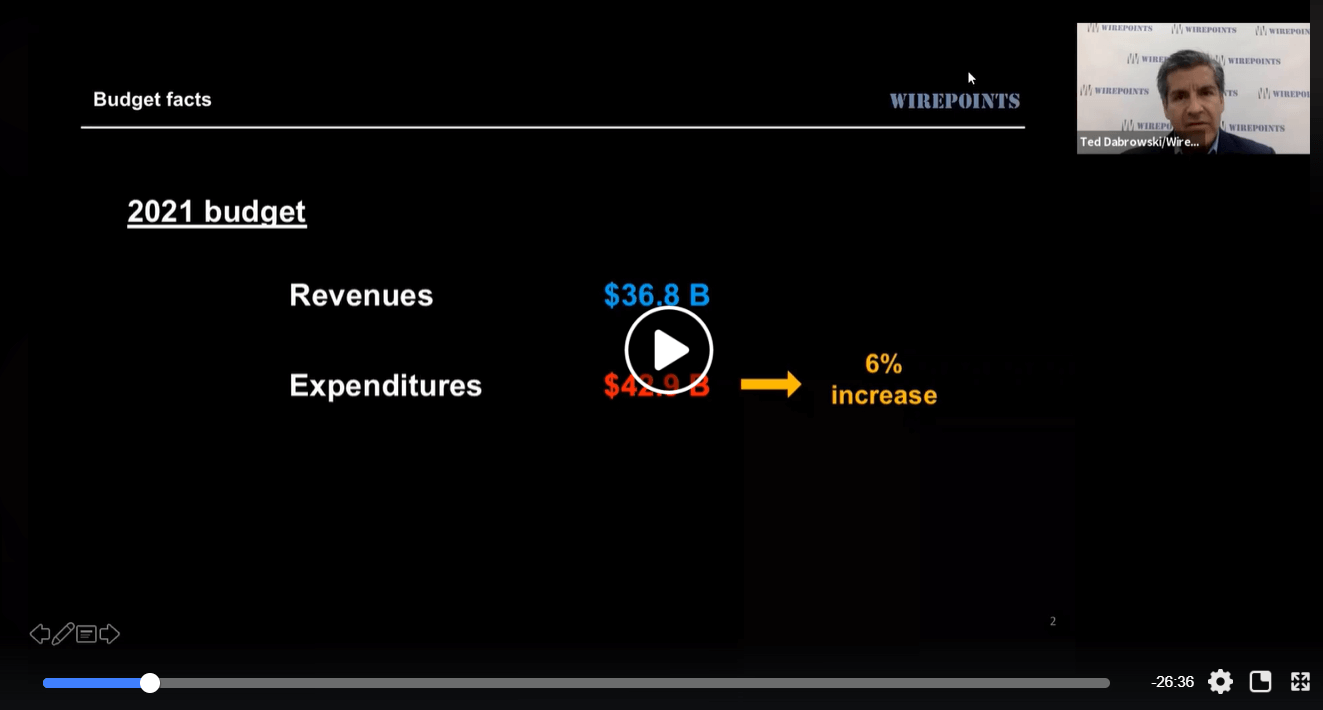
This is by far the most irresponsible budget ever passed by an Illinois legislature. It’s no wonder that the words bankruptcy and Illinois increasingly go hand-in-hand.
They mean what they say.

If you have any interest at all in Gov. J.B. Pritzker’s shutdown order, the video by Village of Orland Park Mayor Keith Pekau is a must-watch.

The bottom line is clear: The virus peaked even before Pritzker claimed the science and data had changed to say it would peak later. And that was just when Pritzker needed to build up his case for extending his stay-at-home order and his reopening plan, which has been rated the harshest in the nation, a plan that makes no sense on its face.

Justice of some form will only come if those in positions of influence and power who condoned and even encouraged violence start getting the blame they’ve earned. Remember their names. Hold them accountable. This is about moral depravity and they are culprits.
Illinois has abandoned hopes of affordably raising $1.2 billion from the bond market and has turned, instead, to a new Federal Reserve lending facility known as the Municipal Liquidity Facility. Illinois will be the first state to tap the Fed, which is meant to be a lender of last resort.
S&P Global Ratings just released its analysis of Illinois’ 2021 budget. When all their criticisms are highlighted, it’s a pretty scathing list.

Numbers, budgets, charts and graphs about government finances. That’s what we do here. We try to understand where public money should be spent and what it accomplishes.
Through that lens, it’s difficult to know where to begin on what has befallen the Chicago area and most of the country.
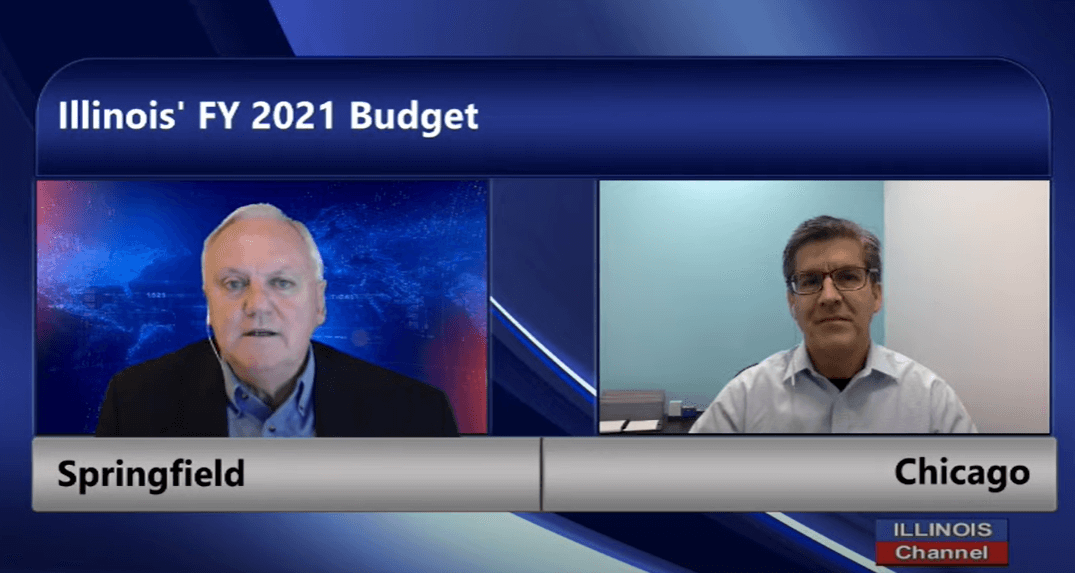
“You’ve got one million Illinoisans unemployed, nobody knows what’s happening with the economy, we’re only now starting to open up. And yet the government passed a record spending budget – the biggest ever – with no cuts, no furloughs, no kind of savings whatsoever to give relief to Illinoisans that have to pay for that government.”
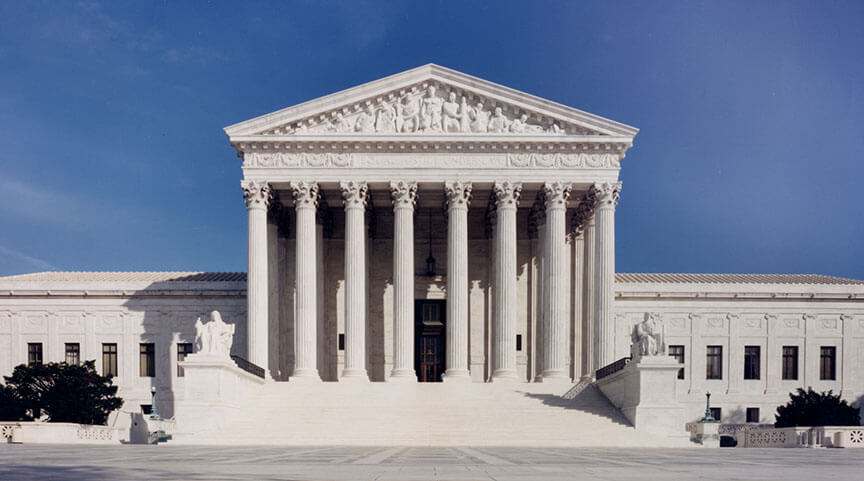
Was it because his “science and data” somehow changed? Or was it because he feared having his vast emergency powers challenged in the United States Supreme Court?
Two months and more than 800,000 lost jobs later, we now know which job sectors are the shutdown’s biggest losers. The least impacted sector in Illinois? State government.
And they need to start demanding answers.
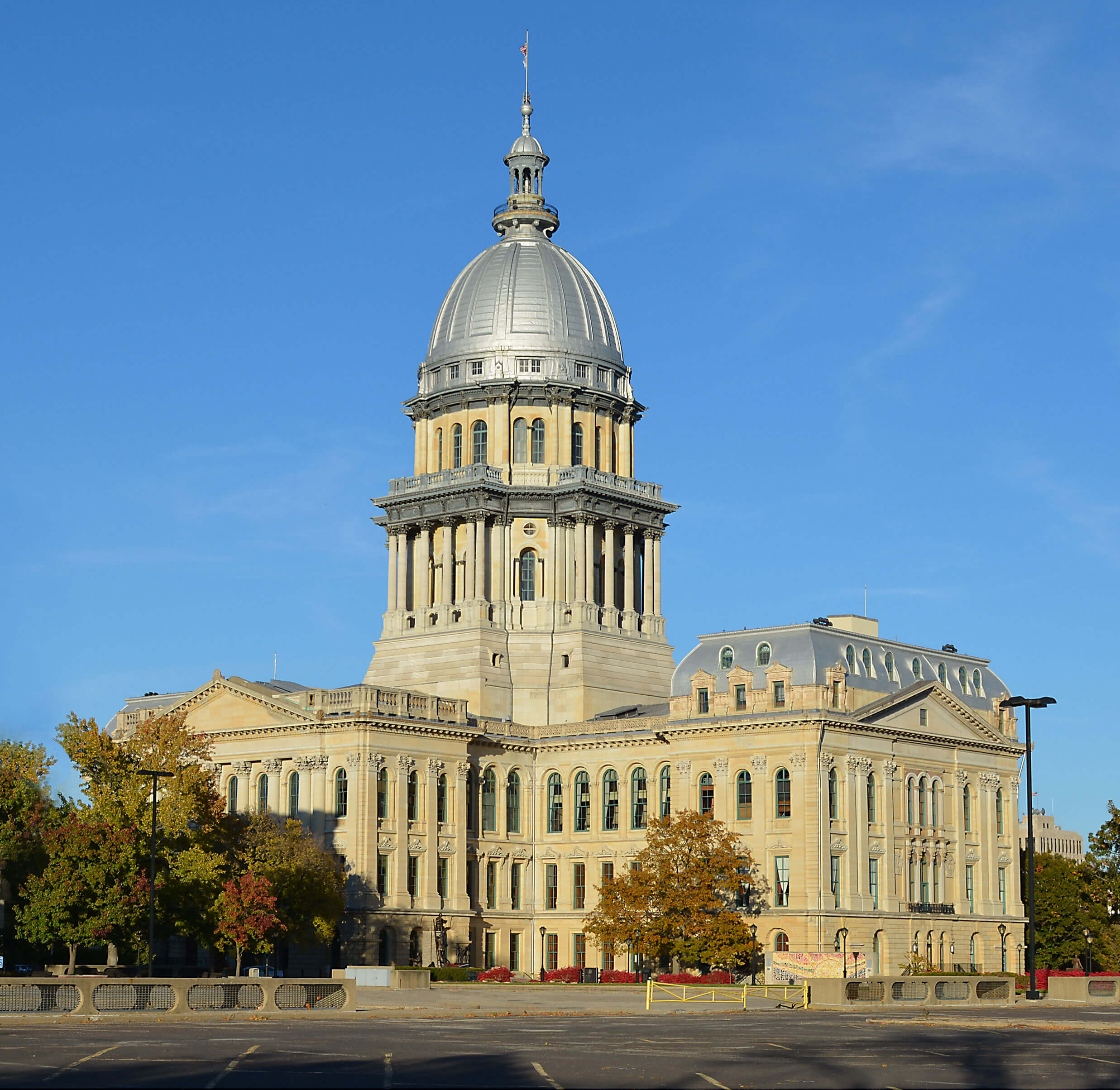
The Illinois General Assembly has finally passed an emergency budget for 2021 Tax revenues have taken a severe hit due to the impact of the shutdown in response to COVID-19, yet that hasn’t stopped lawmakers’ spending priorities. The state will spend a record $42.9 billion while bringing in just $36.8 billion.
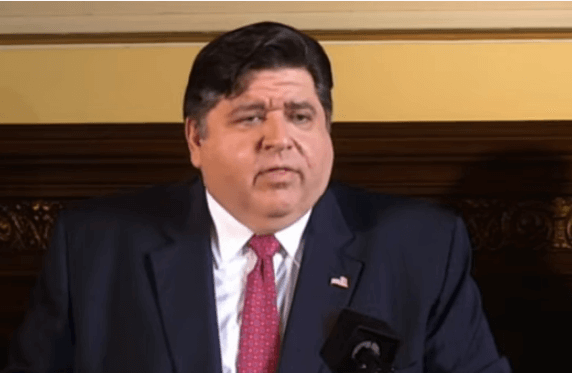
Pritzker is now out of touch — oblivious to the firestorm surrounding his order, disdainful of the rule of law and confident he can dismiss all critics as political grandstanders and much worse.
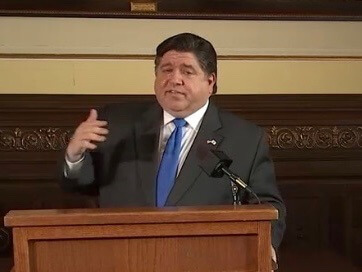
Everybody should back off on extreme comparisons.
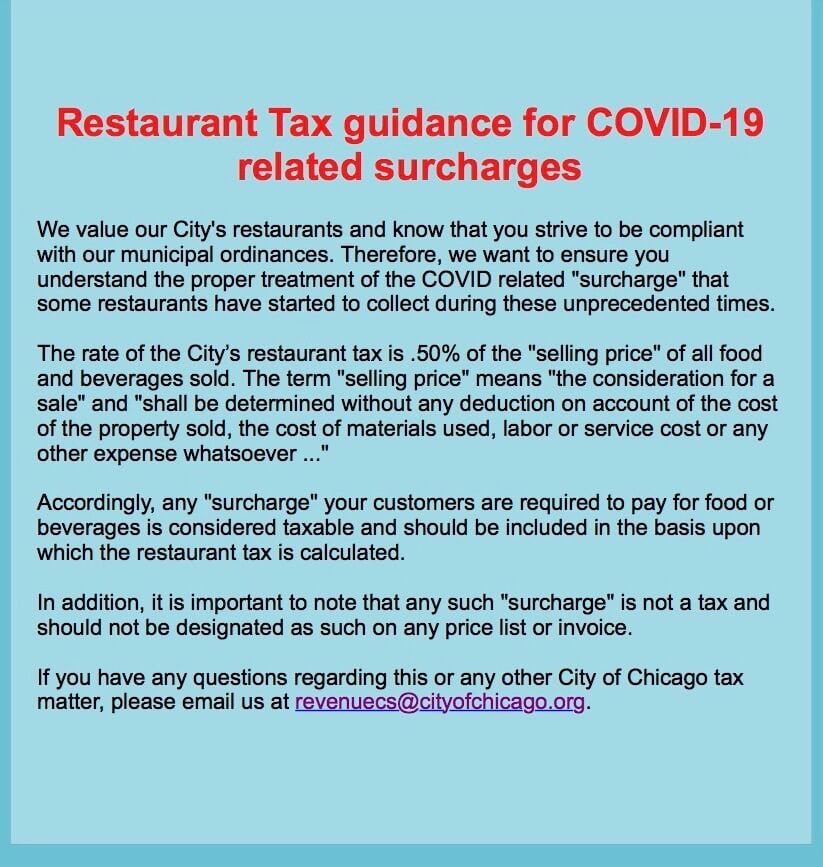
Cough up sales taxes on any surcharges.
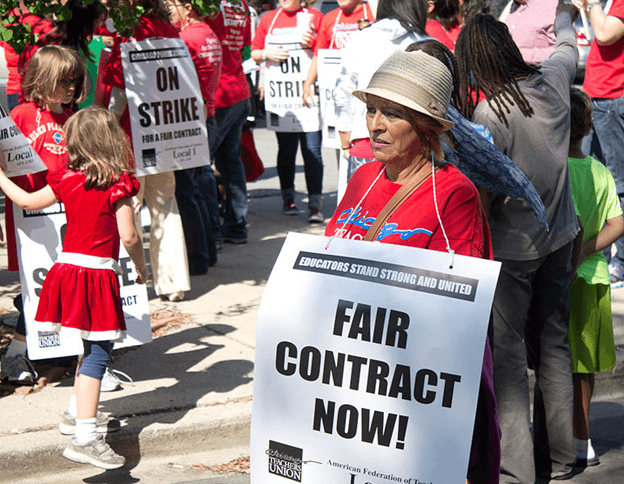
Public payrolls are getting slashed around the country to keep government more affordable for the devastated private sector, but not in Illinois. Quite the opposite. Pritzker and Lightfoot are doling out raises while saying Illinois’ financial problems can’t be solved without help from the federal government.
The number of patients hospitalized for COVID-19 in Illinois has dropped below 4,000 and is now lower than April 9.
A more classic straw man case could barely be made, nor a more shallow treatment of the opposition to Governor JB Pritzkers emergency COVID-19 order.

Illinois is worst on the list, ranking 51st among states and DC for least restrictive.

When this crisis is finally over, Illinoisans will look back at the failure to protect the vulnerable residents of retirement homes as one of the worst tragedies of the COVID-19 crisis. The fact that cases and deaths have been so widespread means there was a systemic failure in protecting the elderly.
“Something is happening here. People are waking up. Overwhelmingly people are indignant about this emergency rule. People are starting to understand the danger of the precedent that would be set here if indefinite powers, like Gov. Pritzker claims he has, are allowed to stand.”
To see how punitive borrowing has become for Illinois, look at the interest rates the state is paying on its 10-year bonds. At 5.65 percent, Illinois’ rate is now five times higher than the 1.13 percent rate it costs AAA-rated states to borrow.
A travesty on many levels. Just don’t call it a police state because cops around Illinois are standing up as civil libertarians.

The new rule effectively directs county state’s attorneys and other officials to enforce the governor’s emergency order, making violations punishable by fines up to $2500 and/or imprisonment.
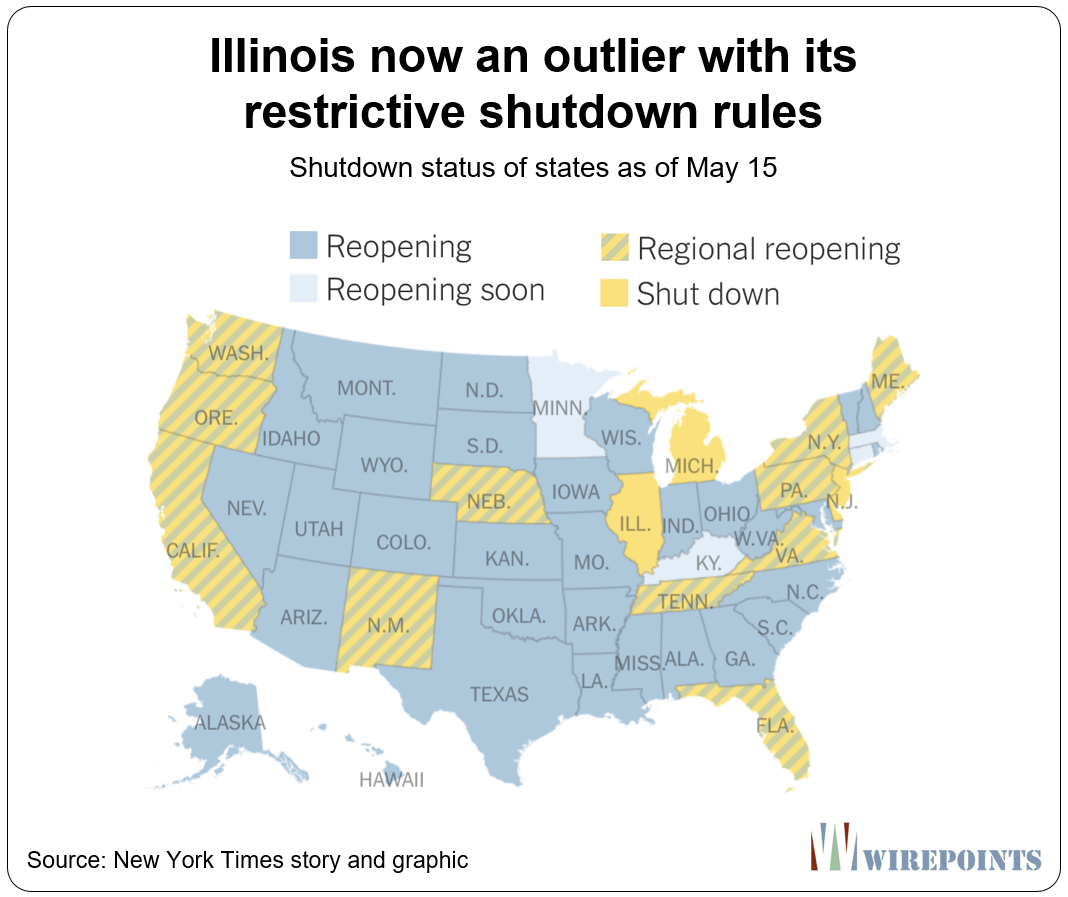
Thirty-one states are already reopening, while 11 other states are reopening on a regional basis. Six additional states – Connecticut, Kentucky, Massachusetts, Minnesota, New Mexico and Vermont – are set to reopen next week. Notably, Illinois was one of the first to shut down and it will be one of the last to reopen.

We’ve been trying to envision the meeting among Pritzker Administration officers and staff when they found that requirement in the paperwork.

Hoping that a “millennial-led militance” will use a depression to make palpable gains for the radical left.
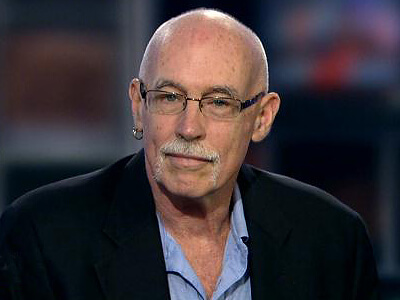
Greg Hinz has long been among the most prominent of Illinois’ reporters and commentators on Illinois government given his position as such at Crain’s Chicago Business.
Here are his two recent articles directed to us at Wirepoints. We reproduce them in full with no further comment, for now, except to highlight the portions pertaining to Wirepoints, and to ask our regular readers to consider in light of what we’ve actually written.
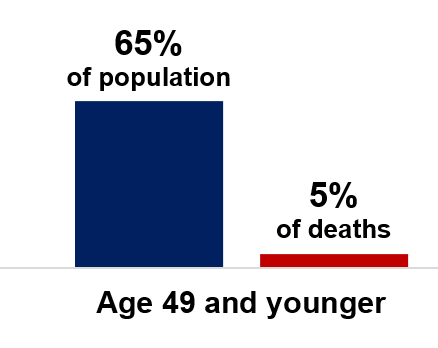
Not all Americans with one or more pre-existing conditions are at serious risk of death from COVID-19. Illinois’ fatality data shows that the virus has had a limited impact on younger demographics.
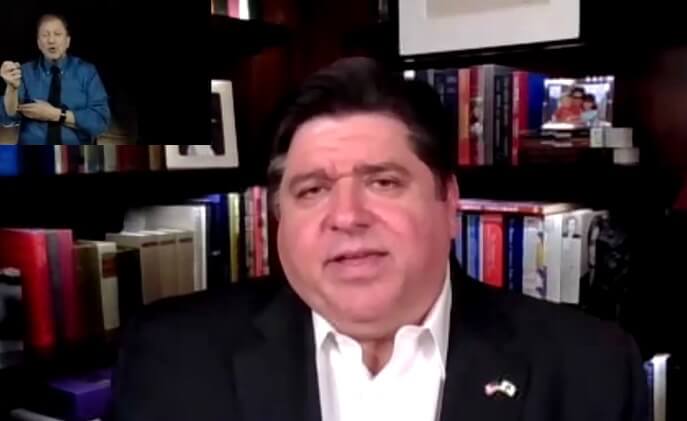
Nobody should be surprised. Pritzker is responding to dissent exactly as we should always fear when czarlike powers are challenged – with vengeance, claims to superior knowledge and assertion of still more power.
“Hey, Hostess company, my Twinkies cost too damn much. Tell us how much you are charging Jewel for them so I can judge if that’s fair.”
Ted talked about the impact of Illinois delaying its latest bond offering and the fact that nearly half of COVID-19 deaths in Illinois are linked to retirement homes. “As long as the market or federal government keeps bailing out Illinois, politicians can keep playing games. But when that stops, the choice is chaos or reforms.”

In all, half of Illinois’ COVID-19 deaths are linked to long-term care facilities, according to the Illinois Department of Public Health. That percentage has been rising since IDPH began posting retirement home deaths on April 19.
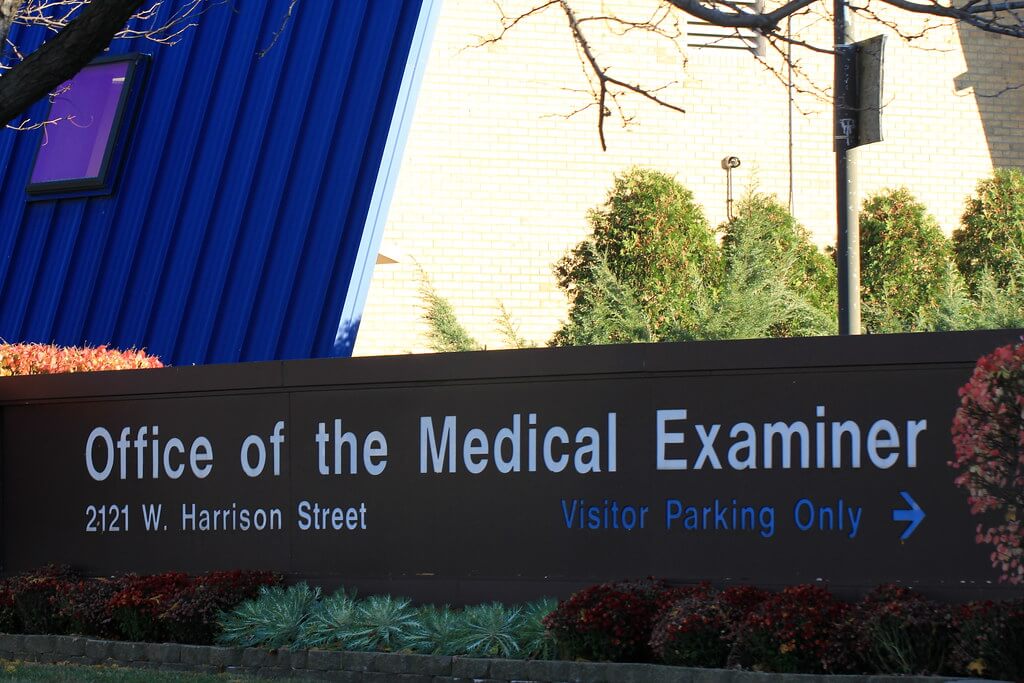
A Wirepoints analysis of COVID-19 deaths from the Cook County Medical Examiner’s office reveals that 92 percent of victims from the virus had pre-existing medical conditions.
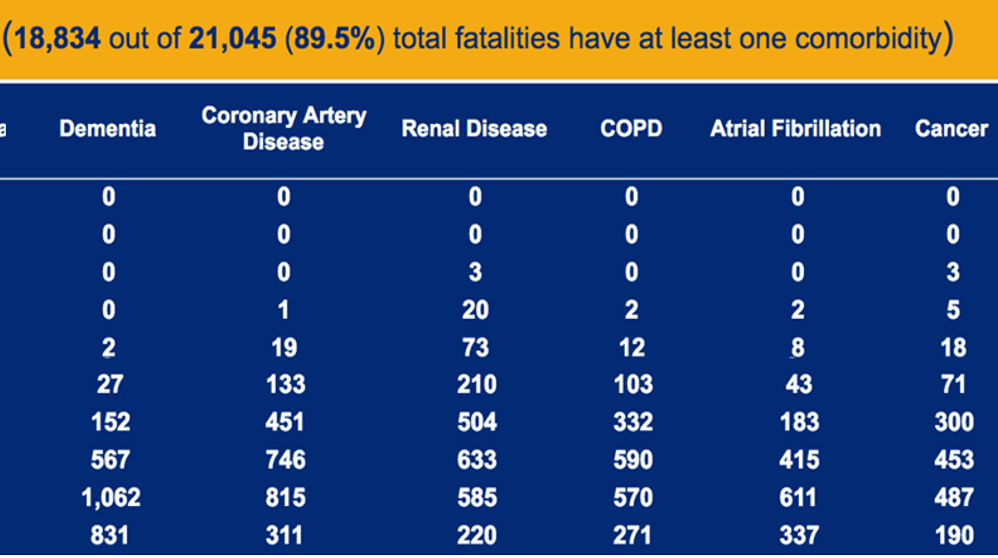
You’d think with more than 3,200 deaths, Illinois’ Department of Public Health would share how many of those deaths had underlying causes. It doesn’t. But it should.
One provider in Illinois is finding a stunning 60% of those tested have antibodies, which is potentially great news. Illinois never did have a good excuse for not collecting and publishing antibody testing. Now it has none.
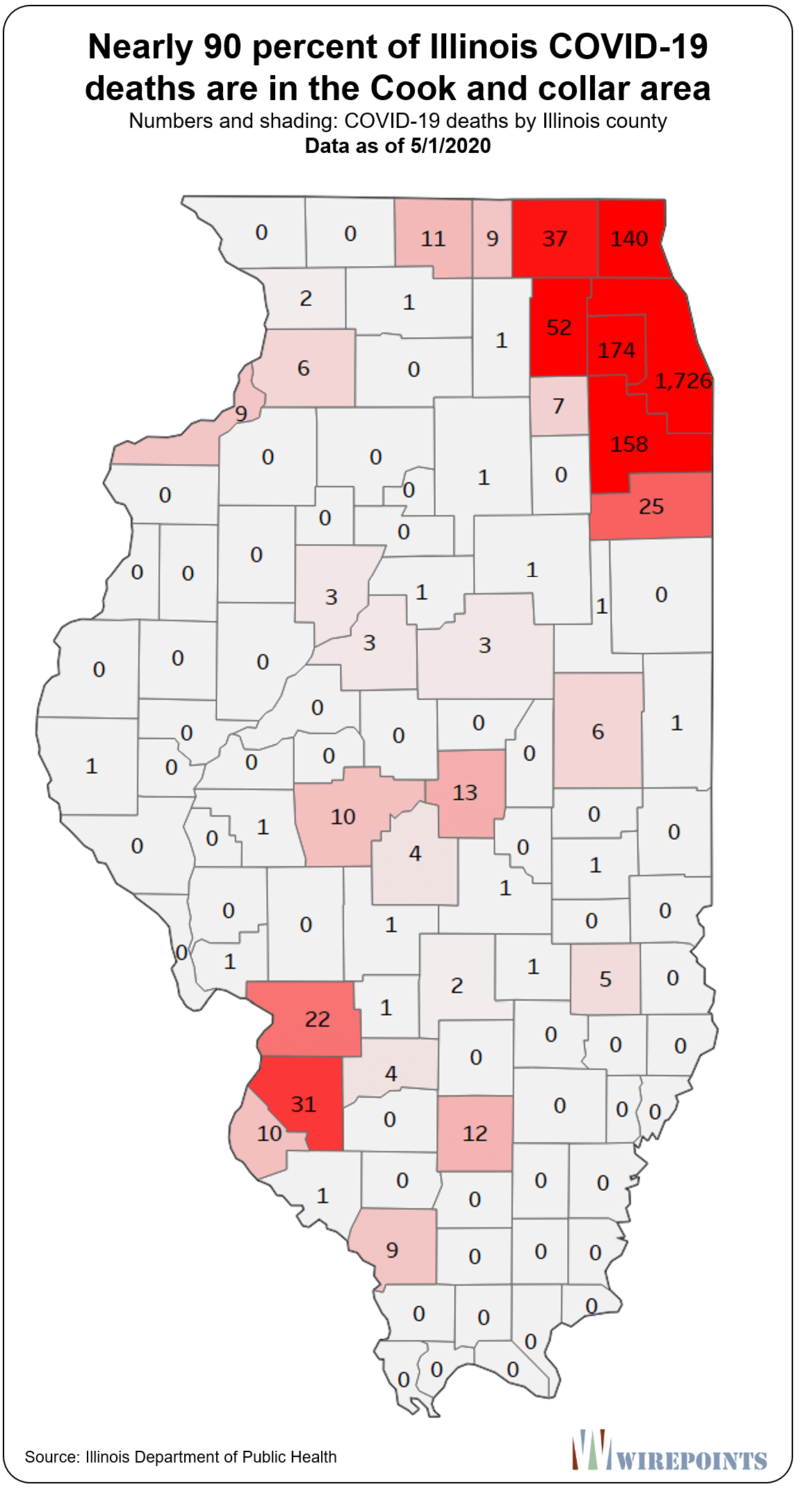
It only takes a glance at Illinois’ statewide COVID-19 data to realize what a big difference there is between Chicagoland and the rest of the state.
Imagine if somebody said, “I will translate for the English deficient audience.”

Extension of the plan’s logic would mean that countless activities we routinely engage in despite some level of risk should be banned until the risk is eliminated.
Illinois has postponed a planned $1.2 billion short-term bond issue. If Illinois can’t access the financial markets, it may eventually end up going to the Federal Reserve. Implications are twofold: it would increase the state’s borrowing costs further and signal Illinois’ further distress to the market.
Base revenues for the State of Illinois for April sank by 46% from compared to April of last year, a $2.7 billion drop.
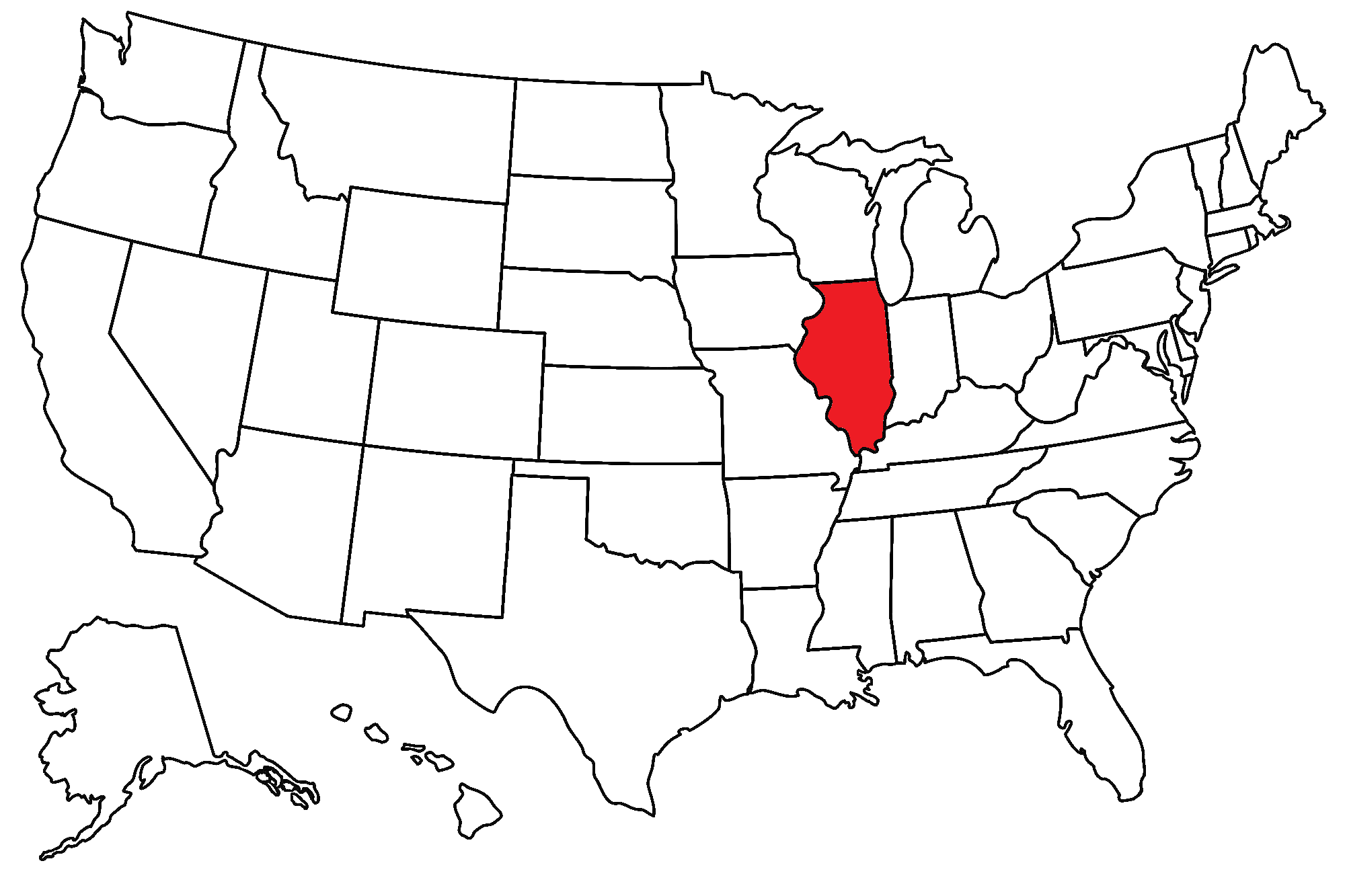
Illinois was in a mess long before the COVID-19 crisis came along. Now the shutdown will make things worse. Overall, Illinois’ true retirement costs would consume a bit less than 60 percent of the state’s budget after taking the shutdown into account.
Remember Governor JB Pritzker’s promises to end gerrymandering in Illinois? Maybe you were among the nearly 600,000 people who signed the petition to end it. Polls have long showed overwhelming, bipartisan support.
Well, forget it.

Pity us if the arguments made to defend Governor Pritzker’s emergency order are accepted and become precedent. From Cicero to Star Wars, the challenge remains the same.
Recessions and depressions kill. We don’t need models to know that, just past experience. It’s not a trivial concern to be dismissed out of hand. But dismiss is exactly what Crains’ Chicago columnist Greg Hinz did.
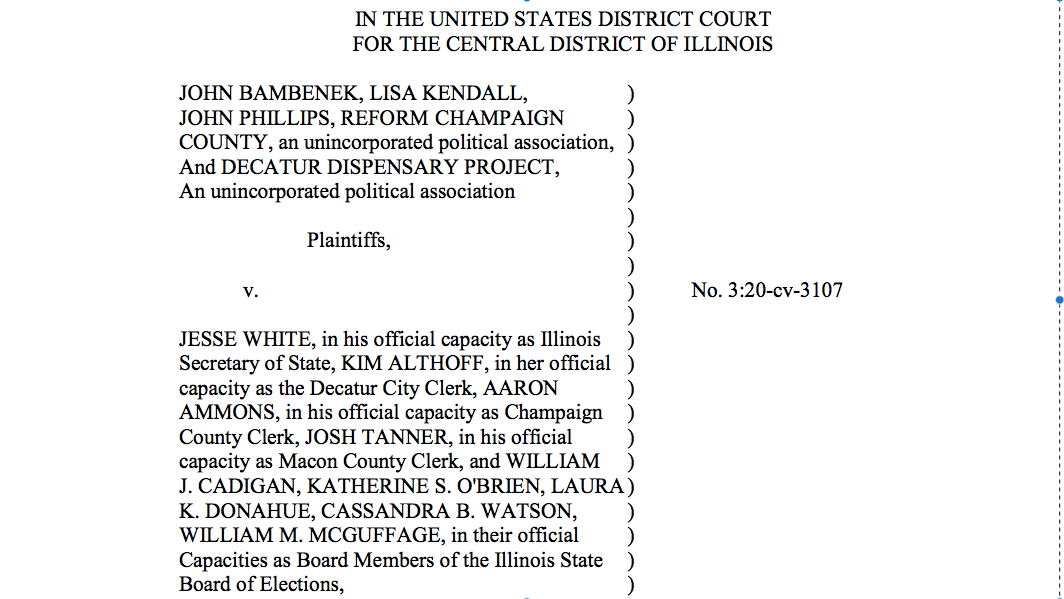
The plaintiffs caused their own problem, the answer basically says, because they were foolish enough to take Pritzker’s order seriously.
A teaching moment is at hand.
Mark was on the Steve Cortes Show this week discussing the various lawsuits that have sprung up challenging Pritzker’s stay-at-home order.
Ted was on with John Kass last week to discuss what bankruptcy could look like for Illinois and Chicago. Now that Illinois Senator President Don Harmon has breached the subject of a bailout and Senator Mitch McConnell opened up the possibility of bankruptcy, Illinois’ fiscal mismanagement is in the national spotlight.
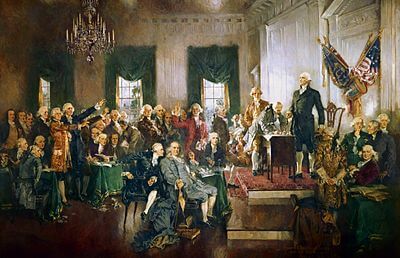
Governor JB Pritzker’s tirade against State Rep. Darren Bailey may be turn out to be as self-destructive as it was improper, encouraging more lawsuits including damage claims and assertions of personal liability.
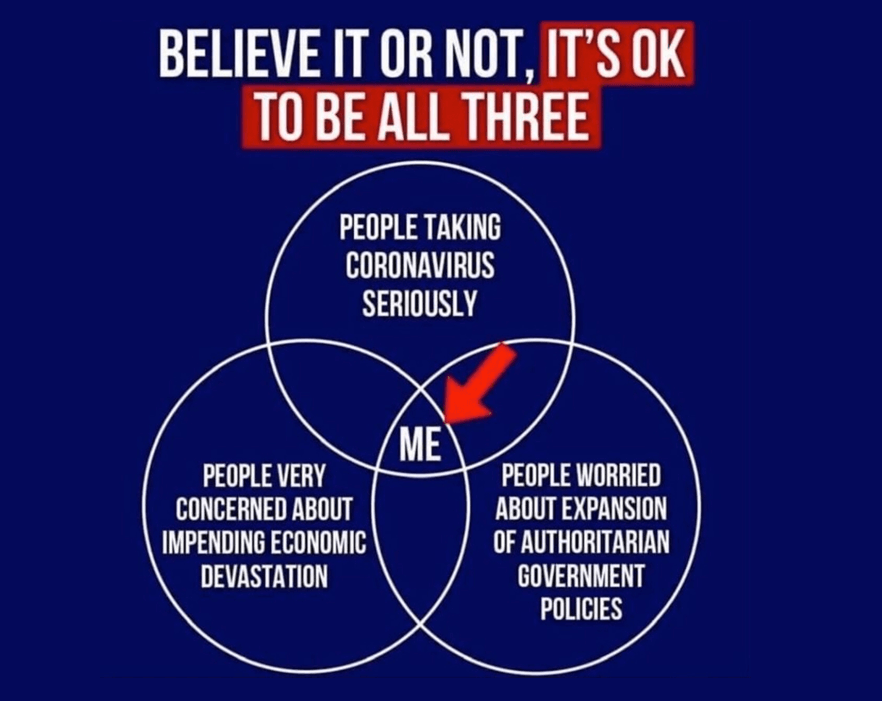
For many ordinary Illinoisans, fear over the killer virus is now morphing into a fear of survival without a job or income. The health data from the past month bolsters their desire to get back to work, while worsening economic data supports their urgency to do so.

The nation’s weakest public pension funds may soon be among the casualties of COVID-19. Many were facing insolvency even before the virus hit and the stock market meltdown will only accelerate their decline. In 2018, the most recent year with comparable nationwide data, some of those funds had assets equal to just a few years’ worth of benefit payouts.
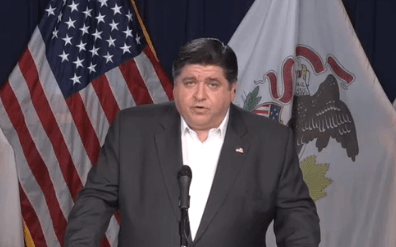
Illinois should be collecting and publishing antibody test results just as other states are. Scrubbing hands is good. But scrubbing key data is abuse of power.

Contracts can be adjusted when a crisis such as this makes full contract performance unreasonable. Where’s the “shared sacrifice?”

If you don’t think we are facing a severe economic depression, read up.

Chicago needs the A-Team, not this.
Ted was on this week with Tom Miller of Newsradio WJPF. He talked about how Illinois Senate Democrats have asked the federal government for what New York Times and others call a “bailout”. The response: “No, you can’t use the pandemic as a cover to try to get funding for previous problems.”

The “science” I suspect he is using is checking which way the wind is blowing.
Poverty kills. Recessions kill. Depressions kill tens of millions. Can we at least approach this rationally?

On Friday, Wirepoints published a letter from the Illinois Senate President to the Illinois Congressional delegation. The letter, sent on behalf of Illinois Senate Democrats, requested a large federal bailout of Illinois pensions and other shortfalls the state is facing. Here is response sent by Republican members of the Illinois Congressional delegation.
Here’s another chapter in the mess that is unfolding as the State of Illinois’ revenue collapses.

Wirepoints published a version of this article last year. We’ve updated it to reflect the new reality of the COVID-19 crisis.
Wirepoints has obtained a copy of letter detailing a federal bailout request sent by Illinois Senate President Don Harmon.

“In war and in all crises as swiftly moving as this pandemic, leaders acquire enormous latitude. There is no time for fact checks, court challenges, FOIA, legislative hearings, elections and all the rest. The opportunity for deceit, political manipulation of news and suppression of basic rights is at its apex. Vigilance in the watch over government, too, therefore must be at its apex.”
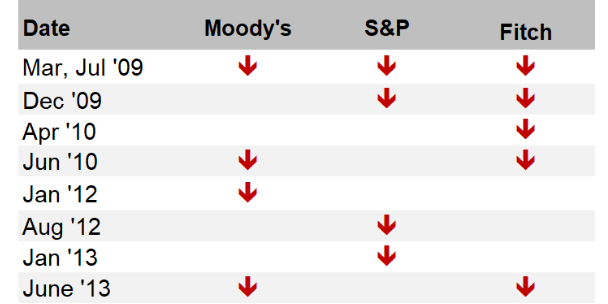
Fitch Ratings has downgraded Illinois’ credit rating to BBB-, one notch above junk, in response to the continued negative impact of the Coronavirus and Illinois’ already-tenuous financial position. It also assigned a negative outlook to the state, meaning another downgrade is likely as the pandemic continues.
The bond markets are already trading Illinois bonds as if they were junk rated. As deficits and pension debts pile up in Illinois, let’s see how long it takes for the rating agencies to catch up.

Many pension funds across Illinois were running out of cash even before the Coronavirus reared its ugly head. The proof is in the collapsing asset-to-payout ratios of most Illinois pensions. Illinois’ worst-off funds only had two to five year’s worth of payouts left in 2018.
“What’s the impact on the economy and the people in the economy? There may be up to 2 million Illinoisans unemployed. If the economy stays closed for too long, we can have more opioid deaths, more suicides, more mental health issues, more domestic violence, much more poverty…all these need to be weighed against the risks of the virus.”
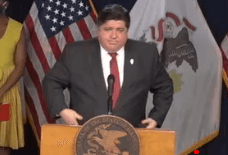
Pritzker has effectively been saying, “Just trust us. Never mind the numbers behind the curtain.” He has been stage managing the facts and data since the crisis started. These are not matters we should blindly entrust to any government.

IHME projections show Illinois has already passed its peak resource needs for hospital beds, ICU beds and ventilators. As the curve flattens and the economic damage grows, Pritzker won’t be able to keep shrugging off questions about the models and the data he’s using to make the state’s big health and economic decisions.

For more than a month now, Illinois’ public has largely been in the dark about the state health care system’s capacity to handle the Coronavirus crisis. The state finally began collecting and releasing hospitalization data on April 3rd.
Illinois Governor Pritzker has accused effectively accused the White House of nothing less than reckless homicide. California Governor Newsom has a different view and a different philosophy. Take your pick.
Without real time updates on current capacity and utilization, projections almost certainly will be wrong. Both the federal government and State of Illinois failed.
We expect Congress, especially the Senate, will say “cut spending, make reforms or drop dead.” Illinois is banking on a fairy tale.
It’s time for shared sacrifice in Illinois. It’s not fair for the private sector, which is getting crushed – up to 2 million Illinoisans may lose their jobs – to pay for a public sector that continues untouched, protected by long-term contracts and guaranteed pensions. It’s not fair to ordinary Illinoisans.
Illinois had just $4 million of rainy day funds before the Coronavirus hit. That was enough to cover just one hour’s worth of the state’s $40 billion operating budget.

Tony Duncan is just one of the millions of small business owners across America who will have to permanently close their doors if the shutdown continues much longer. As testing ramps up and COVID-19 data becomes more robust, the federal government and states must urgently begin to address both the public health and economic crises simultaneously.
Reporters, here are a few questions you should be asking and writing about.
Until April 3, Illinois failed to collect daily information critical to assessing and managing the COVID-19 crisis. It began doing so only under pressure, in which Wirepoints played no small role.
Now the state is bragging about the simple step it should have taken long ago, citing it as an example of its prowess in science and data, and using it for a political jab.
Join Wirepoints on Monday, April 6, 2020 at 12 p.m. for an online event hosted by Americans For Prosperity Illinois. Ted Dabrowski will take participants through the impacts of the Coronavirus on Illinois’ people, economy and government finances.
Illinois’ unemployment trust fund is one of the nation’s most insolvent. Pritzker says Illinois will have to borrow money from the federal government to help make payments to the 178,000 Illinoisans who applied for jobless benefits last week.
We cheered Lori Lightfoot for defeating The Machine, for her triumphs over personal hardship and for her genuine commitment to ethics reform, but she’s clearly incapable of dealing with this crisis. The notion that tax revenues crash when the economy crashes seems beyond her.
She has no concept of the scope of the crisis at hand.
An old friend of mine from my childhood years in Georgia just survived an ugly bout with Covid-19. He recently wrote about his experience with the virus and I want to share it with you. It’s a smart, inspiring piece that everyone should read.
Isn’t it time for reporters to start asking why Illinois doesn’t provide hospitalization numbers as other states do?
If you thought Illinois was already up to its neck in pension debts, just wait until the impact of the Coronavirus is tallied up. The state’s shortfall will jump to over $310 billion in 2020 if conditions hold through June.
Illinois either doesn’t have the most important numbers or isn’t providing them. Governor JB Pritzker, when asked for them last week, said his staff would be working on it over the weekend. We still don’t have them and there is no excuse.

Thank you to the Tribune for publishing.

From Wirepoints’ Ted Dabrowski and Mark Glennon, “Illinois is a perfect example of a state that shouldn’t be bailed out at the expense of fiscally responsible governments. Gov. J.B. Pritzker, the state legislature and Chicago Mayor Lightfoot all reject structural pension reforms that would fix Illinois’ problems.”
The first specific proposal we’ve seen would be a three-fer, piling wrong on top of wrong on top of wrong. It’s from the Rockefeller Institute’s Liz Farmer, published nationally and in Crain’s Chicago Business.
The Illinois Municipal League is angry, as they should be, about federal bailout money for Chicago as the only Illinois town or city to get federal aid.
ProPublica was right to ask for hospitalization numbers, and so were we.
The Coronavirus is a terrible crisis that threatens everyone, but the silver lining for many will be the clarity that only structural solutions can fix Illinois’ problems.
We need daily hospitalization numbers and we need them now, on both people currently in hospitals and those who have been released. There’s no excuse for not having them.
A revenue loss of $8 billion is a reasonable scenario – about 20% of the state budget – though it likely would be spread over several years.
You knew this was coming. Trying to use the crisis to bail out Illinois and Chicago for years of fiscal madness.
Illinois state and local governments have committed Illinois taxpayers essentially to holding harmless public sector workers from any loss. It’s immoral.
A month ago she brushed off the threat of the the coming health and financial crisis, claiming Chicago was fully prepared and the federal government was overreacting. Her latest message is that use of the term “Chinese virus” is false and racist.
Millions of Illinois taxpayers who have been laid off or had their pay cut will pay for public work but see no shared sacrifice.
Government can’t solve this crisis and we don’t know how long it will last. It’s up to us.
Ted was on the Illinois Channel last week speaking to Jeff Berkowitz about the impact of the coronavirus and the toll it’s taking on Illinois’ economy, government and people.
Is anybody even home at the office of the Chicago Treasurer?
“People want to be part of something larger than themselves. They want to be part of something they’re really proud of, that they’ll fight for, sacrifice for, that they trust.”
Crisis and necessity haven’t gotten action earlier, but maybe this time will be different.
Chicago’s economy, budget and residents are in for a nasty shock. Altogether, at least half of the city’s revenues will be exposed directly to the impact of the coronavirus. If those budget lines alone suffer a 20 percent decline for the year, that will add another $500 million hole in the budget.
Do they have the slightest understanding of the United States Constitution?
Ted discussed the impact of the Coronavirus on Illinois and Chicago’s budgets, the effect of the market crash on Illinois’ already crisis-level pension funds, and how these recent events make the push for a progressive tax all the more foolhardy.
Even if things return to normal well before the end of the year, a big hole probably will be blown in Illinois’ pending budget for 2021. And the deficit left for 2020 surely will be bigger than expected.
Nobody is certain about the severity and duration of the market impact of the Coronavirus and the same goes for its impact on pension assets. What’s clear, however, is that taxpayers are on the hook for whatever shortfalls occur.
Maria Pappas’ further comment on the Cook County’s 42 percent spike in delinquent property tax payments and the causes thereof, which she earlier said were “beyond human imagination.”
Referring to the 57,515 Cook County tax-delinquent property owners facing a May 8 scavenger tax sale, Pappas said, “That is exactly 17,000 more than last year” at this time.
Does it undermine the goal of maximizing returns? Yes, of course it does — by definition.
Aside from the math issue, they are apparently relying on Twitter for analysis.
And bravo to the Jacksonville Journal-Courier. They ignored Abudayyeh and let the article stand.
Everyone should reject Pritzker’s progressive tax. Not only are his rates not credible, but real home values in Illinois are falling. Residents are leaving in record numbers. Tax rates are already among the highest in the nation. And our politicians are the country’s most corrupt. A multi-billion dollar tax hike will make every one of those things worse.
Illinois has no financial reserves to weather a recession. The state had no plan to stop the state’s rapid fiscal decline even before the virus and it has no plans now. It’s impossible to know how the impact of the virus will play out and whether a recession is imminent or not. But one thing we do know. Illinoisans are totally exposed to the risks.
“The tree that does not bend in the wind is uprooted.”
Chicago’s Loop might be hot, but city politicians will want to look at two big cities down South to see what real job creation looks like. Austin and Nashville led the Wall Street Journal’s survey of the nation’s hottest job markets in 2020. Chicago, in contrast, ranked 45th.
After looking at the pain of those in Palos Heights and the refusal of Illinois politicians to fix anything, it’s no wonder some residents are looking for a fresh start.
It’s not just radicals who apply the rule: “The moment one gets into the area of $25 million and above, let alone a billion, the listener is completely out of touch, no longer really interested, because the figures have gone above his experience and almost are meaningless. Millions of Americans do not know how many million dollars make up a billion.”
Meanwhile, lawmakers fret about affordable housing. Go figure.
Sanders ahead with Bloomberg in second, though the poll was taken before Bloomberg’s disastrous debate performance.
A plain English explanation of why Pritzker is wrong about a state constitutional amendment for pension reform.
Pritzker’s 2021 budget accelerates Illinois’ downward slide by embracing the same policies that have driven Illinoisans out for years, while rejecting the structural reforms Illinois needs.
All attorneys general, including Illinois’ Kwame Raoul, should terminate the program and it cannot be allowed to become the norm.
“The budget that Governor Pritzker just delivered isn’t a budget for a nearly junk-rated state. It’s not a budget for a state that’s losing more people than every other place except New York. It’s not a budget for where home values are some of the lowest in the nation and not rising here like they are everywhere else. It’s not a budget for a state that has some of the highest taxes, and definitely the second highest property taxes in the nation.”
“Buying up law enforcement,” the Washington Times says.
If you’ve listened to Gov. J.B. Pritzker in the past few weeks, you’ve heard him play games with words. We called him out on it recently and now he’s doing it again. If the progressive tax fixes the budget deficit and delivers a tax cut, then there will be no money for property tax relief.
Certain things we expect he will say that you should treat skeptically or reject entirely.
Mark Glennon was on the Roe Conn Show talking about the mass annual exodus of people and their wealth from Illinois. The state’s growing pension crisis, constant political corruption and the crushing impact of property taxes have driven over a million people out of the state since 2000.
Illinois’ combined state and local pensioner debts have reached absurd levels. When divvied up between Illinois’ households, the “shadow mortgage” each one is on the hook for now totals hundreds of thousands of dollars per household, if not more, depending on who politicians target to repay those debts.
A summary of our recent series of stories taking a close look at what the IRS data say about Illinois — loss of taxpayers and income, which income groups are moving and how other states compare.
With Governor JB Pritzker’s annual budget address coming up next week, it’s a good time to step back and look at the big picture.
With Opportunity Zones, we got what looks like an attempt to reinforce the worst stereotypes of both parties – greedy Republicans handing a pointless tax break to the rich, and reality-challenged Democrats wasting money on a well-intentioned program for the poor likely to fail.
Is there anything in politics today that somebody somehow won’t tie to Trump?
“What we are seeing in global warming is the evaporation of our Great Lakes.” That was Illinois Senator Dick Durbin in 2013 when Lake Michigan was at a record low. You can find plenty of claims to the same effect from the time. Nobel Prize winner Al Gore chimed in around then, too, saying climate change caused evaporation, driving Great Lakes levels down.
Municipal gas taxes would pile on yet another layer on top of the state and federal gas taxes that already exist. The proposal comes less than a year after the state passed a record gas tax hike of 19 cents a gallon as part of the state’s massive $45 billion infrastructure plan.
At the rate Illinois is losing people, it wouldn’t take long at all for Pritzker’s progressive tax hike to bleed away Illinois’ million-plus earners. There just aren’t that many of them to begin with. And faced with a 60-percent tax increase, the chances are higher they’ll leave.
Illinois’ Total Primary Net Position worsened from negative $184.0 billion to negative $187.7 billion at June 30, 2019 according to an interim report recently released by Illinois Comptroller Susana Mendoza.
Illinoisans will want to pay attention to how Ohio recently responded to its state retirement debt crisis. There, the Ohio Public Employees Retirement System board (OPERS) voted to cut health-care benefits for its 500,000-plus members to ensure its retirement funds don’t collapse.
You may never have heard of it or even been harmed, but chances are good if you live in Illinois that you are a plaintiff in one of hundreds of class action lawsuits it has spawned.
We’re often told that Illinois is not losing its highly taxed residents. Don’t worry about lost income from the rich leaving, we’re supposed to believe. It’s just poorer folks fleeing. But that’s simply not true.
Brace yourselves to get snowed (but not literally).
C’mon, Governor. You either have it or you don’t. Give it to us or admit you had no reasonable basis for your claim.

Illinoisans’ pain from punishing property tax burdens has been building for decades. Property taxes per household in Illinois increased by 109 percent since 2000 and household incomes have failed to keep up, rising just 37 percent over the same time period.
It wasn’t the vision of a central planner in City Hall, Springfield or Washington. Minimal taxpayer money went into the effort.
With nothing to back him up, the governor is asking Illinoisans to simply ignore the reality they are living in – that taxes are too high, services are being crowded out, real home values continue to fall, and that residents are leaving at a record pace.
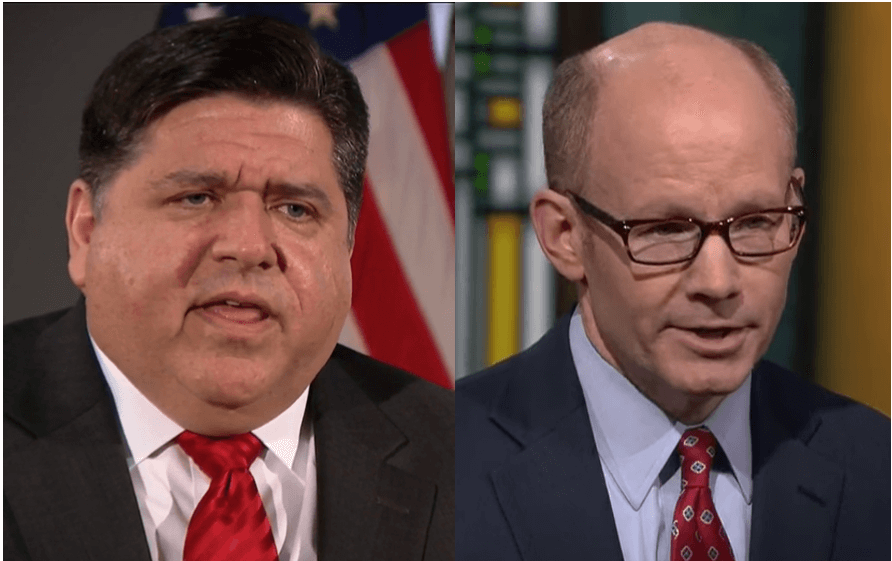
The progressive tax will reportedly bring in just $3.6 billion in new revenue, which would be swallowed immediately by the state’s billion-dollar budget deficit, pension costs and unpaid bills. That leaves nothing for property tax relief.
The latest in bipartisan baloney on Illinois pension buyouts.

At the rate Illinois is losing people, it wouldn’t take long at all for Pritzker’s progressive tax hike to bleed away Illinois’ million-plus earners. There just aren’t that many of them to begin with. And faced with a 60-percent tax increase, the chances are higher they’ll leave.
In a nutshell: Illinois spends far more than its neighbors on education and yet its politicians are committed to spending hundreds of millions of dollars more every year. All to achieve student outcomes that haven’t improved in a decade and are, in most cases, worse than in neighboring states.
The toddlin’ continued for now, but the music can’t go on forever.
The losers in Chicago’s bond scheme may end up being taxpayers, service recipients, public pensioners and everybody else except the muni bond community—bondholders, underwriters, bankers and lawyers.
WCIA Decatur used Wirepoints’ report to tell its story on Macon County’s loss of people. 93 counties in Illinois lost population between 2010 to 2018. Macon County suffered the 4th worst loss – over 6,000 people.
Survival of the Electoral College depends on how remaining states will vote on NPV and what the courts would do with it.
There’s a perfect demographic storm brewing in Illinois that threatens to take retirement security for government workers from bad to worse: Illinois’ boomer generation is hitting retirement age just as Illinoisans and their wealth are migrating out of the state at a record pace.
“Not knowing is foundational and fundamental to the entire design of the organization.”
Ted was on WJPF radio this week talking to Tom Miller about Illinois’ constant loss of people. “The people who are productive are leaving Illinois and going to places like Florida or Texas or Indiana…”
If you’re wondering how widespread Illinois’ problems really are, look at county populations: 93 of the state’s 103 counties have shrunk since 2010.
Dare I say that Susana Mendoza is not the person to be exercising moral authority on use of state resources to victimize taxpayers?
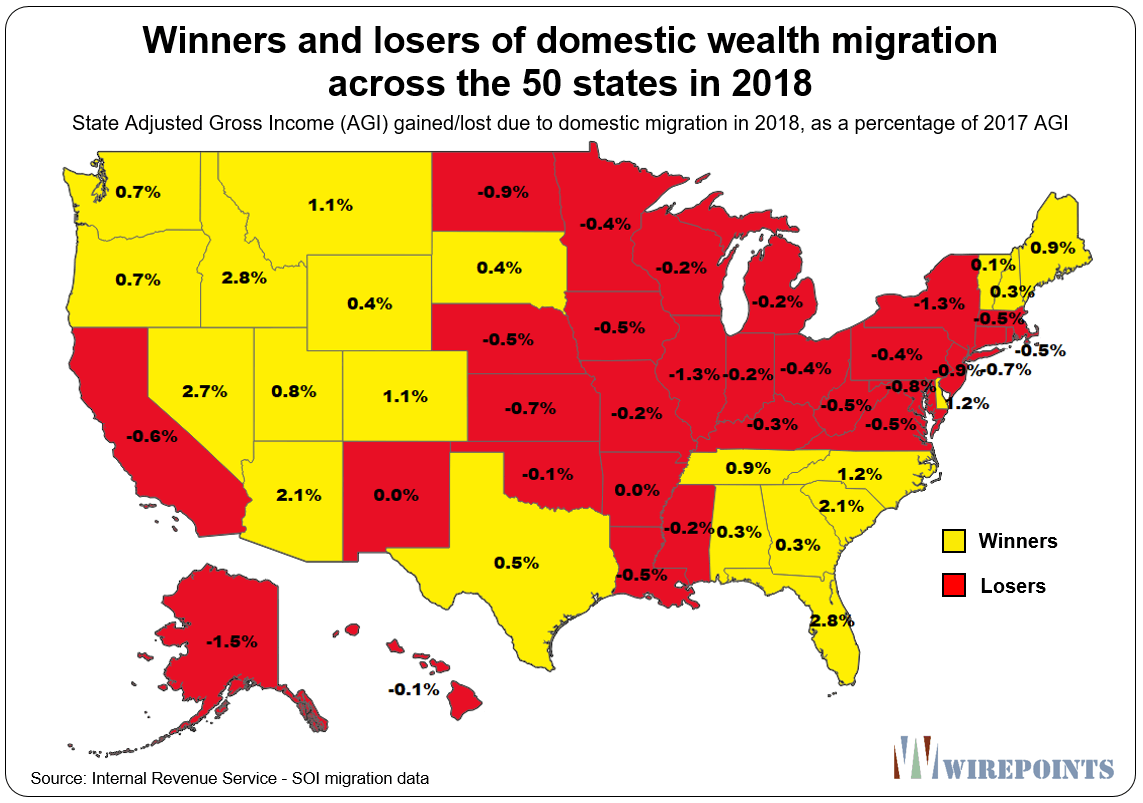
The winners of the battle for people and their incomes included states like South Carolina, Arizona, Texas and Florida. On the other end of the competition are states that have become perennial losers. Connecticut, New Jersey, Illinois and New York have experienced some of the nation’s biggest drain of people and their money.
It’s a hodgepodge of may-be-this-maybe-that non-conclusions and half-baked evasions from different subcommittees. It omits any quantification of the ideas it presents and offers no concrete recommendations whatsoever that can reasonably be expected to lower taxes meaningfully.
Ted was on the Illinois Channel last week taking a look at what happened to Illinois in 2019 and what the state needs to do to make 2020 a better year.
Would it be too much to ask why it’s late and when we can expect it? We’ve seen no answers from anybody.

Illinois’ new decade is starting off with the same bad news the state struggled with throughout the 2010s – the increasing flight of Illinoisans to other states. The IRS has just released new domestic migration data and it shows Illinoisans left the state in record numbers.
Instead of using Illinois’ first day of legalization to warn of marijuana’s undisputed dangers, she celebrated the event as if it were the end of prohibition of apple pie.
Let’s hope that by the end of this decade people of basic decency and common sense will have roared, giving future historians a different reason to call this decade, too, the Roaring Twenties.

2020 was a defining year for Wirepoints and the path is open for us to have an even bigger impact – with your support.
New U.S. Census data shows that Illinois’ population fell again in 2019, making this the sixth year in a row Illinois has shrunk.
You’d think a state struggling to keep its tax base from fleeing would avoid passing a law that has a lot of employers “panicking.”
Finding a law that reduces regulation and cuts costs within Illinois’ 255 new laws wasn’t easy. But I found one.
Do a quick scan of the 255 new laws taking effect in Illinois on January 1 and it won’t take you long to realize that Illinois pols have done nothing to fix the state’s broader mess. None of those laws stop Illinois’ deep fiscal dive and the record flight of its residents.
Pritzker was at one time one of the big donors to the fiscally conservative Concord Coalition and a supporter of the organization’s goals.
Pritzker does Illinois no favors when he declares that Wirepoints’ fiscal realism is nothing more than pessimism.
Chicago has iron ball strapped to its back far bigger than most other cities have to carry.
Imagine how ludicrous it would be if Sears announced a turnaround plan based on just one thing: price hikes. No operating reforms, no change in strategy, no improvement in products – just price hikes. Such a strategy might sound absurd, but it’s precisely the approach politicians are pushing in Illinois.
He might as well designate Lt. Frank Drebin of “The Naked Gun” as his spokesman. “Nothing to see here, move along,” Drebin said as the world exploded behind him. A central strategy based on changing the narrative just isn’t credible. It’s a transparent attempt to substitute political spin for sorely needed action.
Any meaningful property tax reduction, such as matching rates for neighboring states, would require reforms that our political establishment won’t consider.

Pensions get all the attention when it comes to Illinois’ collapsing finances. But there’s another government-worker benefit also wreaking fiscal havoc – free and heavily-subsidized health insurance for retired state workers, teachers and community college employees. Illinois owed more than $68 billion in retiree health benefits to state workers as of 2018.
Moody’s says 23 of the nation’s 25 largest cities are ready for a recession. Two aren’t: Detroit and Chicago.
Ted appeared on Chicago Tonight this week, saying Illinois has lagged far behind the rest of the country in getting people off of food stamps and that the new federal rules provide a good opportunity to get able-bodied Illinoisans back into the workplace.
It’s been nine years since the Great Recession. Stock markets are at all time highs. The national economy is booming. Minority unemployment is at record lows. Even Illinois is riding the nation’s coattails with a record low unemployment rate of 3.9 percent. If Illinois can’t help get single, childless, able-bodied Illinoisans back into meaningful work and off of food stamps now, then when?
Illinois spends blindly on what other nations and states increasingly protest, even violently.
Ted talked with Tom Miller of WJPF Radio about all the tax and fee hikes that were a part of the 2020 budget state budget and the massive $45 billion infrastructure bill. Some of those hikes have been in place since July, but even more are going to be imposed come January 1st of next year.
The Commission on Government Forecasting and Accountability’s special pension report released this week shows yet again how strong markets and ever-more taxpayer funds can’t fix the flaws in the state’s politician-run pension system.
Don’t be surprised if Chicago Mayor Lori Lightfoot ends up hiking property taxes multiple times during her term. That should scare Chicago homeowners. Chicago already sits at the bottom of the 20-city Case-Shiller Index – a leading measure of U.S. home prices – with only Cleveland and Detroit home values performing worse since 2000.
Hey kids, want extra time on college entrance exams and tests in school? Just get an “accommodation.” It’s easy. But a rude shock awaits students and parents who’ve cheated or exploited the gray areas of disability. Our schools are enabling them.
My parents were just two of the many immigrants attracted to Illinois decades ago. I’m thankful for the opportunity they got, even though life for them was never easy. The ups and downs were many and real. But Illinois was the place where with deep faith and a strong work ethic, anyone could grit it out.
The Illinois Treasurer is boasting about success of Illinois’ new retirement program. His numbers actually show it’s a failure.
Alabama is attracting many Illinoisans because parts of the state are booming in jobs, investment and population. More than 29,000 Illinoisans have moved to Alabama since 2010, according to U.S. Census data. In contrast, just 15,000 Alabamans moved to Illinois over that same time period. Illinois was the 2nd-highest net supplier of residents to Alabama over the period.
Pritzker should have added something else to what he thinks isn’t politically feasible in Illinois: honesty.
The argument that “nothing is going to happen in Illinois until things blow up” got a major boost this week. Pritzker once again rejected calls to put a pension amendment on the ballot in 2020.
In concept, the asset consolidation bill is a good idea. But the legislation went from good to bad when lawmakers added unrelated benefit changes into the law. They stuffed piecemeal changes to Tier 2 into the bill and voted to pass it without any public analysis and little debate.
Politicians are once again doing pension reform on the cheap – stuffing piecemeal changes in an unrelated bill with no numbers and no debate. If Tier 2 is changed, it should be part of a dedicated pension reform bill that fixes all the funds at once, not snuck in as part of unrelated legislation.
Despite a tripling in the value of the S&P 500 index since July 2009, Illinois’ pension shortfall has worsened by 75 percent during the same period. The warning this trend provides is stark: if pension debts in Illinois continue to grow during a period of remarkable stock market returns, imagine how those funds will fare when the next recession inevitably hits.
CPS says enrollment fell by another 6,000 students in 2019. How can Mayor Lightfoot and CPS grant the CTU what the mayor calls the “most generous contract” in the union’s history when the school district continues to shrink?
Preliminary reports from Illinois’ state actuaries show the state’s pension shortfall worsened to a record $137 billion in 2019. The data also shows the state’s total pension costs in 2019 exceeded $10 billion, the first time in state history.
Illinoisans outside Chicago may be laughing at the city’s reckless new contract with its teachers, but the real joke is on them.
Now that the strike is over, the cost of the contract is finally being tallied and it totals at least $1.5 billion over five years – money the junk-rated CPS simply doesn’t have. It’s the most costly teachers contract in CTU history.
Ted was on NBC 5 talking to Mary Ann Ahern about the consequences of the teachers strike. He warned Chicagoans that the contract that Mayor Lightfoot and the CTU agreed to will only accelerate Chicago’s decline towards insolvency.
If you can’t follow this economist’s reasoning, it’s not you.
We’re here to talk about the city’s 2020 budget, but I’d argue that’s the wrong way to look at this crisis. By focusing on-one year budgets, it’s like we’re treating an intensive care patient with aspirin. Chicago’s problems are far larger than a one-year deficit. Its problems are multi-year, multi-government and structural.
Ted was on the Illinois Channel discussing the origins of Chicago’s broken 2020 budget.
When it was finally time to retire, Don and Paula decided “to come home.” In 2016, they left sunny Florida for a place in Poplar Grove, Illinois, just outside of Rockford. Now, three years later, they’re experiencing buyer’s regret. Not because of the weather, but because they don’t know if they can afford to stay in Illinois.
Despite national embarrassment from an initial incident earlier this month, many Oak Parkers are doubling down. They seem intent on making their town a national showcase for the manic intolerance of diversity of opinion into which identity politics have devolved.
Governor, this is a good time to remember that you, your wife and brother-in-law are still under federal criminal investigation for that residential property tax appeal based on toilets removed so the property would be deemed uninhabitable. Should the state boycott all the companies you’re invested in?
Teachers in Chicago don’t get Social Security. They don’t pay into the fund and they don’t get the benefits. But what the CTU won’t tell you is that the average retired Chicago teacher gets far more in annual benefits than the average Chicago private sector worker gets under Social Security.
Chicago Mayor Lori Lightfoot has released her 2020 budget. Like her predecessors, she’s chosen to focus on plugging a one-year budget deficit largely with a one-off deal and a number of tax hikes. And also like her predecessors, she’s failed to attack the real sources of Chicago’s slide toward insolvency.
According to migration data from the IRS, people of every sort are already leaving Illinois. Old and young, rich and poor, it doesn’t matter. Illinois has been a net loser of people to out-migration in every age and income group.
Ted appeared on Chicago Tonight to discuss the problems with Mayor Lori Lightfoot’s upcoming 2020 budget proposal. He said that most pundits and politicians only talk about the taxes they say she’ll need to close the city’s $838 million budget gap. None of them are defending ordinary Chicagoans from more unaffordable hikes.
Teacher pensions have not been a point of discussion during the recent Chicago Teachers Union strike, though they should be. After all, it’s pensions that are threatening the solvency of both the City of Chicago and Chicago Public Schools.
$200 million of savings to be booked in the first year on $1.3 billion bond refinancing in a highly controversial form.
What they cannot accomplish legislatively or at the ballot box they seek to implement by holding students hostage.

Wirepoints’ Mark Glennon: The biggest risk of the new plan is that it might pave the way for full consolidation of local pensions, with the state assuming liability. That would eliminate the key benefit of municipal bankruptcy, which is the power to adjust pensions, and authorization of municipal bankruptcy is probably inevitable.
Do what Michigan did for Detroit schools. It’s called “reconstitution” and it’s a regular process in the private sector, often called “oldco/newco.”
Ted appeared on the Illinois Channel TV to talk about the Chicago teachers strike. He told Illinoisans what they need to know: that all Chicagoans will lose no matter how the strike is resolved, that taxes will continue to go up, that property values will continue to stagnate, and that people will continue to leave the city.
Chicago teachers are striking for the third time in seven years. Here are 13 reasons why the strike spells trouble for Chicago. Point one? The simple fact is that Chicagoans can’t afford either the CTU’s demands or Lightfoot’s offer.
Ted was on The Chicago Way with John Kass talking about the Chicago teachers contract fight and what it means for ordinary Chicagoans. Chicago politicians are to blame for the Chicago Teachers Union’s militancy. When the CTU leadership throws a tantrum, politicians don’t stand firm. Instead, they appease and enable the union.
What gives the Chicago Teachers Union the power to strike – or threaten to strike – every time they don’t like a new contract proposal? One of the answers lies in the state’s collective bargaining rules. They are among the most anti-taxpayer labor laws in the country.
This week on WTAD, Ted talked all about the release of Gov. J.B. Pritzker’s state economic development plan and his pension consolidation task force’s recommendations. He said “if you can make 1-2 percent more on your investments, you should do it. But don’t call it a monumental action. It doesn’t fix the pension problem, it doesn’t get rid of all those 650 pension funds. It doesn’t free cities from overbearing state control.”
A Gov. J.B. Pritzker task force has recommended that the state’s 650 local public safety pension funds consolidate their assets into two funds solely for investment purposes. It’s a good idea. But will it be “a momentous achievement in state history?” Hardly.
The renewables industry knows who to use.
Though Illinois’ wealthy make up a relatively small share of the people lost to out-migration, they’re responsible for the largest share of income lost to other states. Illinois suffered a net $4.87 billion loss in AGI in 2016. More than 50 percent of that came from losing people who made $200,000 or more.
Few things are as easy to debunk than the claim that the Fair Tax would materially reduce property taxes.
The report also includes discussion of Illinois’ comparatively low consumer debt level.
If you were holding out for Chicago Mayor Lori Lightfoot to finally show her fiscal reform credentials, give up now. The new labor contract she’s offered to the Chicago Teachers’ Union will bring the district and the city another step closer to bankruptcy.
First, it was the trustees of the East St. Louis firefighter pension fund that asked the Illinois Comptroller to intercept city funds on its behalf. Now, it’s the police pension fund’s turn.
The discussion is returning and this time it will be informed and rational, if Friday’s New York Times article is an indication.
Eighty-five percent of Chicagoans are in favored categories getting preference in city contracting. The remaining 15% — white males with no disability — are effectively disfavored.
Peoria is no Harvey or East St. Louis, but it’s certainly in a downward spiral. Officials are adding new taxes and fees to deal with the city’s struggling budget and pension crisis. Their efforts to tax more are likely to be futile. The numbers justify those doubts.
Will Illinois cities be forced to choose between making pension payments and ensuring the safety of their citizens? That was the question Quaid asked Ted on the WTAD News Round Table.
Harvey was the first domino to run afoul of Illinois’ pension intercept law. North Chicago was the second. Now it’s East St. Louis’ turn.
Moody’s Investors Service has updated its state-by-state pension liability report and if there’s one key takeaway, it’s that Illinois is the nation’s extreme outlier when it comes to pension shortfalls.
In a recent talk at Chicago’s City Club, Senator Steans managed to endorse most every piece of double talk, gimmickry and evasion of responsibility we’ve seen on pensions from the Illinois General Assembly.
Improvement, finally! That’s no doubt how many Illinoisans reacted to news about Illinois’ latest audited financial statements. Take a closer look, however, to get a major lesson on how misinformation about our financial crisis is spread.
Illinois homeowners: Is your city’s housing market is in danger of “turning ugly?” Peoria, Aurora, Elgin, Decatur, Joliet, Rockford, Champaign, Plainfield and Naperville are all in serious risk of trouble should a downturn occur.
Calling us “fringe” indicates more about the perspective of Illinois’ political establishment than it says about us.
The State of Illinois recently reported its biggest annual financial loss ever. Instead of clear reporting on that, we’ve seen perhaps the most glaring example yet of how the state’s finances can be misunderstood, misreported and intentionally distorted.
Ted was on with John Kass earlier this week discussing what Mayor Lightfoots’ state of the city speech and what she should do to fix Chicago’s problems.
Illinois’ finances aren’t just decaying at the top, they’re falling apart everywhere. Of the 630 downstate police and fire pension funds that reported data to the Illinois Department of Insurance in 2017, 57 percent had funded ratios lower than 60 percent.
Marbury vs. Madison be damned.
Ted talked to Dan and Amy about the scope of Chicago’s financial crisis and what Mayor Lightfoot should be doing about it. Chicagoans are burdened with more debt than they can ever pay and the only way to reduce that burden is through structural pension reform.

If reports of Lightfoot’s plans are true – that she wants to increase taxes and push debts off further into the future – then it’s clear she doesn’t intend to fix Chicago’s problems. If she did, she would instead push for an amendment to the Illinois Constitution’s pension protection clause and take a hard line on contract negotiations.
Experts on Chicago’s budget challenges are available for interviews to discuss Mayor Lightfoot’s first budget address.
To many of us, some things seem obvious. When you’re so broke that your survival is threatened you don’t raise pay. You don’t keep facilities open that are half full. You don’t provide lavish retirement benefits. You expect employees to contribute to their own retirement.
We think that way because we live in an alternate universe.
Failure to deliver essential service marks a milestone with statewide implications. It exposes just how long Illinois officeholders are willing to ignore the state’s fiscal crisis, and it has important legal implications as well.
Why exactly doesn’t Illinois’ political establishment recognize that only drastic policy changes will reverse the population outflow crippling the state?
The problem with Illinois’ chronic outflows is that one year’s losses don’t only affect the tax base the year they leave, but they also hurt all subsequent years. The losses pile up on top of each other, year after year, damaging the state’s tax base.
Thank you to our tipster for making this a national story and to teachers who know the difference between right and wrong.
The world’s collapsing interest rates have made survival that much harder for Illinois’ pension funds.
An interesting debate has arisen on one particular aspect of the proceeding now pending in an Illinois court to invalidate certain state bonds.
Illinois is an extreme outlier nationally when it comes to losing people to other states through domestic out-migration. Unsurprisingly, it’s also an outlier when it comes to losing the incomes those people take with them.
The Kenilworth Village Board may have voted for a TIF over the objection of its residents, but opponents of the TIF shouldn’t assume all is lost.
Residents old and young, rich and poor are are leaving Illinois for warm states and cold states, big states and small states. And they’re taking their taxable income with them, shrinking Illinois’ tax base.
Michigan has had the most successful recovery among the manufacturing states in the Midwest. In contrast, Illinois has had the worst recovery: over 88,000 manufacturing jobs are still missing.
Those who write that a constitutional amendment to Illinois’ pension protection clause are spreading a false, public union talking point.
Only in Illinois does a surprise increase in tax revenues and more pension debt equal “stability” for a state’s finances.
Politicians obviously don’t care about how much damage they’ve already inflicted on Illinoisans property values. A review of median home values across the nation found that Illinois ranked 45th in median home value growth between 2005 and 2017.
You’d think this came from a parody site, but it didn’t.
Illinois’ 2020 budget is an unbalanced mess. What does that mean for ordinary Illinoisans? Come and listen to Wirepoints President Ted Dabrowski speak on July 31st at Americans For Prosperity in Rolling Meadows to hear the answer.
Common sense says Illinois is a high tax state once all state and local taxes are added up. Analyses from a Chicago Fed economist to the Tax Foundation to personal-finance firm WalletHub all back that fact up.
Raise property taxes for affordable housing. The madness never ends.
Just three weeks ago, Lightfoot was demanding a state taxpayer bailout of her city’s nearly bankrupt pension funds. Now she’s offered the Chicago Teachers’ Union a five-year contract that will cost taxpayers $325 million.
New research by Pew Charitable Trusts shows that the disparity between well-funded public pension systems and those that are fiscally strained has never been greater.
On the central issue important to Illinoisans – what the constitutional limits on state borrowing really are – bring it on. Let’s hear it.
“They haven’t had to figure it out because you voters haven’t figured it out. Wake up. Tell Pritzker and Lightfoot that pretty much every financial reform you’ve heard about must be effectuated immediately.”
Some of the arrows flying out of the massive federal corruption investigation centered in Chicago are now pointed in a new direction.
Kenilworth has no business creating a TIF, but it’s an effective way for officials to evade residents’ wishes.
If the assembly’s wage freezes are reversed, state lawmakers could get years of back pay. In total, the additional back pay could cost taxpayers $13 million and much more in future pension costs.
This eblast is a follow up to Wirepoint’s previous piece: Only in Illinois: Ultra-rich communities like Kenilworth want TIFs.
Ted talked with Tom Miller of WJPF Radio about Gov. Pritzker’s rejection of Mayor Lightfoot’s proposal for the state to take over Chicago’s pension debt. Ted says there’s some good news to take from that. It means state and Chicago politicians are running out of ways to kick the can on the pension crisis.
The June report for state revenue is out, which also provides totals for the 2019 fiscal year that ended June 30. Comparing this June to last June, total tax receipts from all sources were up 4.3%. Personal income tax receipts increased a welcome 6.2%, though corporate income tax receipts dropped 7.1%. Sales tax receipts increased by 5.6%. For the year as a whole, total tax receipts increased nicely by 8.5%. Personal income tax receipts increased by 8.8%%, and corporate income tax receipts were up 16.1%. Sales tax receipts increased by 7.8%. All that equates to a total tax revenue gain

Just keep doing what we’ve been doing, wrote Amanda Kass in a new op-ed.
In no sane world does AAA-rated Kenilworth need a TIF to redevelop its business area. But if Kenilworth can get away with creating a TIF anyway, then every community in the New Trier area can justify having one, too. That would have serious fiscal consequences for the funding of school districts and other governments down the line.
That’s $1.3 million for every mile from here to the Moon.
It didn’t take long for new Chicago Mayor Lori Lightfoot to propose a plan that would wash her hands of Chicago’s pension crisis altogether. Lightfoot wants the state to take over Chicago’s pension debts and merge them with the other pension plans throughout the state.
Expect the doubling of Illinois gas taxes to anger Illinoisans this summer. Before the hike, Illinois’ combined gas taxes ranked 21st in the nation. After taking into account the 19 cent tax hike, Illinoisans will pay the 3rd-highest tax on gas.
Widely published nonsense about pensions never ends.
State Rep. Will Guzzardi wants the government to pay off his and all other student loans debts. What he’s really asking is for taxpayers to pay for universities’ bloated administrations and outrageously compensated bureaucrats. Even the Senate Democratic Caucus agrees that Illinois higher education needs reform.
The total amount of city, county and state retirement debt Chicagoans are on the hook for is $150 billion. That’s nearly $145,000 per household. Most can’t afford to pay that debt. If politicians put the burden only households earning $200,000 or more, those Chicagoans will be on the hook for more than $2 million in government retirement debts each.
Unprecedented and brazen political discrimination. If you don’t like it, tough.
Our pension hole is already impossibly deep, but it deepens every day thanks, in part, to shameless dishonesty spread by public unions.
Ted told WJPF all about how much retirement debt Illinois households are really on the hook for: downstate households owe $75,000 and Chicago households owe nearly $150,000. Those are impossible numbers for Illinoisans to pay.
The Sun-Times Editorial Board has recommended several reform ideas to Mayor Lightfoot. Unfortunately, the Sun-Times ignores the elephant in the room – structural pension reform. There’s no fixing Chicago’s problems until pension costs are addressed.
Taxes get a lot of the blame for the exodus of Illinoisans, but for many, it’s just the sheer lack of opportunity that drives them away. That was the case for Tanya Wellmaker, a beautician who left Collinsville, Illinois for Sandy Springs, Georgia.

“Fully funded pensions” and “balanced budget.” They’re probably the most perniciously deceitful phrases used by Illinois politicians. If they were true, we’d have no fiscal crisis. The false narrative those phrases perpetuate is central to how Illinoisans allowed the state to snore into deep insolvency.
Ted explained to Quaid of WTAD why Gov. Pritzker’s claim of a “balanced” 2020 budget is bunk. Lawmakers are only contributing what they want, not what the state’s actuaries say is the responsible amount.
Pritzker’s new contract with AFSCME made it into the budget, and now Illinoisans are learning more about where their new tax dollars are going – to multi-year, guaranteed raises and potentially pensionable stipends for state workers who are already some of the highest paid government workers in the nation.

What’s clear is that, contrary to persistent claims by public unions, the Contract Clause does not spell doom for addressing our pension crisis through a constitutional amendment. Rhode Island indicates it would work.
Gov. J.B. Pritzker says Illinois’ budget is balanced ”for the first time in decades.” That’s the claim he made upon signing Illinois’ $40 billion budget for 2020. Pritzker’s claim is simply not true. According to the state’s own actuarial calculations, his budget is billions in the red.
Ted was on the Chicago Way last week with John Kass discussing what the state’s $40 billion budget and $45 billion capital bill mean for ordinary Illinoisans. Hint: It’s about to get a lot more expensive to live, and especially drive, here.
Whatever proponents might say, TIFs don’t provide “free money” for development, nor are their benefits guaranteed.
Unexpectedly tucked away in Illinois’ $40 billion 2020 budget was another giveaway to the state’s teachers unions. School districts are once again more free to spike end-of-career teacher salaries and pass-on the resulting pension costs to state taxpayers.
Illinois’ “historic” legislative session was enough to keep the state’s credit rating stable, but it did nothing to move Illinois away from the cliff of a first-ever junk rating for a state.
April may have been an aberration.
The most “consequential” legislative session in Illinois history, many are saying. Let’s hope it’s consequential for Durkin.
A spending binge so massive, prepared by proven incompetents and dumped on the General Assembly along with thousands of pages of other budget and spending matters inevitably will be loaded with pork and waste.
No matter what budget politicians might pass this time, it’s going to be a sham anyway. Passing yet another budget with more spending, more deficits and no reforms is not an accomplishment.
Younger teachers be damned. We have a bigger priority: More pension spiking.
The last minute blitz of horrible legislation is on.
Politico Illinois described the House vote as “Pritzker’s big win.” The better way to describe it is “big trouble” for Illinois’ middle class. But you wouldn’t know that from what tax hike proponents say. Their rhetoric about protecting the middle class falls short once you look at the math behind the tax.
On May 17, the Illinois Municipal Retirement Fund Board voted to give itself the ability to override the decisions of local townships on pension eligibility for elected officials, stripping another element of local control from Illinois governments.
“You will drop all your demands and accept what we offer. If you so much as blink, we will start from scratch with a new school district and run it as it must be. The old school district will be gone, you with it.”
Take a look at the long list of new taxes on the table for Joe and Mary Six-Pack to pay.
Expect the Chicago Teachers Union to try to bully new mayor Lori Lightfoot as teacher contract negotiations heat up. The problem is, Lightfoot has nothing to give. Windy City residents simply can’t afford the union’s new over-the-top demands, so Lightfoot must stand up to the CTU.
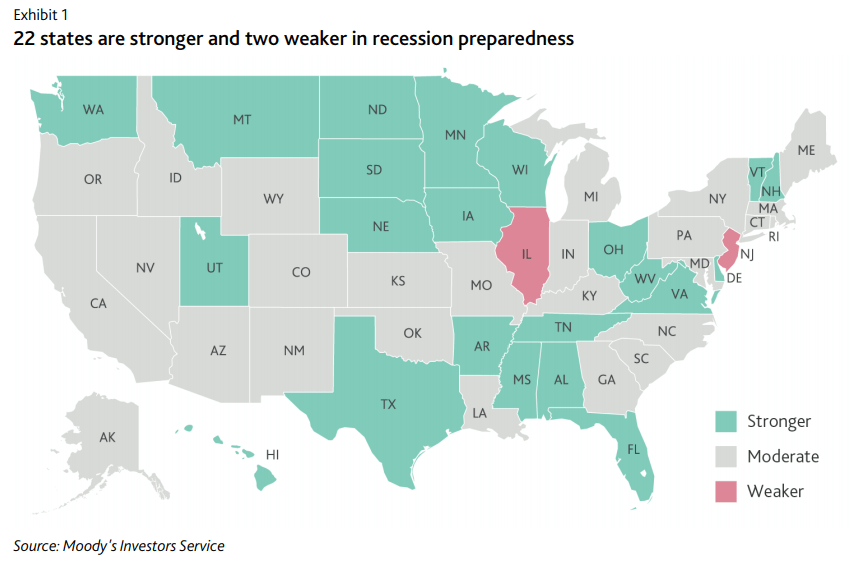
Illinoisans have another reason to worry about their future – their state government is unprepared for the next recession. That means when the national economy finally slows, Illinoisans will get hit far harder than residents nationally.
Using a windfall revenue bump in a budget that’s already phony solves nothing and misleads the public in the same ways they’ve always been misled.
Fewer young people could mean a shrinking population and a workforce too small to support the country’s ever-growing number of retirees. If that’s a problem nationally, then it’s a full-on crisis in Illinois.
In Park Ridge, and across Illinois, property values still haven’t recovered from the effects of the Great Recession. Yet local officials continue to tax more and more, especially to pay for schools and local pensions.
Average Illinois home prices are still 12 percent below their pre-Great Recession peak. That’s the 7th-worst recovery in the nation. In contrast, the average home prices in all of Illinois neighbors have surpassed their pre-recession peaks.
What’s worse than an unfunded mandate? An unfunded mandate worsening existing problems.
Look for lawmakers to paint Moody’s recent report on Illinois’ proposed progressive tax scheme as a positive endorsement. But the agency’s requirements for a credit “positive” outcome for the tax are nearly impossible for Illinois to achieve. And if lawmakers fail to meet the agency’s requirements, the tax could even lead to more downgrades.
The folks so fond of saying Illinois has a revenue problem not a spending problem want you to think the new progressive tax would be the end of it.
Warren Buffett says he wouldn’t relocate a business to a state like Illinois. He doesn’t want to get stuck paying for its pension crisis. His concerns are actually an understatement considering just how bad Illinois’ crisis is.
The ingredients are lined in the remaining four weeks of this legislative session to cook up a particularly nasty dish.
Nice to see at least some in the education establishment acknowledging something we’ve long said.
It won’t take long for most Illinoisans to see through this.
Who would have the gall to introduce such a bill? Why, that would be a leading Machine politician — one who happens to have a big tax appeal practice – Rep. Robert Martwick.
Many of Chicagoland’s elite know exactly how to pass the property-tax buck. For decades they’ve been using their powerful connections to cut their property tax bills, pushing the costs onto other unsuspecting residents. And that’s left many lower-income homeowners footing ever-larger tax bills.
Embracing essential reforms would be the true miracle.
William F. Sharpe is a Nobel Prize-winning economist at Stanford University. He has long been critical of the phony way public pension numbers are reported, hiding the scope of their problems. (See our earlier article linked here about what he and another Nobel economist have said.) Here are two short, simple videos he posted on the subject. The first is particularly timely because it’s about pension obligation bonds, which Illinois Governor JB Pritzker has proposed using. That’s when the government borrows money to pay down its pension debt: The second is about pension reporting in general: –Mark Glennon is founder
Reform opponents say it’s a waste of time to pursue a constitutional amendment. They’re wrong.
If you look at Chicago’s collapsing demographics and consider how they’re threatening the solvency of the city’s government-run pensions, you can’t help but call it a Ponzi scheme.
Some New Trier Township residents were stunned to see the assessed value of their homes jump by as much as 40, 60 or even 100 percent this year.
Also see our related article linked here on the “town hall” meeting discussed herein.
Might as well have said, “If you have any questions about Illinois’ budget and pension crisis, buzz off and talk to the union guy.”
The campaign for the Fair Tax – a graduated income tax in Illinois – is being made so dishonestly that a detailed look is in order.
Ted was on Fired Up with Mike Flannery last week debating Pritzker’s progressive tax rates with two progressive tax supporters. Ted’s message was simple, “Anyone who thinks tax hikes are the solution to Illinois’ problems are just flat out wrong.”
In yet one more snub to Illinoisans, state politicians are ready to go on another borrowing binge.
Illinois politicians may carry on in their alternate universe, but the national press is waking up.
Places like Harvey in Chicago’s south suburbs no longer function for the residents that live there. Many blame local corruption and the nation’s manufacturing woes as the cause. They contributed, but the real problem is the failed public policies the state has imposed – the same ones that are hurting municipalities across the state.
The renewable energy industry needs to get its story straight.
But defenders of our pension system a the little guys’ champions, right?
Rahm Emanuel caved to the Chicago Teachers Union early on in his first term. He was never the same after that. That’s a lesson incoming Mayor Lori Lightfoot should heed. She needs to give as good as she gets from the union. Wirepoints has several facts about CPS that should help her during negotiations.
The manner in which it dismissed the case was exceptionally irresponsible, imperious and cowardly.
Under new Associated Press guidelines, reporters should forget what it calls euphemisms like racially charged, racially divisive and racially tinged, and just say racism or racist.
If you’re an ordinary Illinoisan, you may be tempted to support Gov. Pritzker’s plan to change Illinois’ flat tax structure to a progressive one. He’s promising to lower your taxes if you’ll support the switch. You should reject his offer. Simply put, the governor’s progressive tax numbers aren’t credible, nor is his offer of tax breaks for the middle class. Illinoisans might think they’ll get a deal, but in reality, they’re setting themselves up to take a hit.
Talking about the Jussie Smollett scandal and having broader discussions about racial and identity politics in Chicago is important, but it’s distracting from an even more pressing problem: The Windy City’s impossible financial math.
Yes, Chicago Teachers Union, whatever you’d like.
Then again, maybe we’re better off if he says in hiding.
By not formally recusing herself, Foxx circumvented the law that probably would have taken the case out of her office’s hands.
There’s nothing in the U.S. Census migration data to tell us what exactly Illinois’ neighbors have done to improve their migration demographics. But whatever it is, their numbers have become better over time, especially compared to Illinois.
Ted talked with Tom Miller on Newsradio WJPF all about Illinois’ demographic collapse earlier this week.
Another signal to residents that “they’re coming for your money,” as Warren Buffett recently said about Illinois and other states with severe pension crises.
Teachers: JB, don’t you dare kick our pension can.

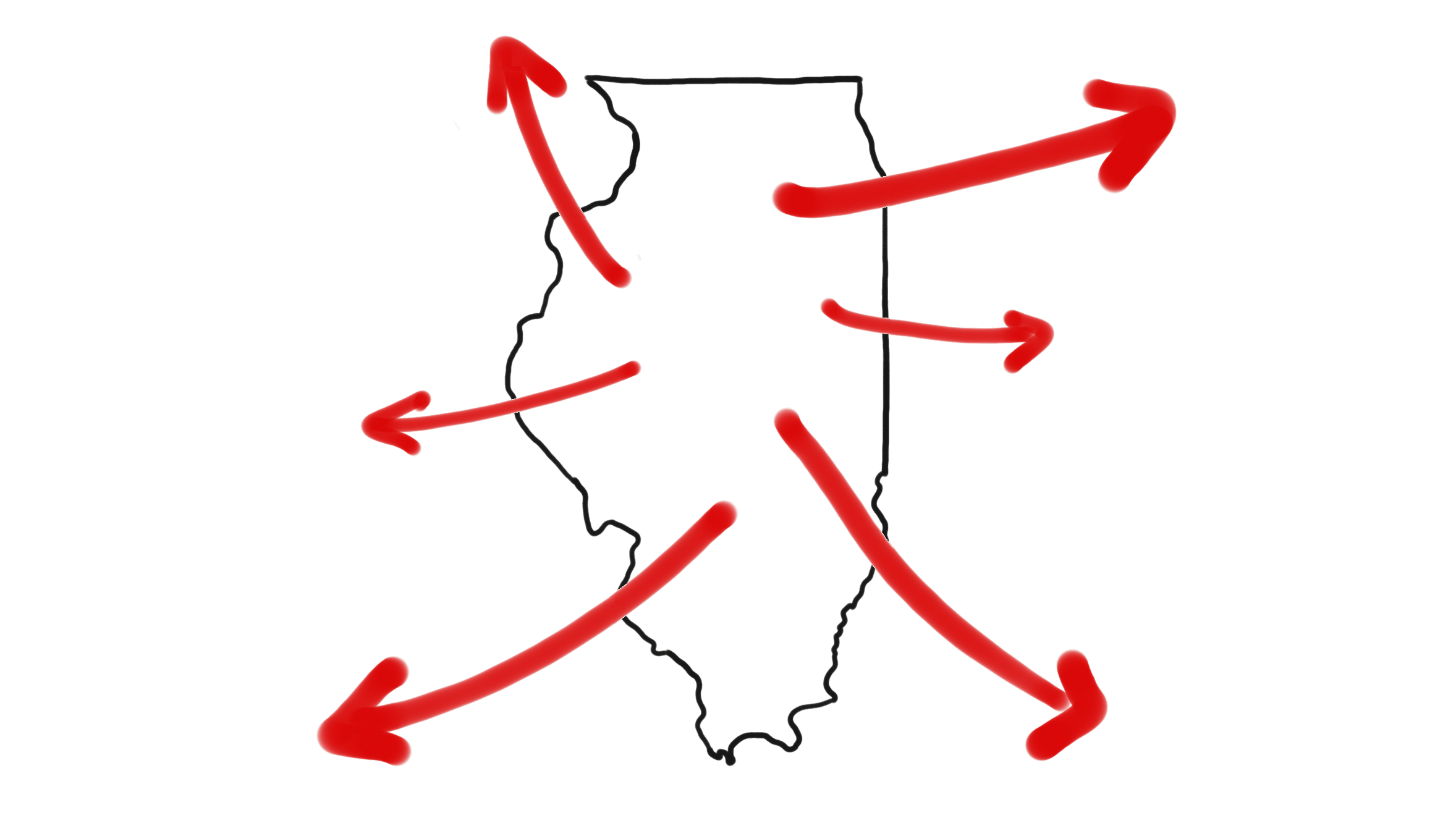 Illinoisans are leaving in record numbers. Fewer people want to come here. Our birth rate is down significantly, as millennials are also fleeing. Even international immigration has dropped by half. All of the state’s woes are captured in one sad statistic: Illinois is shrinking.
This article is a more detailed version of our Crain’s Chicago Business article on the Illinois bill.
An extended interview on Illinois’ state and local fiscal crisis.
Don’t be surprised if Illinois politicians say they want to pursue yet another bad borrowing idea in the near future. This time the excuse won’t be to pay off pensions. Instead, it will be for health insurance benefits owed to government retirees.
A report released this week by Cook Country Treasurer Maria Pappas isn’t getting the attention it deserves in the regular press.
If they have an excuse for this, none is apparent, and we can’t think of one.
A splendid chance to remedy a monumental educational failure.
Oh, the places Illinois’ wealthy will go. Under the governor’s new plan, everyone with incomes above $250,000 will get hit with tax rates of 7.75 percent or more. That’s higher than the top tax rates in 44 other states.
Maine Township, located in Chicago’s northwest suburbs, has agreed to give property owners a $1.25 million tax break. That’s thanks to the efforts of two trustees who fought to prove the township’s reserves were bloated and far higher than what the township needed.
Contrary to his persistent claims that a progressive income tax is Illinois’ ticket to salvation, $3.4 billion isn’t remotely close to solving Illinois’ fiscal crisis, much less funding all the other promises he has made.
Don’t forget: Illinois was downgraded 13 times by the big three rating agencies during the Gov. Pat Quinn years. And it was already the nation’s worst-rated state by 2010.
They probably comprise no more than 20% of the general population, but they’ve learned how to mau-mau Democratic Illinois moderates into compliance or silence and, unlike America as a whole, their party controls all of Illinois government.
If Illinois politicians were to focus on the goal of becoming a competitive, AAA-rated state, their policy solutions would be the exact opposite of what they are today. All they have to do is look next door at Indiana for inspiration, which has maintained its AAA status for years.
Moody’s worries that major stock market drops, like the kind seen late last year, will damage pension funds’ limited liquidity. Chicagoans should worry too. The city’s pension funds can’t afford another drop in assets.
It won’t get any better for Pritzker as reality and math sink in further, especially after he is forced, as we hope we will be, to get specific on his progressive tax panacea.
Bankruptcy-for-states?
Echoing our own warnings.
His new letter ends with humility and inspiration, but Illinois isn’t helping.
Huge consequences result longer term from Pritzker’s can-kick on pensions, and he is hiding the ball.
Pritzker’s 2020 “bridge” budget to his progressive income tax panacea is almost entirely comprised of exactly the kinds of measures that broke the state. And as usual, it’s only “balanced” under phony government budget accounting.
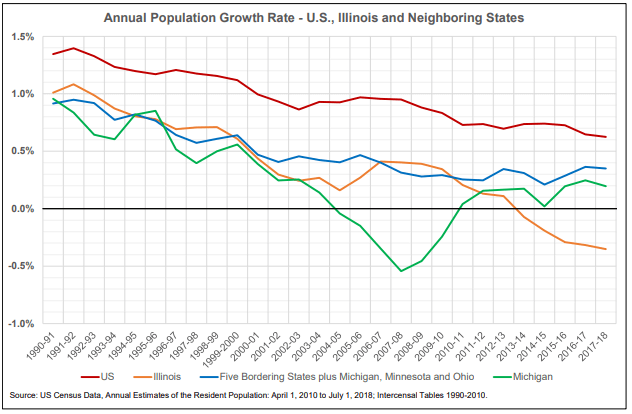
Keep in mind this shows rate of population change, not population itself, so everything above zero is growth. Note how Illinois has fallen in the last five years compared to its neighbors, and note Michigan’s nice recovery.
Wirepoints has covered Illinois’ outmigraton problem in detail. To learn more, read:
A reader who asked to stay anonymous sent this image in of a shirt he had made. The joke backfired.
Wednesday’s Budget address is time to put up or shut up..
We’ve written often here about Susana Mendoza’s constant misuse of the Illinois Comptroller’s office to peddle a key piece of her party’s political message – that Illinois’ fiscal problems result almost entirely from Bruce Rauner and a budget impasse he caused.

Her latest takes the cake – using that message against Bill Daley in their contest for Chicago mayor.
Yes, Bill Daley is responsible for Rauner’s performance, which caused our problems, she says in a new ad. “After co-chairing
Ted was on WTAD with Quaid earlier this week talking about Gov. Pritzker’s idea to transfer public assets, like the lottery or the tollways, into the state’s pension funds. The plan is a financial trick on taxpayers.
Illinoisans shouldn’t fall for Pritzker’s progressive tax push. The state is already too uncompetitive with its neighbors. It’s too much of an outlier on taxes. And it’s losing too many people.
If Pritzker really wanted to break the cycle of fiscal dishonesty in Illinois, he’d tell the truth about how the big the real budget hole is for 2020: $9.4 billion.
Borrowing to pay off debt, kicking the can and gifting public assets to pensions.
The Civic Federation is back with its annual budget plan for the state. Rather than offer a reform-driven proposal, the group wants another $3 billion annually from Illinoisans’ wallets.
Deputy Gov. Dan Hynes just authored a new report blaming Rauner for just about everything that’s wrong with Illinois. There’s one big problem with that, though. Hynes himself declared Illinois was already in crisis a decade ago.
There’s no argument that Illinois is a wreck. But read Deputy Gov. Dan Hynes’ new “budget” report and you might get the impression that former Gov. Bruce Rauner alone caused that wreck. However, Illinois was a fiscal and economic basket case long before 2015 and no amount of anti-Rauner rhetoric should let Illinoisans ignore that reality.
Abandoned by his mother, the baby boy — he was about 2 — ended up at an Indiana orphanage during the Great Depression. His luck changed when a WWI veteran and his wife filled out the “boy or girl” portion of an adoption application with the words: “any child we can love.” That’s from a Chicago Sun-Times article today about William Quigley who passed away Saturday, father of U.S. Congressman Mike Quigley. Our condolences to Mike Quigley and his family. A special salute to his grandparents and everyone like them. -Mark Glennon
Ted was on Chicago’s Morning Answer talking about the Civic Committee’s proposal to hit Illinoisans with $6 billion in new taxes – in part by taxing retirements and raising sales taxes on services.
It appears the flight of Illinoisans has gotten so big that Moody’s can no longer ignore it. The agency has included outmigration among its top-three Illinois credit concerns for the first time.
The January report from Illinois Commission on Governmental Forecasting and Accountability says receipts from Illinois personal income, corporate income and sales taxes are “impressive and have exceeded expectations” for the fiscal year-to-date. They’ve grown 4.8%, 14.7% and 7.6%, respectively, compared to the same period last year. January, however, was badly off-trend for personal income and corporate income tax receipts. For the month, they dropped 14.3% and 11.1%, respectively, compared to last January. Those numbers may be distorted by changes in taxpayer timing resulting from the new federal tax law that went into effect last January. Let’s hope it’s not a
Regardless of whether the Code technically applies, voting is going on now, and pertinent information is being withheld.
Five years ago they told the public and the courts the opposite of what they say now.
The State Board of Education’s latest budget request calls for an 86 percent increase in state operating spending on education. With this request, education would consume more than 50 percent of the state’s current budget.
Why would voters care if a candidate is taking all he can when they’re doing it, too?
It’s bad enough that Illinoisans are forced to pay the nation’s highest property taxes. It’s even worse if many of those dollars sit idly in the coffers of their local governments.
It’s nice to know that some folks will feel good about themselves as Illinois’ pensions bleed dry.
Rauner’s exit might seem like a cause for celebration for many Illinoisans, but they’ll want to reconsider their exuberance. In their distaste for Rauner, they’ve forgotten how dysfunctional the state had become in the years before he took office.
Ted talked with Tom Miller of WJPF this week about Gov. Pritzker’s first act in office: he granted raises to state workers, worth hundreds of millions, before contract negotiations with AFSCME have even begun.
More and more of Illinoisans’ hard-earned incomes are going toward paying property taxes. In 2017, 6.73 percent of household incomes went toward property taxes. That’s up 55 percent compared to 2000.
It’s due to good news — our rapid growth!
Tax the rich. That’s the extent of the CTU’s ideas. But their ideas don’t match their rhetoric. Not this time, anyway.
Another blank check signed by Pritzker?
It’s due to good news — our rapid growth!
If Mendoza was joking, then it’s yet another example of politicians not taking seriously Illinois’ increasing flight of residents. And if she wasn’t, then it’s an example of just how out of touch Illinois politicians really are.

Pritzker wouldn’t provide the cost to reporters, but we have it.
“Chicago’s New Obama Burden.”
Newly-minted Illinois Gov. J.B. Pritzker boxed himself into a corner when he delivered his inaugural address on Monday. He promised to balance the budget, spend billions more on programs and spare Illinois’ middle class from an income tax hike – all while keeping the state’s core spending drivers intact. What he promised simply isn’t possible.
Campaign and communication operatives aren’t what Illinois needs.
Borrowing to pay off debt is a “no-brainer,” we’re told.
Illinois residents are fleeing the state in record numbers. The most recent U.S. Census numbers showed Illinois netted a loss of 114,000 residents to other states in 2018. How does Illinois rank under an apples-to-apples comparison based on population? Illinois is the nation’s third-biggest loser.
My ace research assistant sadly brought this to my attention.
How might you reinforce the worst stereotypes of both parties – greedy Republicans handing a pointless tax break to the rich, and reality-challenged Democrats wasting money on a well-intentioned program for the poor likely to fail and perhaps backfire?
Washington managed to find a way – with bipartisan support.
The new chairman’s bio reads like a parody of Chicago politics for the 35 years he has been an alderman.
Moody’s recently released what fiscal realists would say is the true estimate of Illinois’ unfunded state pension liability – $234 billion. The rating agency’s calculation dwarfs Illinois’ official shortfall estimate of $134 billion
The latest Illinois Auditor General report doesn’t read like something authorized by Springfield politicians. It criticizes much of the state’s pension reporting methodology while making valid recommendations to fix them. That’s important, as Illinois politicians will never truly address the crisis as long as they can paper over it with their own numbers.
While Illinois progressives envy California’s income tax, California progressives are making headway steering their state a little more in Illinois’ direction with higher property taxes.
The good: Rahm Emanuel’s new pension plan includes a call to amend the pension protection clause in Illinois’ constitution. The bad: other than that, Emanuel’s proposal is a litany of wrongs, many of which are the very ones that created the fiscal crisis that has crippled Illinois, Chicago and most of its municipalities.
It’s particularly serious for high net worth people because they pay an outsize share of taxes in Illinois.
Blame whatever you want: pensions, corruption, property taxes or perpetual budget crises, but there’s no denying Illinoisans are fleeing the state. New U.S. Census data shows that Illinois’ population declined by 45,116 in 2018, a record loss for the state.
Most of his speech was a disappointment, but kudos to Rahm Emanuel for embracing a constitutional amendment for pensions and highlighting the expensive cost of COLAs. However, it would be a mistake – as some may be tempted to do – to think that an Illinois fix is as simple as COLA reforms via a narrow, Arizona-style constitutional amendment.
Former Gov. Jim Edgar is on Gov.-elect J.B. Pritzker’s transition team, providing advice on how to “fix” the same problem he created. An old Daily Chronicle piece from 1994, sheds some additional light on the Edgar Ramp, the pension “reform” that helped unleash Illinois’ current pension crisis.
Ted was on WJPF with Tom Miller last week discussing Illinois’ other retirement debt: The $73 billion the state owes in retiree health insurance benefits to state workers. Increasing healthcare costs, coupled with even higher pension payments, will eat up even more of the state’s budget in the future.
Ted was on Illinois Rising earlier this week discussing Illinois’ massive retirement crisis at the state and local level. Everybody wonders what to do about pensions, but the retirement problem is even bigger than that.
Wall Street’s best predictor of a recession has reared its ugly head and Illinois is nowhere near ready for a slowdown. In fact, Illinois is the nation’s least-prepared state for an economic downturn. When that recession finally comes, Illinoisans should expect to get hit hard.
Recent evidence shows tax revenue from gambling in one form reduces revenue from other forms.
COGFA says that the state’s unfunded pension debt grew to nearly $134 billion in 2018. Pension debts rose by more than $4 billion despite strong stock markets, a booming national economy and billions more in taxpayer contributions.
A constitutional right for union leaders to spike their taxpayer-guarantied pensions by working for their unions, while DNA evidence for 750 murders goes ignored for lack of 11 new workers who would surely cost less than the pensions. Illinois has its priorities.

Illinois’ $130 billion in official pension debt gets all the attention when it comes to Illinois’ collapsing finances. But there’s another government-worker benefit also wreaking fiscal havoc – free and heavily-subsidized retiree health insurance for state workers. Illinois owes another $73 billion in retiree health insurance debt and doesn’t have a single dime set aside to pay it.
Take time off to work for the union? Taxpayers will cover your pension based on higher union salary.

The longer it has life the more property values suffer, so kill it.
On Chicago’s pension problem.
Ted was on WTAD earlier this week discussing Pritzker’s upcoming negotiations with AFSCME over their stalled contract. With Rauner on his way out, the union will likely push for even more generous benefits.
The small Illinois village of Norridge just announced a municipal tax hike of 35 percent so it can make its required police pension payment. For residents, it’s another hit to their home values. Norridge’s pension problem is unfortunately the norm in Illinois. 335 of Illinois’ 650 public safety funds are less funded than Norridge’s police fund.
Ted was on WJPF earlier this week with Tom Miller discussing the role Gov. Jim Edgar had in creating Illinois’ pension crisis and the can-kick “solutions” politicians are going to promote in the coming months.
Pritzker can’t give in to AFSCME’s demands if he’s serious about putting dollars back in ordinary Illinoisans’ pockets. If he gives the union what they want, he’ll have to take dollars instead.
Illinois Comptroller Susana Mendoza is among the Illinois politicians I’m least inclined to defend, but she got a bum rap in the Better Government Association’s latest fact-check.
It’s a bottomless pit without many drastic, structural reforms.
GOMB has released its five-year budget projections. The forecast, not surprisingly, is alarming. Despite last year’s 32 percent tax hike, GOMB expects Illinois to maintain average budget deficits of about $3 billion over the next five years.
Whatever your answer, we’re probably on the same page.
Elaboration on our Crain’s article.
Problem? What problem?
Kudos to the recent Crain’s opinion piece that called for Illinois millennials to wake up. If politicians have their way, millennials will shoulder the whole burden of the state’s pension crisis. Millennials have two options, to fight or leave.
Pritzker has included former Gov. Jim Edgar in his transition team to add bipartisan legitimacy to his upcoming policies. But Edgar’s reputation and legitimacy isn’t deserved when it comes to Illinois’ biggest problem: pensions. The bipartisan compromises Edgar championed are responsible for turning the state’s pension problem into a full-blown nightmare.
“Reamortization” and a pension obligation bond.
Think you’re going to sell your expensive home and move to Tennessee? Sorry, that will cost you.
It’s inexcusable that Illinois hasn’t acted to amend its pension clause, which our courts have interpreted as a suicide pact.
Governor-elect J.B. Pritzker may have celebrated his win over incumbent Bruce Rauner, but his resulting hangover will last for his entire term. Pritzker’s campaign promises for more spending and higher taxes will set him up for failure. Combine that with the mess Illinois is already in and Pritzker could see the state collapse around him. Call it the winner’s curse.
Originally posted August 15, 2018. Officially, Chicagoans are on the hook for $70 billion in overlapping local and state pension debt. But Moody’s has the real number. They peg the total overlapping pension debt burden for Chicagoans at $130 billion, or $125,000 per household.
“Simply stated, the incumbent will solve the pension crisis by bankrupting the State while the challenger will solve the crisis by bankrupting the people in the State.”
Ted was on WROK Rockford this week talking about Illinois gubernatorial candidate J.B. Pritzker’s promises to spend billions more and enact a progressive income tax that only hits the wealthiest Illinoisans. Pritzker’s promises are impossible to keep. The math says so.
Comparing October tax revenue to October 2017 shows increases of 9.9%, 5% and 10.7% for the “big three,” respectively, the personal income tax, corporate income tax and sales tax.
A couple broader lessons are at hand.
The hard part to ending legislative pensions will be getting lawmakers who are currently earning pension benefits on board. It will take lots of pressure from constituents to make that happen, but it’s not impossible. You can bet a bi-partisan public is fully behind ending legislative pensions.
Illinois politicians are rewarding Chicago Public Schools for losing students and perpetuating the district’s failed brand of education. The new education funding formula protects the base amount CPS gets from the state even though the district lost another 10,000 students in 2018.
How far has respect for freedom of speech sunk? How unaware are some Illinois lawmakers about constitutional protection for speech? House Bill 5977, now pending in the Illinois General Assembly, informs us.
Reposted due to recent coverage in the Wall Street Journal editorial “Nickel-and-Diming Democrats.” Based on the spending promises J.B. Pritzker made during his campaign, any realistic progressive tax rate structure will have to raise taxes on middle-income earners
Tier 3 was a poorly-designed pension “reform” shoved into the state’s omnibus budget bill in July, 2017. It was one of the token gifts given to Republicans in exchange for their help in overriding Gov. Bruce Rauner’s budget veto. Now, nearly a year and a half later, the Tier 3 hybrid plan still hasn’t been implemented.
An Act of Contrition, not a Hail Mary. It will earn you at least some forgiveness and the state will be much better for it.
Ted was on WTAX with Joe McLaughlin last week talking about Wirepoints’ push to end lawmaker pensions in Illinois.
Hundreds of millions of dollars saved. You’re welcome, Springfield.
No, unfunded pension liabilities are not measured on the assumption that all workers retire today.
Ted was on Illinois Rising this week discussing progressive income taxes and J.B. Pritzker’s refusal to put forth a specific tax proposal. The reason why is simple. Pritzker will have to hit the middle class with higher taxes to pay for all his promises.
On behalf of his successor, thanks for nothing, Rahm.
Seems there’s very few willing to stand in the way of Mayor Emanuel’s hairbrained $10 billion pension bond idea. Fortunately, the market just might. Rising interest rates and a jittery stock market could kill Emanuel’s bad idea before it’s ever formally proposed.
Ted was on Illinois Rising this week discussing AFSCME’s $768,000 campaign contribution to Mike Madigan and what it gets them. The average state AFSCME worker already gets $110,000 a year in total compensation, but the union wants even more out its next contract with the state.
By Wirepoints’ Ted Dabrowski and John Klingner.
Rochelle, Illinois, should drop the idea of borrowing money to fund its ailing public safety pensions. It’s a bad idea in so many ways, most of all because a city can’t borrow its way out of a debt problem.
“I think the expansion of Chapter 9 legislation for states makes sense, and I’m not the only one.”
By Wirepoints’ Mark Glennon.
Forced property tax increases are the issue.
AFSCME’s record campaign contribution to Mike Madigan is more than just typical support. It’s insurance. AFSCME is making sure it will get extra benefits for state workers after years of deadlocked contract negotiations with Gov. Bruce Rauner.
An obscure footnote raises the question.
Just let people vote blind, Edgar advises Pritzker.
Ted tells AM 560 listeners about his recent encounter with State Sen. Dan Biss. It says a lot about Illinois politicians in general. They think they can get away with anything, from Biss insulting a constituent in a public place to Mayor Emanuel shoving a $10 billion borrowing down Chicagoans’ throats.
Politics has moved from disagreement into rude, public attacks. When your own elected representative confronts you in public – as if taking cues from Sen. Maxine Water’s political playbook – it becomes all the more outrageous.
The end of the melting pot. Banish the phrase.
Lisle residents are pushing for a referendum to lower their school property taxes by 10 percent. The Daily Herald opposes the idea because it cuts revenue, but the tax reduction isn’t about hurting classroom spending. It’s about making communities affordable and cutting the fat in Illinois’ education bureaucracy….and there’s plenty of fat to cut in Lisle.
There are plenty of reasons why Illinois politicians should give up their legislative pensions. First on the list is the fact that politicians have run the system into the ground. At just 15 percent funded, GARS is basically insolvent and requires an annual bailout by taxpayers to stay afloat.
If only things were as simple as the Harris School sees them.
Your tax dollars at work.
The community organizer inspires unusual unity.
Rich Miller reposted a tweet that leaves unsuspecting readers thinking Minnesota’s progressive tax structure would be favorable to individual “middle-income” Illinoisans. But it’s just not true. Most, if not all, individual middle-income Illinoisans would pay more in taxes.
An easy chance to earn at least a few positive footnotes in the history books.
Chicago firefighters’ pension is the latest to intercept state money. Police pension may come next.
Mayor Rahm Emanuel’s $10 billion pension bond idea deserves a brutal vetting. Since no real challenge will be made of the scheme by the Chicago media, I’ve decided to transcribe what an honest interview with Emanuel might look like.
Yet another chapter in the dishonest way the Obamaland is being rammed through.
Plus a whopper about his nonexistent tax plan and more.
Why mess with proven success?
We may never know why Rahm Emanuel decided to drop out of the Chicago mayoral race. But there’s a far more likely reason than the fear of losing. Chicago is a ticking time bomb and Emanuel is jumping ship just in case it goes off.
If the bad idea proceeds, it it should be linked to reforms for Chicago’s pensions that would reduce the unfunded liabilities crippling the city.
The establishment business community’s traditional excuses for not acting don’t hold.
This one was so easy to see coming we can only say, “Duh,” instead of our usual “Told you so.”
Wirepoints has obtained the handout Mayor Emanuel used to sell his $10 billion Pension Obligation Bond plan to Chicago Aldermen last week. It has no mention of the arbitrage risk. No stress tests. And no details of how “savings” are generated.
Chicago is looking around to hock whatever it has and borrow even more than $10 billion for its pensions.
The first step towards recovery.
Ted Dabrowski was on WTAD earlier this week discussing Wirepoints’ new initiative: calling on all Illinois legislative candidates to refuse a lawmaker pension if they are elected.
Illinois pays the highest “borrowing penalty” in the nation thanks to corruption and malgovernance. The state will pay some $2.6 billion in interest penalties on its $30.6 billion in general debt. That’s just wasted money.
We’d be so much better off if political reporters stuck to politics, which most of them understand, and stayed away from fiscal policy, which they don’t.
Pension obligation bonds are nothing more than gambling using taxpayer funds. But bad policy has never stopped a Chicago politician. The POB’s are Emanuel’s “solution” to his failed record on policing and as a property tax hiker.
August 2008. But the real lessons go beyond market timing.
Suspended for two years from the American Academy of Actuaries.
Wirepoints has a new policy initiative: We call upon all legislative candidates and newly-elected legislators to pledge they will not to accept a legislative pension.
Pension obligation bonds like Chicago is considering violate the rationale behind the margin trading rules, making them unwise and unsafe for the very reasons we limit margin trading.
There’s little to cheer about in Illinois after the stock market’s decade-long rally just became the longest bull market run in U.S. history. Illinois’ unfunded pension liabilities have worsened by more than $50 billion during the same period.
For a break from the usual softball interviews, watch Mark Maxwell’s 15-minute interview of Governor Bruce Rauner. His questions largely reflect arguments made against Rauner by J.B. Pritzker and Illinois Democrats, but that’s OK — he put those arguments to Rauner clearly and demanded answers. When Rauner gave unresponsive answers Maxwell repeated his questions firmly. Pritzker must be forced to submit to the same kind of interview. He has not yet given a single, serious interview. The problem is whether there’s anybody in the Springfield press corps informed enough about right-of-center perspective to do the job, and with the guts
The latest, goofy “fact-check” is out from the Better Government Association through its partnership with the Chicago Sun-Times and PolitiFact.
Illinois’ sham state budget is officially unbalanced yet again. The budget imbalance of $1.2 billion was confirmed to prospective investors in an upcoming bond offering.
Because you get sued for lying to bondholders but not to voters.
Maybe over $1 billion? Easy.
The bottom line is pretty simple. The center should not be in Jackson Park and taxpayers shouldn’t be contributing a dime.
Ted was on Illinois Rising earlier this week discussing how CPS took the latest bailout from the state without tightening its belt or getting its books in order. Instead, it wants to spend nearly 20 percent more this year, increase its number of school administrators and build new schools even as student enrollment declines.
Ted was on Illinois Rising earlier this week discussing the plan Rahm Emanuel has floated to issue $10 billion in pension bonds. It’s a terrible idea. You can’t borrow your way out of a debt problem and it requires Chicago to sell parts of its financial future.
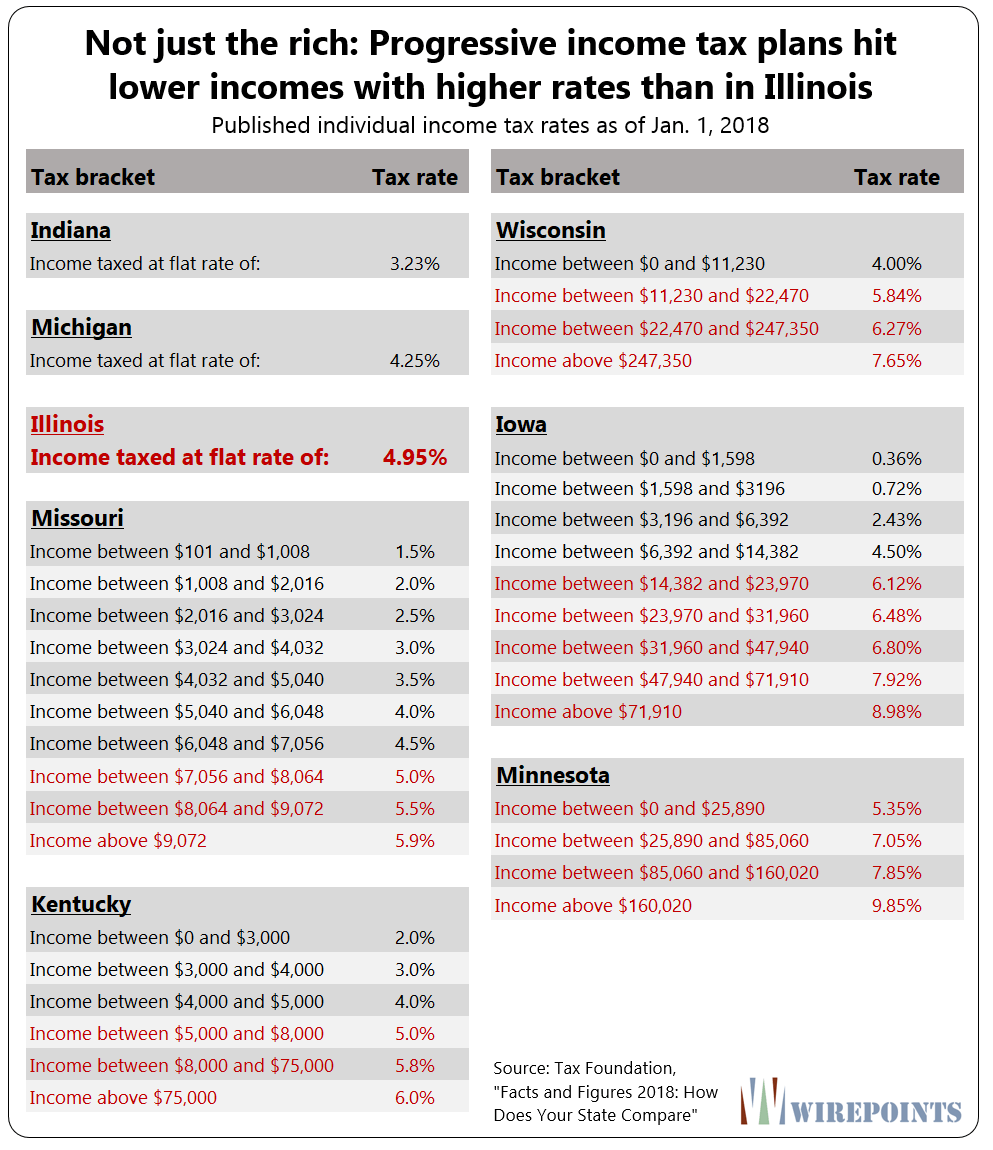
J.B. Pritzker promises to use a progressive income tax to hit the rich while lowering taxes on the middle class. Don’t buy it. It’s an empty promise. He’ll end up taxing the middle class as well. The proof is in the tax rates of Illinois’ neighboring states.
What cities are best positioned to shoulder additional responsibilities as federal leaders seek to cut the federal budget and workforce and reduce regulatory authority in Washington? Not Chicago, says Brookings.
You can trust public pension apologists to deflect any critique that calls out the failure of defined benefit plans. But the apologists don’t disprove the core findings of our research: that unrestrained growth in pension promises is behind many state fiscal crises.
A lawsuit pending against Cook Country that could cost the county as much as $250 million might well set the precedent for similar exposure to the State of Illinois of $700 to $900 million.
Last week, Chicago released its Annual Financial Analysis and held a major conference for the municipal bond community.
Chicago Mayor Rahm Emanuel has floated a new $10 billion POB plan. It needs to be slapped down for two key reasons. First, it simply won’t work. Second, it requires Chicago to sell parts of its financial future.
Illinoisans knew CPS wouldn’t do the right things if taxpayers were forced to bail the district out. They were right.
Illinois’ failed policies discriminate against no one. People are being forced to do what’s best for their families. And if that means leaving, they’re doing it.
Shameless dishonesty.
State lawmakers impose one-size-fits-all government benefits and local governments – meaning local residents – have no choice but to pay them. For some cities, that’s bringing on bankruptcy.
How Illinois State Rep. Mark Batinick – typically known as a reformer – ended up legitimizing a slick, kick-the-can pension repayment scheme sponsored by the Center for Tax and Budget Accountability is baffling.
Batinick added distortions to an already phony pension plan offered by the Center for Tax and Budget Accountability. That’s right, a Republican is using the union-backed CTBA as his foundation.
A twenty-fold increase in the cap on tort claims against the state is on Rauner’s desk.
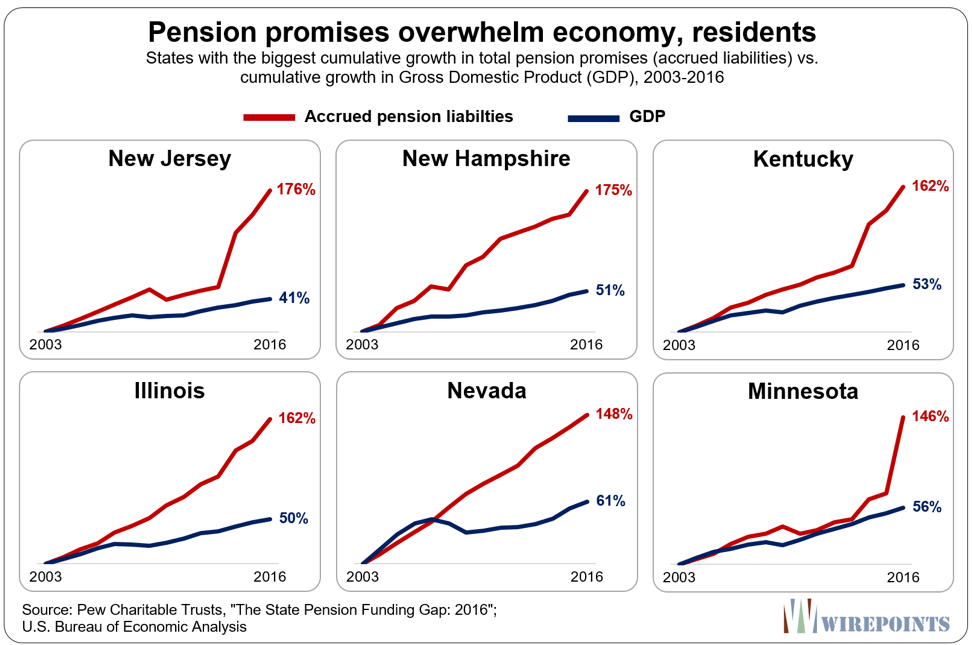
Most reporting usually focuses on the underfunding of state plans and blames the crises on a lack of taxpayer dollars. But a Wirepoints analysis found that it’s the uncontrolled growth in pension promises that’s actually wreaking havoc on state budgets and taxpayers alike. Overpromising is the true cause of many state crises. Underfunding is often just a symptom of the underlying problem.
To you and others who offer nothing beyond name-calling, put up or shut up. And as for any call for us to be banned from township meetings or anywhere else, drop dead.
After years of credit downgrades that pushed Chicago Public Schools’ rating to B3, deep into junk territory, the district finally got a one-notch upgrade to B2 from Moody’s. Expect Mayor Rahm Emanuel to sell that as good news on the campaign trail, even if a B2 rating is still five notches into junk.
James Spiotto is a nationally recognized legal expert on insolvency. At an upcoming Brookings Institute conference on municipal finance, he will be delivering a significant new paper, with an appropriately long title: “When Needed Public Pension Reforms Fail or Appear to Be Legally Impossible, What Then? Are Unbalanced Budgets, Deficits and Government Collapse the Only Answer.” The paper is linked here. It’s for legal and policy wonks, but it’s important, primarily because it lays out the case for why and how the federal government and federal courts can and should play a role in solving state and local fiscal crises,
Assuming things are better doesn’t make things better.
Wirepoints’ recent commentary on Illinois’ skyrocketing pension benefits left many readers questioning where that massive growth in pension promises came from. The answer is simple. The growth is due to overly generous benefits and more accurate reporting.
The leading figure in the effort to bring more honesty to actuarial reporting on pensions.
Take heart. Excellence is everywhere.
Pritzker and Korecki. Quite a duo.
Ted was on Upstream Ideas last week discussing how millions of Illinois residents remain dependent on government through programs like food stamps and Medicaid.
One graphic perfectly captures the absurdity of Illinois pensions over the past three decades. It’s what Justice Samuel Alito described as Illinois’ “generous public-employee retirement packages” when writing for the majority in the Janus v. AFSCME decision.
Yes, but don’t blame the Founders or their vision of government.
Ted was on Upstream Ideas last week discussing the Supreme Court’s Janus v. AFSCME court decision and the positive implications it has for Illinois.
Wirepoints has learned that at least $139 million — 80% of the public funding for the center — almost certainly will be reimbursed by the federal government.
Don’t think that the Janus ruling by the Supreme Court will change how credit agencies rate Illinois. The decision, which allows public workers to opt out of union membership, didn’t fix any of Illinois’ problems overnight and the state is still on a trajectory towards a junk rating – now just one-notch away.
Illinois’ dysfunction, in large part influenced by the power of Illinois’ unions, made the majority’s decision inevitable. They couldn’t help but find that forced dues violate free speech, considering the negative impact Illinois’ public sector unions have had on the state and its residents.
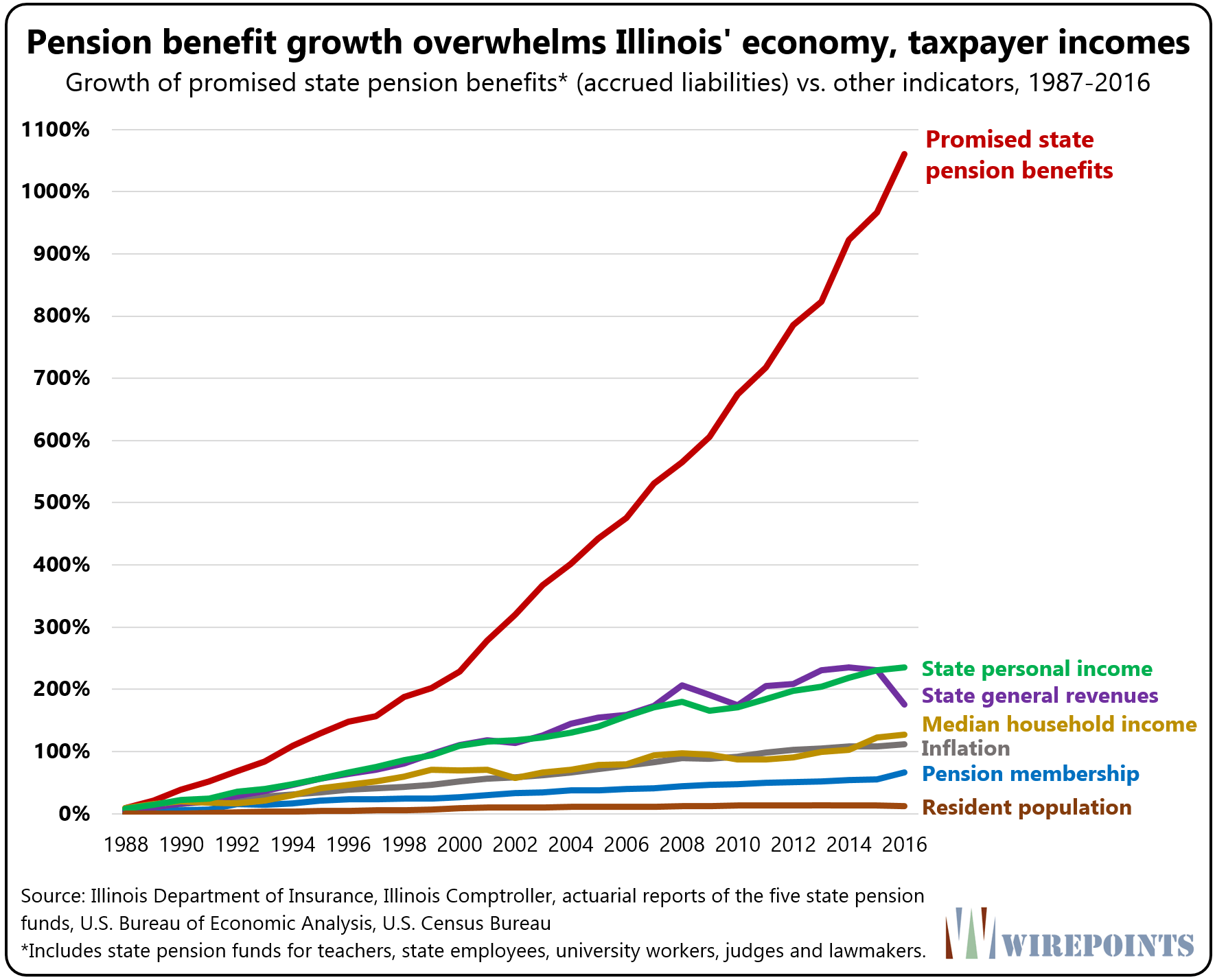
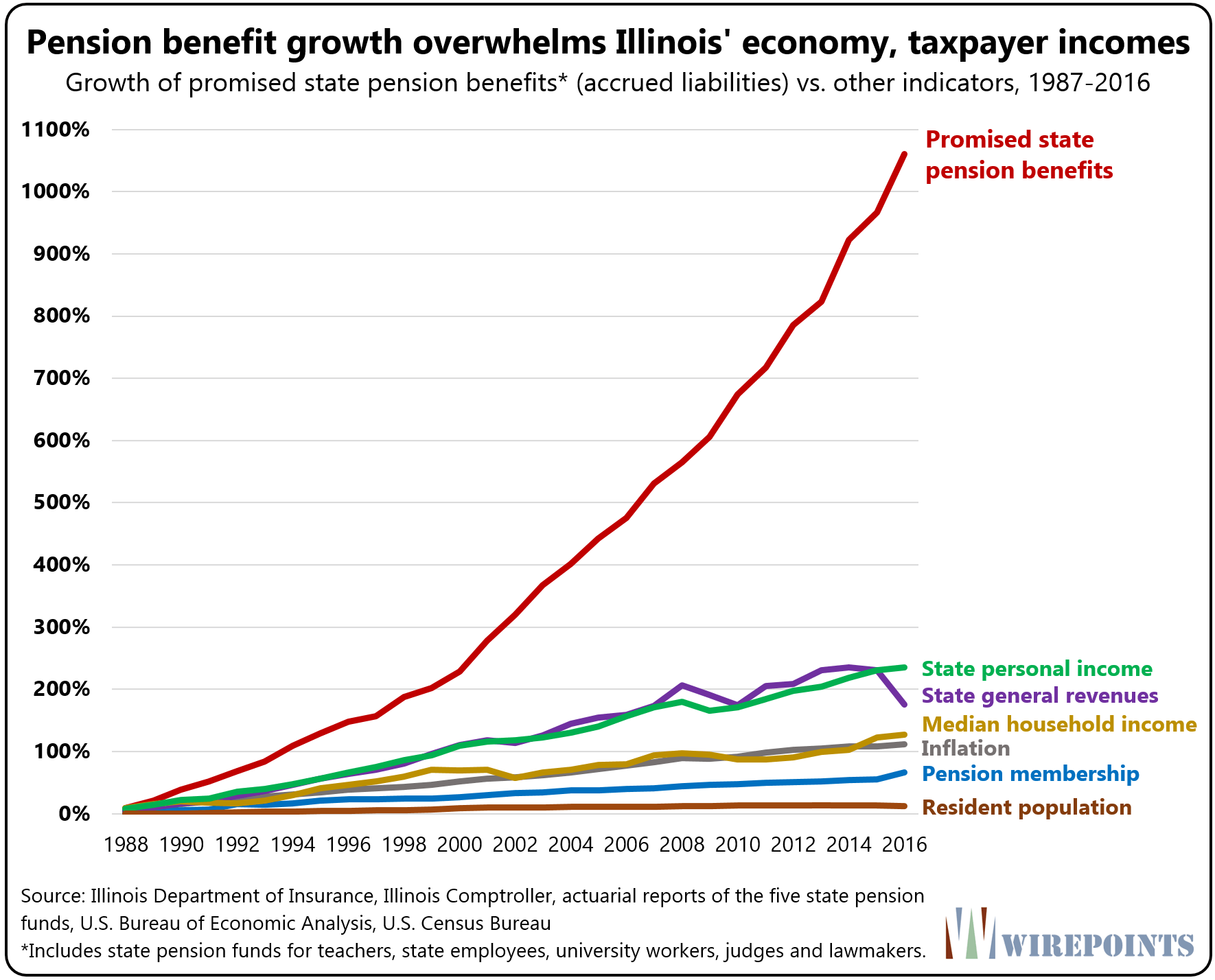 Justice Alito wrote in the Janus vs. AFSCME decision that “Illinois’ pension funds are underfunded by $129 billion as a result of generous public-employee retirement packages. He’s right. Wirepoints found that Illinois promised pension benefits have grown 1,100 percent since 1987, multiple times more than the state budget, the economy and taxpayers ability to pay.
Automatic annual tax increases in whatever-it-takes amounts to fund all our pensions? Good luck.
The Wilmette Village Board is voting for a second time on a Cook County ordinance that mandates higher minimum wages and more sick leave days. Over 80 percent of Cook communities have already said no to the county’s overreaching ordinance. Wilmette should do the same.
Detrivitorous. Positively, indubitably detrivitorous.
Apologists for Illinois’ fiscal and economic dysfunction have yet another bad statistic to defend: A full 15 percent of all Illinoisans remain enrolled on food stamps. Missouri, Kentucky and Indiana have all cut their enrollment by about 20 percent since March 2010 while Illinois enrollment is 17 percent higher.
“We demand that J.B. Pritzker, the Democratic candidate for governor of Illinois, pay his organizing fellows,” says a petition circulated by a group called the Campaign Workers Guild. It goes on: As the pro-labor candidate in this race, it just doesn’t add up that J.B. doesn’t pay his student workers. Even Republican Governor Bruce Rauner, J.B.’s opponent and one of the most anti-union governors in the country, pays his interns…. We demand that J.B. uphold his campaign’s values by paying his fellows a fair wage of $15 an hour. A $15/hour minimum wage is indeed a core item Pritzker campaigns
The center will be known forever as Obamaland, a monument to little more than misuse of government power, hubris and Chicago machine control over Illinois government.
Earlier this week, Quaid of WTAD’s News Roundtable took a deep dive into Wirepoints’ recent piece: The Harvey fallout: Are Illinois public safety pension trustees protecting police and firefighters? He considered the question: Why hasn’t there been a rush by police and fire pension trustees to intercept the money cities owe the funds?
Since the Illinois comptroller has concluded that IMRF, too, has the right to intercept state money, hundreds of Illinois muncipalities may have some of that money seized.
AFSCME workers are on track to receive $400 million in back-pay from the state. That will knock another hole the 2019 budget. The budget wasn’t balanced before, but adding another $400 million in spending will demolish any politician’s claims that revenues will match expenditures next year.
If you want to understand Illinois’ corrupt budget making process, look at how lawmakers just “cleaned up” some unaccounted-for budget deficits. In the blink of an eye, Illinois politicians made $1.2 billion in deficit spending disappear. There was no debate needed over how to fund it. In fact, pols didn’t need to find any actual cash to pay for it at all.
Riverdale, Illinois is in line to sell off its share of state income tax coming from the state of Illinois as part of an upcoming $10 million bond offering. It’s the third Illinois municipality to use the new authority given by the state last year to sell its ownership in future tax revenue to a separate entity, which will hold that money to ensure repayment of the bonds. The new structure is carefully designed to ensure that, even in bankruptcy, the bank — bondholders — gets paid no matter what the consequences. We’ve written often here criticizing this new structure.
You’d think a newly-implemented law that allows pension trustees to effectively garnish monies owed to their funds would be getting lots of use. But other than Harvey and North Chicago, no other trustees have taken the next step. There are several reasons why trustees are ignoring their fiduciary responsibility to the pensioners they represent.
For those unfamiliar with the concept, here is the basic background on bankruptcy-for-states.
Passing a budget does nothing to change the fact that Illinois is on the wrong track. “We’re one notch away from a junk bond rating. You can’t be a destination state if you have the highest property taxes in the nation, losing a third of our manufacturing jobs since the turn of the century, shrinking population three years in a row.”
How much distortion, blather and pure dishonesty can somebody cram into a ten minute interview on the state budget and pensions? An astonishing amount if it’s Illinois Senate President John Cullerton.
“For the political elite, this budget is a perfect sign of progress. They’re all getting along. There are no fights. No impasse. No real debates over reforms. Everybody is lined up to do the exact same things we’ve been doing forever. The sad thing for Illinoisans is this budget is not good for them.”

Listen to Illinois education officials’ demands for more money and it’s easy to believe Illinois grossly underspends on K-12 education. But the truth is Illinois already spends more on education than any other Midwest state. It’s just that much of the money is going to all the wrong places. Billions of dollars are being siphoned away from the state’s poorest districts by the state’s burgeoning education bureaucracy.
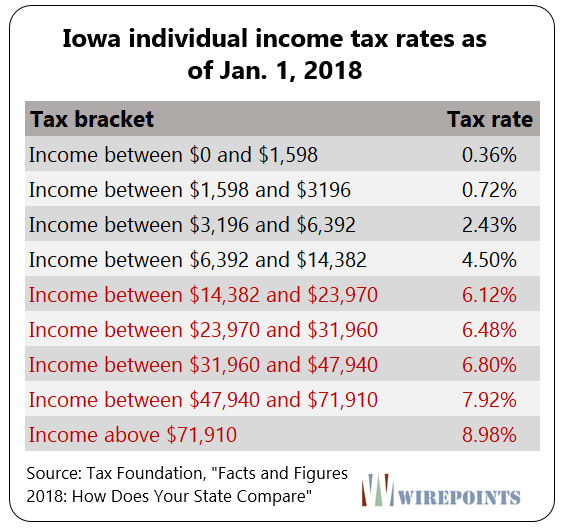
Somebody should have told Madigan that if he wants to be “…cutting taxes on the middle class, putting more money in the pockets of working families,” then the last thing Illinois should do is copy its neighbors’ progressive tax schemes.
“On hot mic, @GovRauner asks House GOP leader Jim Durkin (R-Western Springs) why he didn’t carry the stack of budget docs out for him to sign. Durkin jokes that he didn’t know if that’d be a “perp walk.” They know. They all know. Republicans and Democrats alike.
WASHINGTON – The most recent obstacle to the summit between President Donald Trump and North Korea’s Kim Jong Un in Singapore has been removed. As initially reported in Washington Post last week, cash-strapped North Korea expected difficulty paying for Un’s hotel during the summit, and the United States had been looking looking for a discreet way to cover the bill while saving face for Un. State Department officials, mindful of North Korean pridefulness, worked days to find funding safe from public scrutiny. “We needed a dark, dark source,” according to a department spokesman, and the president personally intervened with very
Ted was on AM Quad Cities this week discussing Illinois’ FY 2019 budget and why Illinoisans should be angry about its passage. The budget was negotiated in secret, introduced and passed with no time to read it and contains none of the reforms the state needs to turn itself around.
Expect a major celebration from both sides about the civility and the bipartisanship that created the new FY 2019 budget. But what about the budget itself? Just because they say it’s balanced, is it? And just because they have a budget, is it good for Illinoisans? And just because there was no impasse, will Illinois avoid a junk rating? The answer is no, no and no.
The narrative itself is the lie, keeping voters in the dark.
Is precedent being set to force a race to intercept? And a “credit negative” warning for all Illinois towns and cities.
The Wilmette Village Board is revisiting Cook County’s minimum wage and sick leave mandate. The city originally joined more than 80 percent of communities in rejecting the county’s ordinances last year. Nothing has changed since then. The mandates are still a bad idea for Wilmette and all communities across Cook County.
The media is reporting that all is quiet on the negotiating front, which confirms no real reforms are being debated. The status quo will continue. But the decline in Illinois has gone on long enough – certainly long enough to know the status quo isn’t working. To demonstrate, we’ve put together a list of trends that capture much of Illinois’ collapse.
Illinois media is widely reporting that no news on Illinois’ budget negotiations is good news – that a quiet battleground in the statehouse means all is well. But if you are an ordinary Illinois resident, don’t buy the “no news is good news” pitch. It’s bunk for a bunch of reasons.
The lawsuit appears viable, thanks to the state’s own admissions, but there’s no way to pay it.
REPOSTED DUE TO RECENT EVENTS. Twenty-two school superintendents have filed a lawsuit against the state. Their demand is identical to the State Superintendent’s budget request earlier this year.
Illinois K-12 Superintendent Tony Smith says he wants $7.2 billion more in funding right now – not over ten years. His demand reveals the complete disconnect between Illinois’ education bureaucracy and the real world.
It’s surreal to read the Civic Fed’s 2019 recommended budget plan for Illinois. Year after year the group continues to ask Illinoisans to pour billions of dollars more into the corrupt and nearly-bankrupt corporation that is the state of Illinois – while demanding little to none of the hard hitting reforms its trustees would demand with their own money.
Ted was on WJPF’s Morning Newswatch this week discussing the continuing fallout from Harvey and the broader problem of state control over local Illinois governments. Illinois cities are trapped by the pension laws, the collective bargaining rules and the unfunded mandates set up by the state.
After trustees from the Harvey and North Chicago pension funds paved the way on how to use the 2011 intercept law, it’s been virtual crickets from the other funds. Why aren’t the pension trustees busting down the comptroller’s doors? Why aren’t public safety pensioners demanding action from their trustees? As usual, you’ll find the answer in math.
“The scary thing they don’t want you to know is, if you look at progressive tax rates around the country, they’re not on the rich, they’re on the middle class and working class…when you start these progressive taxes, politicians realize they need more money, so they bring that higher and higher rate down into the middle income and working classes.”
A bit of history to keep in mind when you see former Governor Jim Edgar pontificating about our fiscal and pension problems.
To you who think the establishment narrative about Illinois and its crisis is flawed, we have some good news. Our alternative viewpoint is being heard. Just in the last couple days, over 700,000 readers have clicked to our articles here and on sites that republish us. More importantly, we’re getting our work picked up more and more by the regular media. That’s why we’re here — we want to be a source for facts and numbers that aren’t getting reported or reflected in policy. We’re always happy to share our research and commentary with politicians, reporters and editorialists, whether they’re
Wirepoints held a press conference on with Rep. Jeanne Ives (R-Wheaton), Rep. Tom Morrison (R-Palatine) and Allen Skillicorn (R-Crystal Lake) after testifying in front of the Illinois House Cities and Villages Committee about Harvey, North Chicago, and the broader downstate pension crisis.
Ted was on Illinois Rising last week discussing the $21 billion in school district debt that most Illinoisans know nothing about. Illinois, with $10,400 in debt per student, has 70 percent more school debt than Wisconsin, 44 percent more than Iowa and 33 percent more than Missouri. Indiana’s debt load is just 2 percent more than Illinois’ own.
Ted Dabrowski was on WTAD earlier this week discussing the implications of the downstate pension crisis and why Illinois politicians in Springfield don’t seem to care about the financial stress hitting both community budgets and resident wallets across Illinois.
Over a million readers have now clicked on this story here and in various republications across the country.
https://www.spreaker.com/user/9809126/mark-glennon
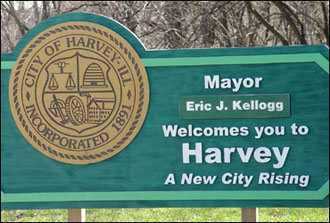
Wirepoints has performed an analysis of 180 Illinois cities with both a dedicated police and fire pension fund, examining their finances and their pensions. The findings, which will be released in a forthcoming paper, are alarming. Look at the numbers – at the collapsing funding ratios, broken budgets, and unsustainable tax burdens – and anyone can see that many cities aren’t far off from a breaking point.
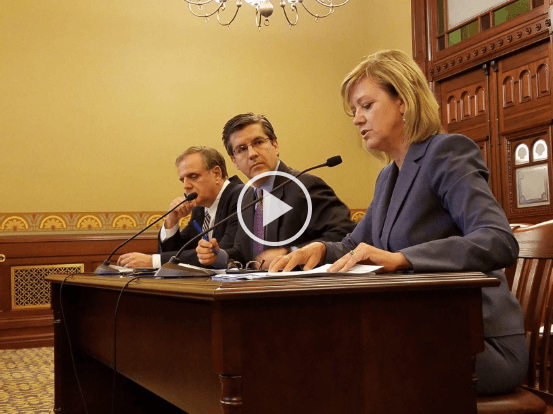
Mark Glennon and Ted Dabrowski joined Rep. Jeanne Ives on May 8th, 2018 to testify in front of the Cities and Villages Committee of the Illinois House of Representatives.
Ted was on Illinois Rising earlier this week. He and Dan Proft talked to State Rep. Jeanne Ives (R-Wheaton) about the state’s garnishment of Harvey and North Chicago’s revenues, the chances of revenue intercepts spreading to cities across Illinois, and the negative impact the downstate pension crisis has on city budgets and peoples’ lives. Read more about the crisis here: Beyond Harvey: Many Illinois municipalities running out of options Second domino falls in Illinois: North Chicago revenues garnished for pensions Harvey, the first domino in Illinois: Data shows 400 other pension funds could trigger garnishment
Chapter 9 bankruptcy for municipalities is a last resort and a bad option. The question, however, is whether it is the only option offering any hope to Illinois’ most distressed communities. I am convinced that offering the option isn’t just the right thing to do, but any delay will doom some communities to circumstances not even bankruptcy can help.
Pensions versus bondholders versus residents.
Illinoisans hear plenty about the state’s ballooning pension debt, its billions in unpaid bills and rising bond debts. But most don’t know that the state’s 860 school districts have put Illinoisans on the hook for another $21 billion in debt.
“If there ever was a wake-up call of how deep we are in the abyss, this is it.“
Those who can least afford it are getting hammered to pay up for a broke city.
You’d think Springfield is intent on a strategy of repetition inspired by a record of success.
During the impasse, tax revenue came in and bills were incurred just as they did when there was a budget. The impasse made no difference.
Illinois’ brutal political campaigns may have distracted attention from the reality of the state’s crumbling finances, but an upcoming $500 million bond borrowing by the state will remind investors and Illinoisans alike how little has improved.
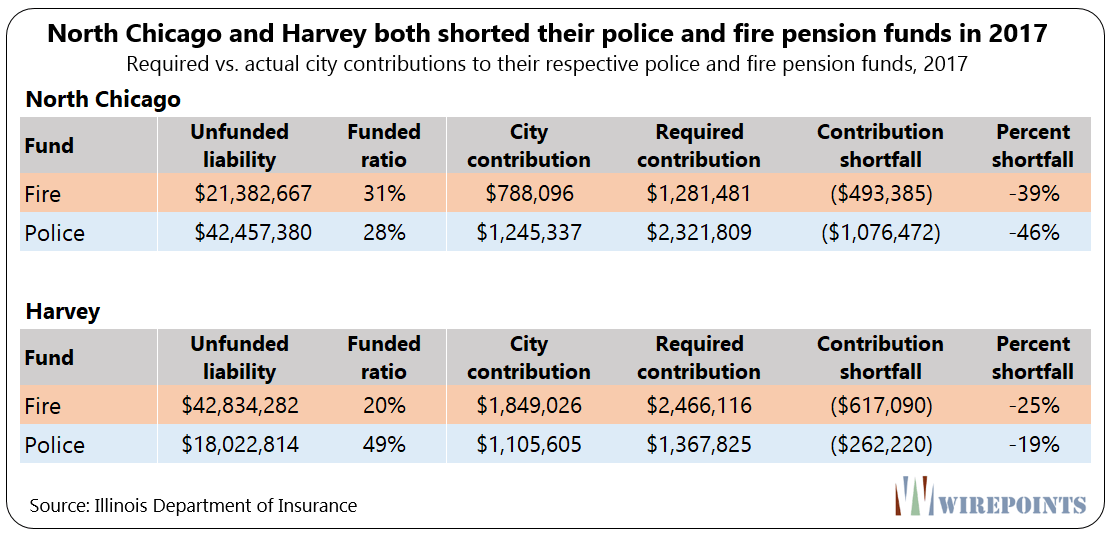
Harvey was the first domino to fall in Illinois’ public safety pension crisis. Now North Chicago is the second. The state comptroller has begun to intercept the city’s revenues on behalf of its firefighter pension fund. Both cities are the vanguard of a much wider problem faced by municipalities across Illinois.
Ted talked with Perri Small of WVON Radio on Wednesday about Harvey’s lack of options. It’s trapped by the one-size-fits-all state laws that rob every Illinois municipality of local control.
Harvey has put the state political machine in a bind. If lawmakers allow garnishments to continue, a wave of intercepts could lead to struggling municipalities cutting pay and laying off public sector union workers across the state. On the other hand, if lawmakers reverse the garnishment law via legislation, they’ll reveal their unwillingness to defend public sector pensions.
Ted joined State Rep. Jeanne Ives (R-Wheaton) in Harvey, Illinois on Monday to bring attention to the city’s plight and discuss the solution it so desperately needs: bankruptcy.
Ted talks with Tom Miller of WJPF Radio to discuss Harvey and the possibility that hundreds of other cities across the state could have their revenues garnished to pay their public safety pensions.

You’d be mistaken to think Harvey, Illinois has a unique pension crisis. The mess is everywhere, from East St. Louis to Rockford and from Quincy to Danville. A review of Illinois Department of Insurance pension data shows that Harvey could be just the start of a flood of garnishments across the state.
Last year, the courts ordered nearly-bankrupt Harvey to hike its sky-high property taxes – even though they are already at confiscatory levels – to pay for pensions. Now the comptroller is confiscating the city’s local tax revenues to pay for them. One or both of those actions may accelerate what needs to happen in Harvey: bankruptcy.
It’s impossible to overstate how deep Illinois’ pension crisis is. The market is experiencing remarkable returns and yet the state’s pension debts aren’t improving. Imagine how the funds will collapse when the next recession inevitably hits.
Further into the abyss: $10 billion loss this year, $137 billion loss over the last ten years.
It looks as if AFSCME will win yet another battle in its long-standing contract fight with the state. The state will have to back pay step increases to workers, costing taxpayers more than $400 million.
New financial statements released this month show actual results are far different than portrayed in budget negotiations and the press.
The speeches last night said most of what you need to know about the election.
Are you overloaded with debt? Ever consider just buying the invoices you owe to your creditors? Lots of questions jump out about this.
Illinoisans don’t like how they’re being disrespected by their politicians – paying ever-higher taxes for ever-fewer services. So they leave.
One of those people leaving is a North Shore neighbor of mine moving to Colorado. For him, the calculus was simple. Stay and pay more and more for a government he trusts less and less, or leave and save $1 million dollars.
Ted talks to the Morning Newswatch about how the state’s teacher pension funding scheme is regressive. Wealthy districts, with higher salaries and bigger bureaucracies, benefit most from state pension funding.
Read on to compare your local school district’s pension subsidy to others around the state.
No, Illinois is no Florida. But we’d be dumb not take some lessons from their success.
Illinois continues to grow its spending by borrowing, enacting massive tax hikes and growing its unpaid bills, even as its tax base shrinks. Florida, in contrast, has grown its spending by growing its economy and its tax base.
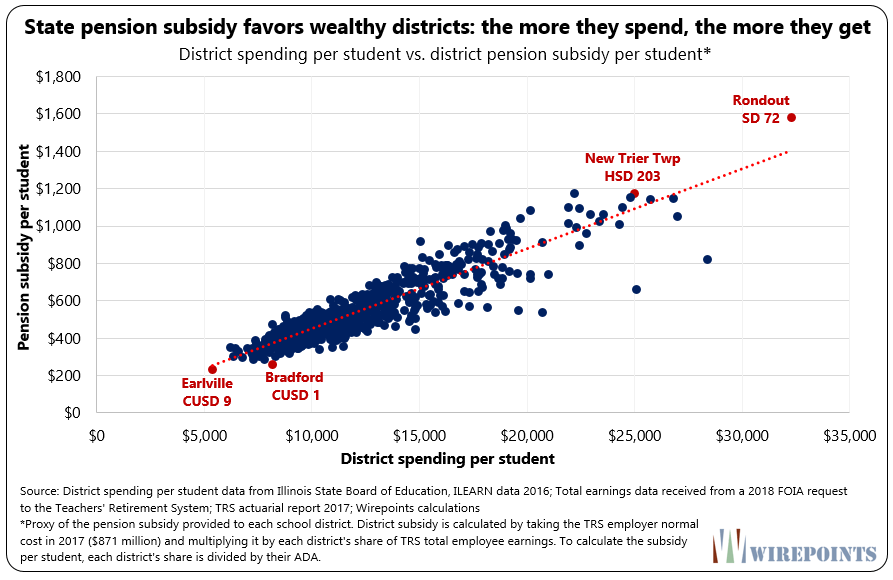
The state’s teacher pension funding scheme, where one unit of government doles out benefits while another one pays for them, has destroyed accountability and driven up taxes on struggling Illinoisans. And it’s regressive.
Rep. McSweeney is wrong to ally himself with the IEA to block a pension cost shift.
Treasurer Summers says his ESG investment decisions would be similar to how the Cubs and other Major League Baseball teams rely on advanced analytics to assess players, with a system that draws in disparate bits of information to score companies based on ESG factors.
Nonsense. It would be more like letting the girls in the grandstands select the players based on who looks nicest.
The decline in Illinois has gone on long enough to show anyone that the status quo isn’t working. To demonstrate, we’ve put together a list of trends that capture much of Illinois’ collapse.
Maine Township is considering a move to merit-based pay. Given the struggles of Illinois taxpayers burdened under the nation’s highest property taxes, they should pursue consolidation instead.
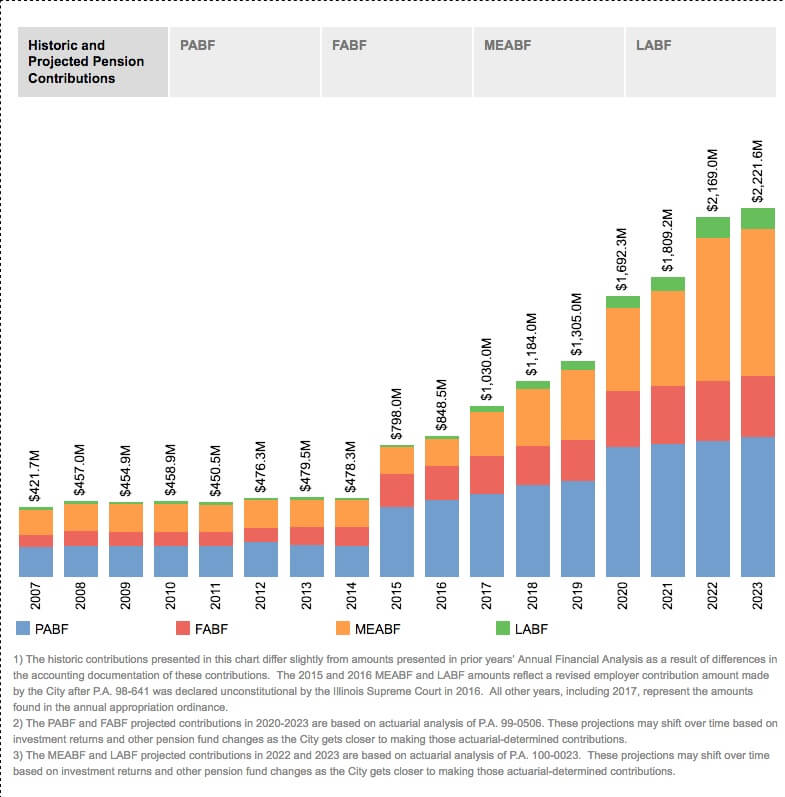
Pension protectors and the municipal bond juggernaut have been aggressively passing into law whatever they can to ensure they come first if the city doesn’t have enough money for everything. Who’s doing the same for taxpayers and those who rely on city services? Not Chicago Democrats.
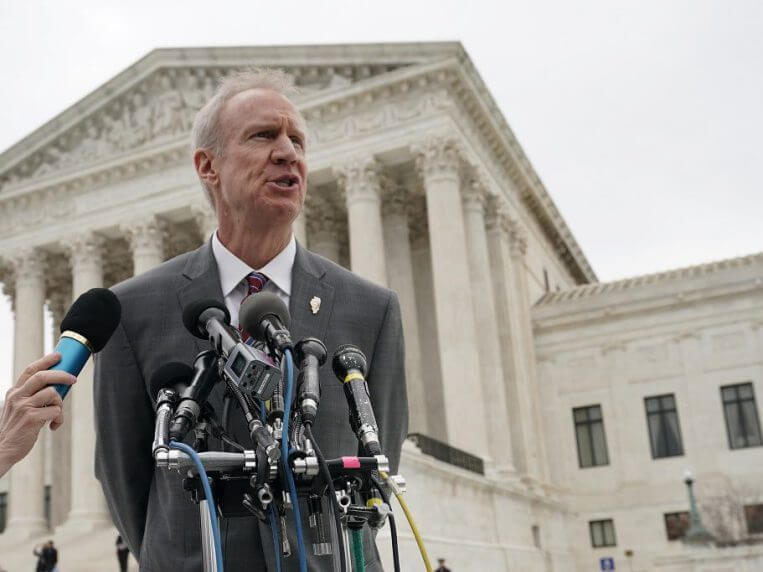
Gov. Bruce Rauner’s leadership failures have deflated the political pressure for reforms in Illinois. But his inability to change anything, ironically, only strengthens the case for structural reforms. The longer Illinois’ status quo policies remain in place, the more this state will continue to decline.
“If you care about your policemen, your firemen, your teachers, then we need to have pension reform. Because if we don’t – people keep leaving, the tax base is shrinking – we’ll have to start firing them…It’s ironic, paradoxical, but to take care of workers we have to change pensions.”
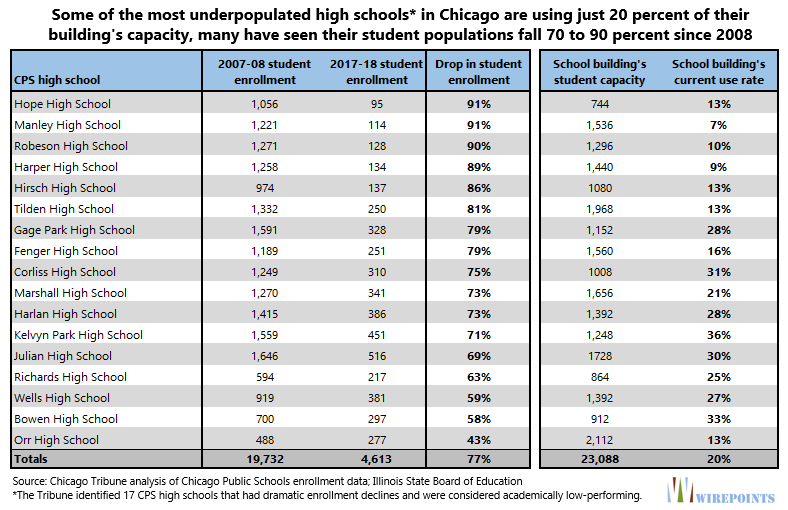
Chicago Public Schools and the Chicago Teachers Union have been practicing a corrupted version of school choice that’s done little to improve the lives of CPS students. Instead, it’s led to perverse consequences that actually perpetuate the systemic failures of CPS, leaving far too many students without an education
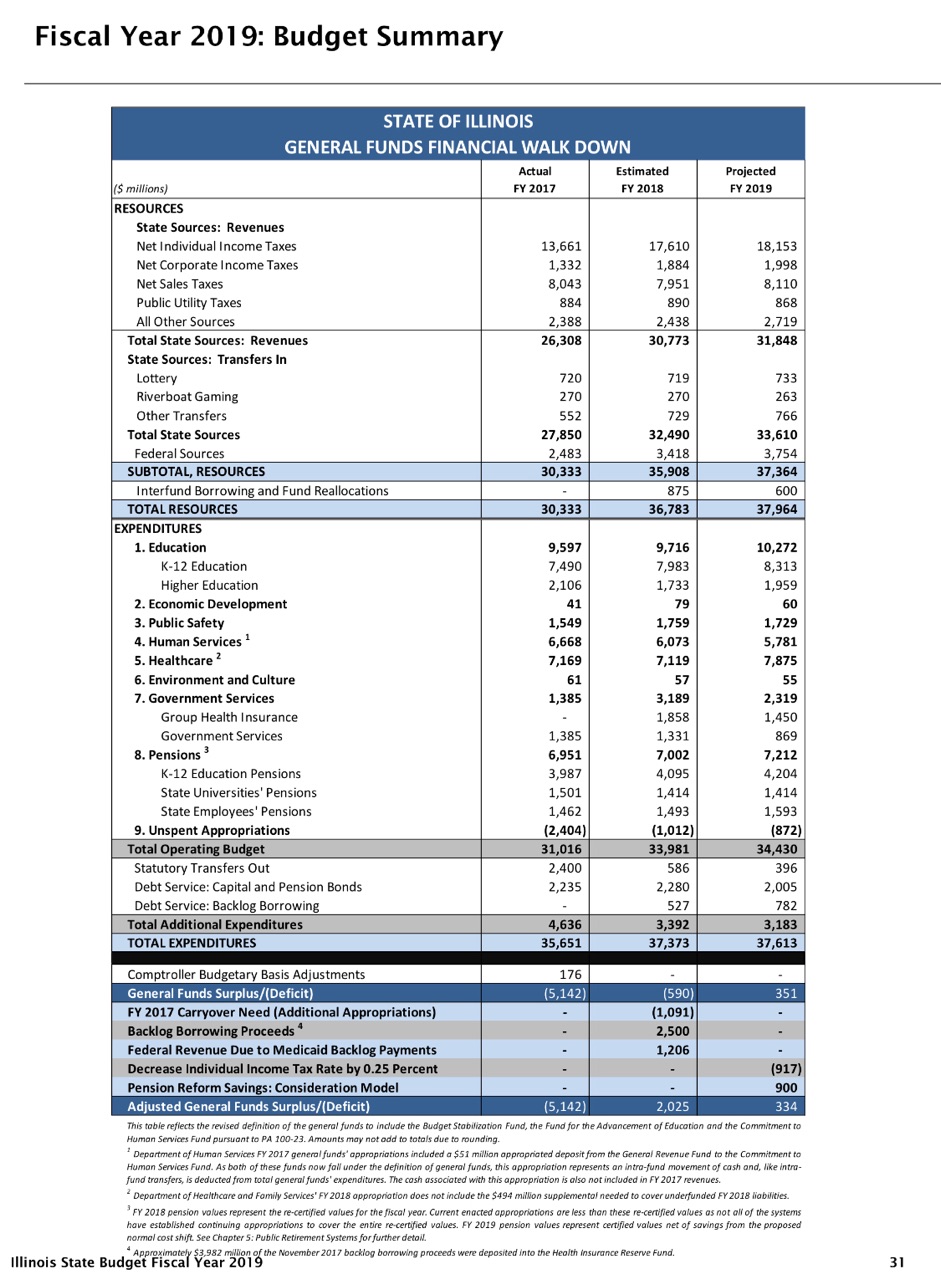
Key points jump out that make a protracted fight look likely.
Gov. Rauner has proposed a far less transformational budget for FY 2019. It isn’t the budget Illinoisans want or need. If Illinois is going to keep its people here, grow its economy and bring back jobs, lawmakers must pursue much deeper reforms.
Ted on WTAD Quincy. Quincy household incomes are up just 97 percent since 1990, total state pension benefits grew seven times more than than that.
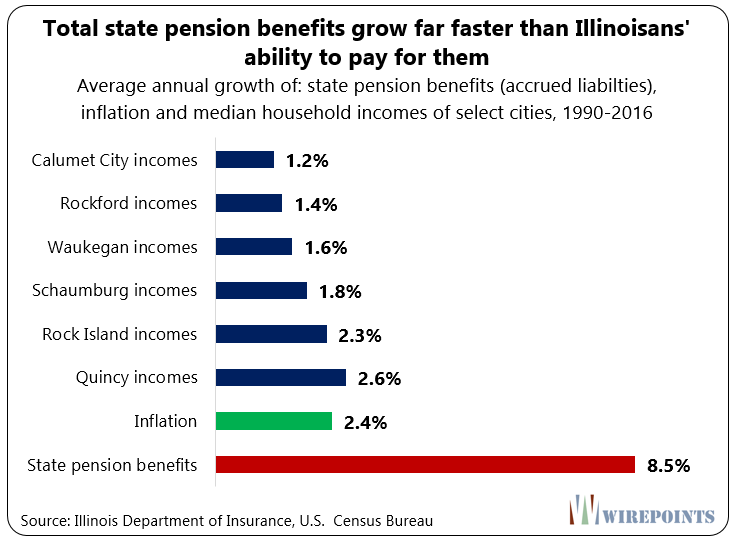
Illinoisans are losing out everywhere they turn. Their incomes are stagnant. They’ve just been hit with a record $5 billion dollar income tax hike. They have to pay the nation’s’ highest property taxes. And they have to pay for the total state pension benefits that have grown exponentially over the past 30 years.
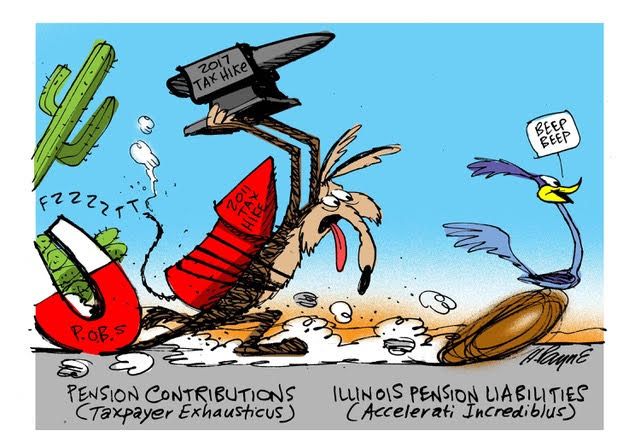
For years, the state’s political elite has blamed ordinary Illinoisans for the state’s pension crisis. They say that the state – and by extension taxpayers – have failed to put enough money into government-worker pensions to keep them solvent. We’ve always been suspicious of that claim, and as it turns out, we were right to be.
In August, we wrote here about an unprecedented appellate court decision affirming an order to an Illinois city to approve a property tax increase specifically for its firefighters’ pension. That city, Harvey, already has effective tax rates of 5.7% for residential and 14.3% for commercial properties. Yesterday, Moody’s weighed in highlighting the implications for bonds. The full report, however, is for subscribers only. Among their comments: The increased Harvey levy could make it politically and practically difficult for Harvey to raise taxes any further to support government services and pay bondholders. The city has continually defaulted on its general obligation
If Illinois were a corporation, think Enron or Worldcom, all kinds of regulators would be sniffing around or breaking doors down. But where are the investigations here? Where are the legislative hearings? The odds of a real investigation happening are zilch. But it’s still worth asking the right questions.
Undeterred by national ridicule heaped on Illinois last year, statehouse Democrats are pushing again for passage of a 20% “privilege tax” on investment managers. Thanks to ZeroHedge for republishing.
Pity the average citizen trying to understand any of this based on what politicians say.
And this guy is complaining about those who earn more?
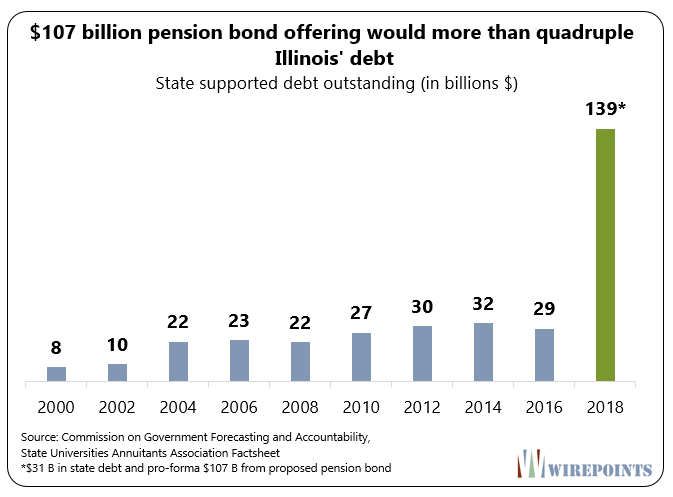
State Rep. Robert Martwick wants the state – meaning taxpayers – to borrow a massive $107 billion so that those proceeds can fund the state’s pension plans.
The dumbest policy proposal yet from a major candidate in Illinois’ race for governor.
If you’re going to claim that “socially responsible investing” is the right way to manage money, you might want to check the stock price before bragging about an example. Over $20 billion of shareholder value lost in an instant.
To see what a reform-oriented Illinois might look like under different state leadership, just look at the small village of Lakewood, Illinois. Since a new board was elected last year, the village has abolished its TIF, reduced the village’s property tax levy and even returned some tax dollars back to residents located in the terminated TIF.
Wisconsin’s residents are now finding out that the price tag for the Foxconn deal is $4 billion, much higher than Wisconsin politicians originally advertised. That should serve as a warning to Illinoisans. In this state politicians like House Speaker Mike Madigan, Chicago Mayor Rahm Emanuel and Gov. Bruce Rauner pick winners and losers directly with taxpayer dollars.
It’s not his mission and they aren’t his shares. It’s bad policy and a dangerous precedent.
Illinois’ manufacturing recovery has been paltry. The state would have 150,000 more jobs if it had followed the same recovery path that Michigan has taken.
Illinois’ manufacturing sector is going to need a lot more than just federal tax relief to get growing again. The number of manufacturing jobs in the state has collapsed by more than 300,000 jobs since the turn of the century and there’s been little sign of recovery since the end of the Great Recession.
Huge drop in the number of teenage mothers. Maybe the cycle of poverty is finally breaking.
Illinois will start the new year heading straight into the abyss with it’s foot firmly on the gas pedal. Nobody in government is saying how bad it is, including two who are in particularly good positions to do so — Comptroller Mendoza and Governor Rauner.
What a mess!
A tax matter of immediate importance to many property owners — prepayment of property taxes — is rapidly descending into chaos and unfairness.
Doubling down on borrowing by selling off body parts.
Few Illinois governments seem to understand – or care – about the implications of the state’s shrinking population. However, there are a few governments willing to actually find ways to make things more affordable for their residents. Lakewood Village is one of them. The village recently found the resolve to cut its property tax levy by 10 percent.
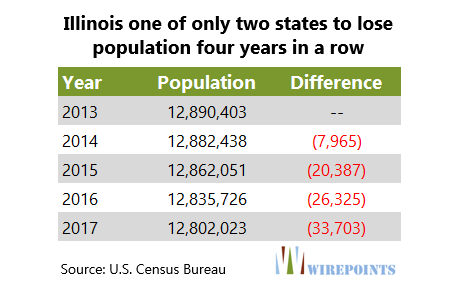
Don’t blame the weather. Illinois has shrunk four years in a row, while its neighbors have all grown during that same time period. As Illinoisans leave, so does the tax base.
By far the worst debt load among major local governments. Worse than Puerto Rico on per household basis.
State and local officials keep raising taxes despite the sobering fact that Illinois and Chicago have both lost population three years in a row. Illinois will never recover if its tax base continues to flee. Even those in more affluent areas of the state will become fed up and leave when tax burdens get too high.
Illinois’ pension funds have collapsed during one of the longest bull markets in history. Since the end of the Great Recession, the S&P 500 index has recovered and grown by more than 200 percent. At the same time, Illinois’ pension shortfall worsened by 65 percent, to reach $129.1 billion.

Special report: Decades of state mandates have pushed up costs, taxes and debts to unsustainable levels for many cities. They’re either at the brink of bankruptcy because of unfunded pensions or have lost people and businesses due to high taxes and fewer services. The most unfortunate cities, like Danville Illinois, are suffering from both.
Fitch Ratings says Illinois is the worst in the nation when it comes to debt and pensions as a share of residents’ personal income. The state’s total debt amounted to more than 28 percent of Illinois residents’ personal income.
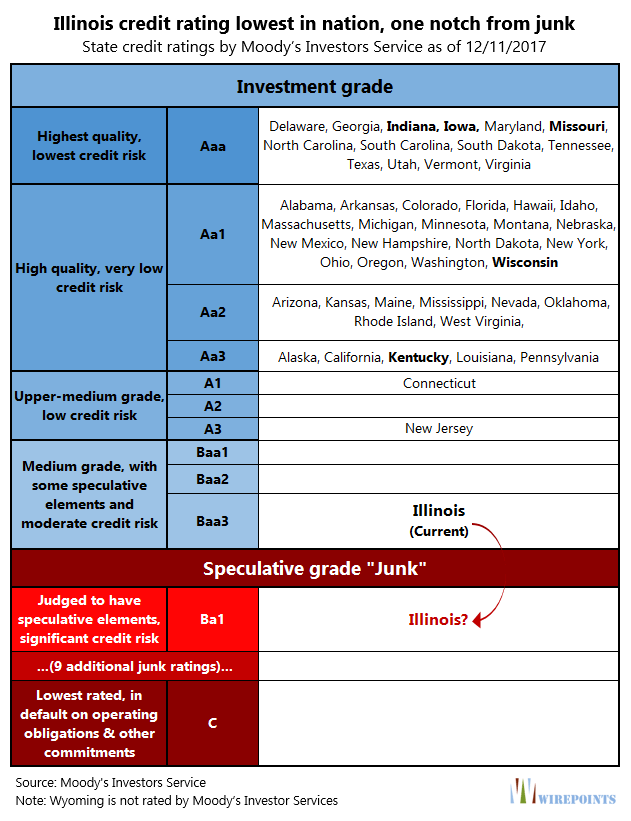
Moody’s wants to update its rating methodology to increase the influence that debt and pensions have on the overall ratings of state governments. That’s bad news for Illinoisans and the state’s economy. Illinois’ credit is already just one notch above junk – the worst of any state.
Coming to your local school, whether you like it or not.
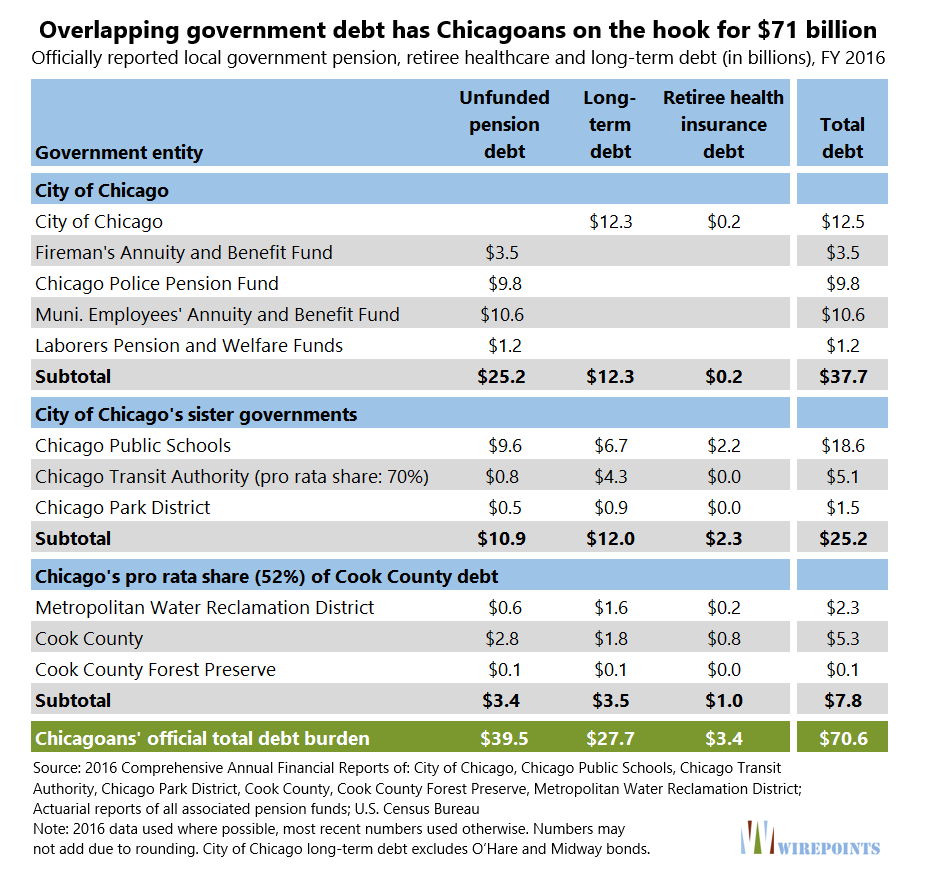
Overlapping local government debt for Chicagoans – that from the city, its sister governments and the city’s proportional share of Cook County debts – now totals $71 billion. More debt to fund Amazon’s investment would only make things worse for the Windy City and its residents.
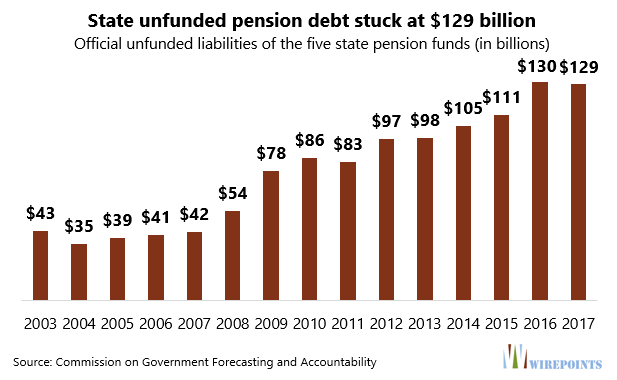
The Commission on Government Forecasting and Accountability has announced that the state’s pension debt remained virtually unchanged from last year, despite a continuing surge in stock markets globally.
At the very moment that the Cook County Board repealed its $200 million pop tax, the Chicago Public Schools publicly announced it was hiking property taxes by another $225 million. Politicians imposed one $200-million tax hike just as another one was killed.
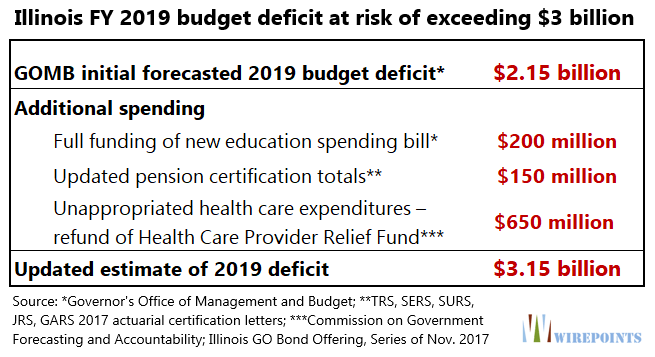
Illinois’ record-sized budget and its $5 billion tax hike haven’t solved the state’s chronic fiscal mess. The “balanced” 2018 budget has turned out to be anything but balanced. And new numbers show the state’s deficits will only get worse in fiscal year 2019.
Don’t count on any taxpayer savings from the recent Tier 3 pension “reform.”
A surprise for the administrators which, not surprisingly, they didn’t even ask about.
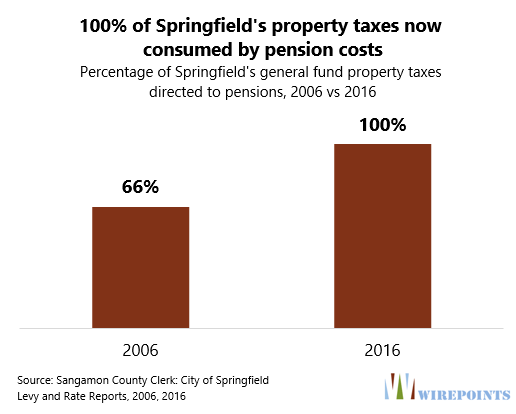
Add up city police, fire, IMRF and retiree healthcare costs and Springfield taxpayers are on the hook for $517 million in local retirement debt. That’s up from approximately $180 million in 2005.
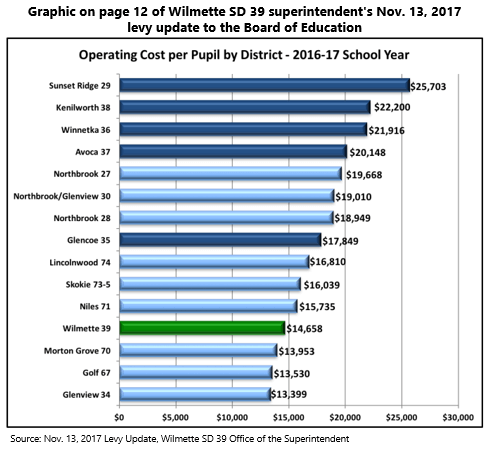
Local officials and union leaders have employed a near-perfect method to pressure residents into accepting higher taxes year after year: Sell the idea that communities around them are more generous than their own.
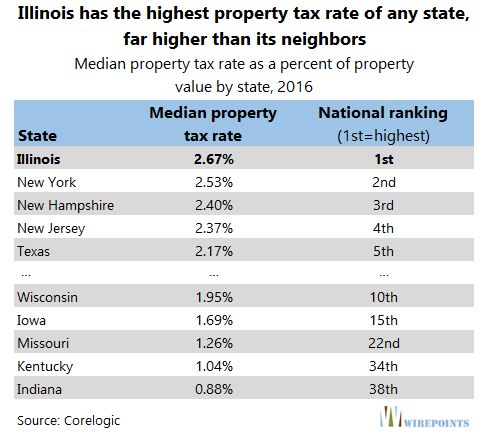
A lethal combination of rising property taxes and stagnant incomes has forced many Illinoisans to rethink their relationship with their state. More than a million net residents have already fled the state since 2000 – and you can’t blame others for thinking about joining them.

An overall tax cut wouldn’t change those results.The effect of doubling the standard deduction is being overlooked
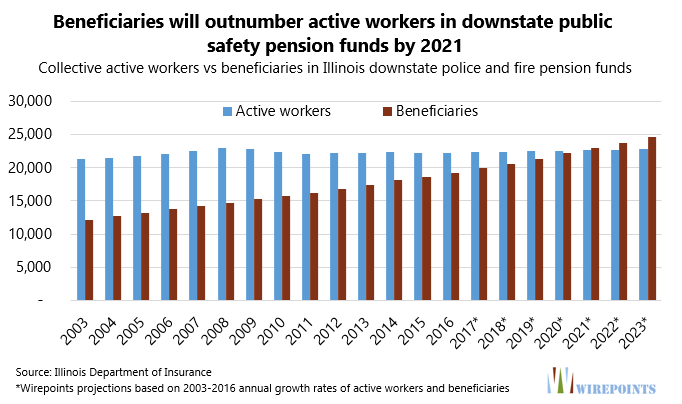
In Illinois, 118 fire funds already have more pension beneficiaries than active workers. Another 73 police funds are in the same dire position. That’s 191 of the 653 fire and police funds, or nearly 30 percent, that are upside down.
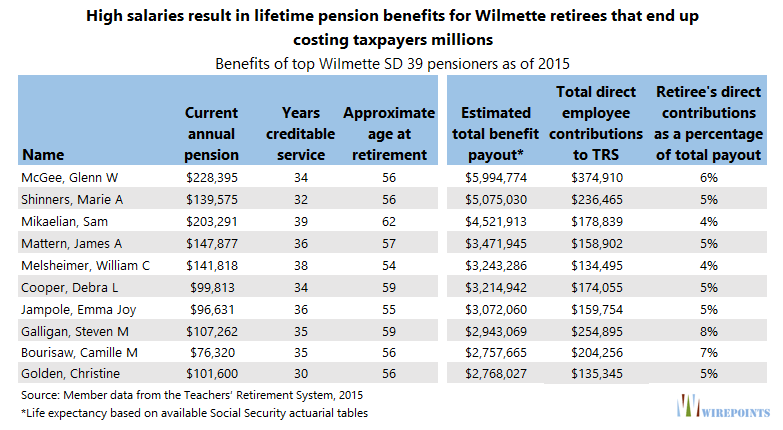
Reform obviously needed, not higher taxes.
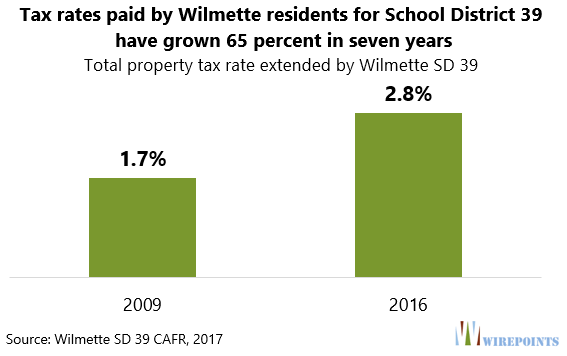
Wilmette school district officials pursue more tax hikes despite falling property values, jump in property taxes.
Lots of reasons why this property tax “freeze” is a failure, but these latest additions have made it even more of a mess.
What’s the point of negotiating?
The latest proposal that may get fast tracked and passed immediately is a good-for-nothing property tax freeze introduced by Rep. Michelle Mussman.

Bailout first, reform later.
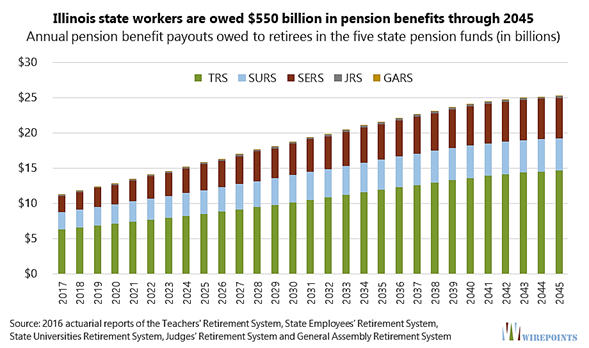
The first number you’ll need to know is $550 billion. That’s the total amount state workers are owed in pension benefits over the next 30 years.
By: Ted Dabrowski* I was recently invited to speak on a panel in Schaumburg on the topic of pensions. Skyrocketing pension costs are pushing property taxes higher and higher and suburban residents want to know what’s driving those increases. My handout is attached here. The answer, in large part, is that government worker salaries and benefits have become increasingly unaffordable for the residents that pay for them. For example: Nearly 80 percent of full-time Schaumburg workers cost local taxpayers more than $100,000 in total annual compensation, according to the village’s compensation database. Top retired school district administrators can expect $3.8 to $6.9
Two concepts are afoot in Washington.
A trillion dollars per year of investment activity that’s largely unnecessary, billions left unused and a Treasurer unilaterally using the resulting power for political benefit and policy goals unrelated to his office. Using taxpayer money at the Treasure’s office to fix the fake news problem?
A comprehensive, apples-to-apples report on all 671 pensions in Illinois.
Dry stuff for some, but this will be critical in Illinois, sooner or later.
But the new teachers’ contract sure hides it well.
Remember the surge of relief in early July when so many celebrated passage of a “balanced budget”? Well, never mind.
Mrs. Rauner, however, should have popped the champagne.
With effective property tax rates already 5.7%, Harvey is a bloodless turnip. Where else will the courts order higher taxes?
The Wall Street Journal and FOX Business are among those who botched this one worst.
The can has now been kicked on all four city pensions, as shown on the chart.
If you don’t know that state and local budgets are deceitful and nearly meaningless, or you don’t know why that’s so important to understanding our crisis, spend a few minutes watching the video.
We know more now, but distortions abound and key points remain unreported or unknowable.
Sanctions against the county’s lawyers? Maybe, but without a firm and unequivocal decision against Cook County a dangerous precedent will be set.
And here’s a promise: The trend will continue.
Shame on everybody who has let SB1 get as far along as it has with such little understanding, Republicans and Democrats alike.

That which can’t pass the establishment in the General Assembly and its enablers in the press is “too radical” for Illinois.
“If you are protected from dark things then you have no protection of, knowledge of, or understanding of dark things when they show up.”
And check out the ten-year record of huge losses.
We are being looted. The muni bond industry is going all out to keep raising the credit card limit and sucking every ounce of blood out to ensure it gets repaid.
It’s not just that people are moving out.
Read this and guess where it’s from.
“We have no idea what’s in it.” – House Minority Leader Jim Durkin
Illinois has a financial crisis, not a budget crisis.
Together we make great theater — unless you disagree with us, in which case you’re a bigot.
Illinois gets an ‘F’ as you’d expect, but we have plenty of company on this.
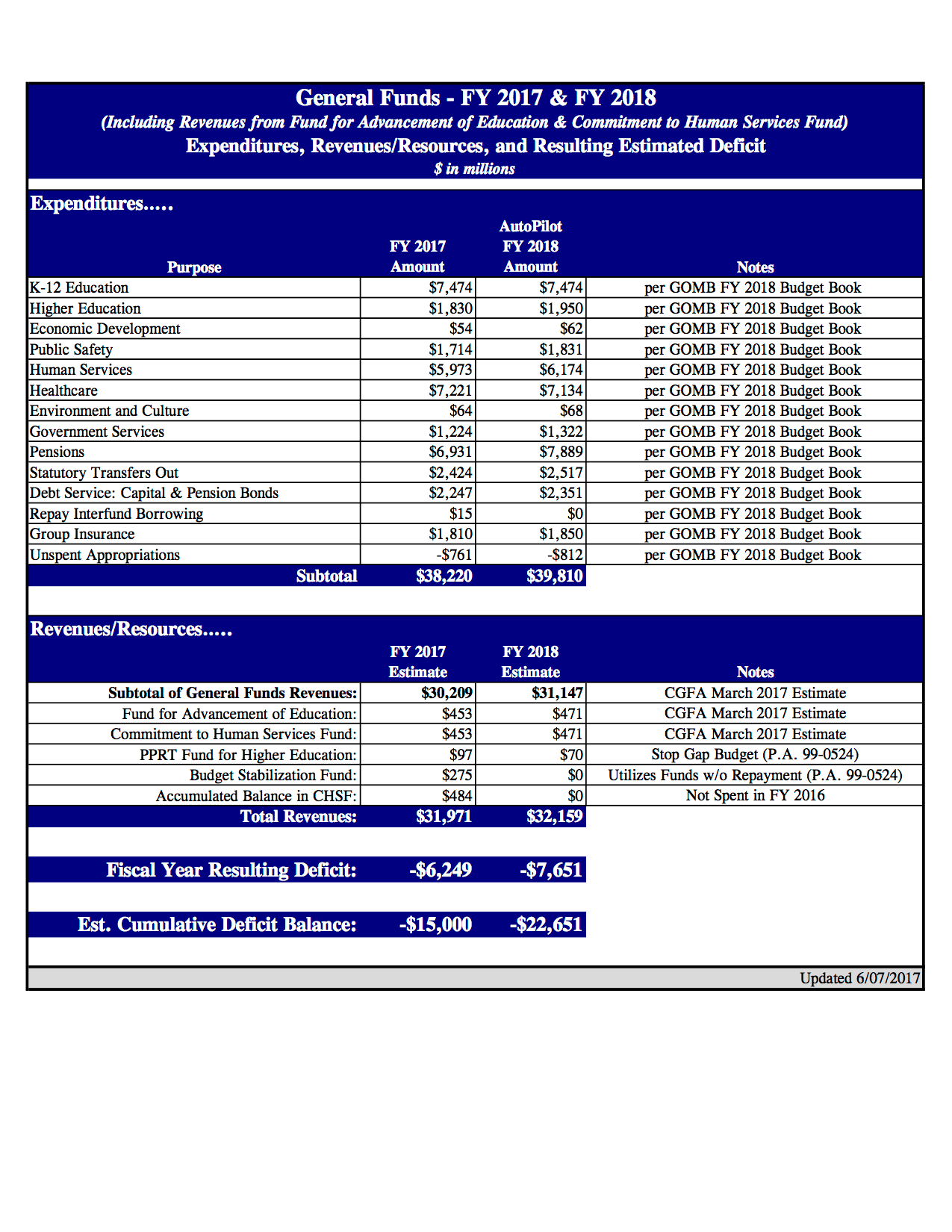
True numbers are 2X or 3X worse and show the genuine bind Illinois is in — not just an ego clash between Rauner and Madigan.
And a look ahead for the near term.
Up 7% for the month but still down 3.5% for the year-to-date.

And shame on most of the Illinois press for ignoring this crime.
Truth is, most of the rest of the legislature doesn’t know what the bill does either. It still passed. Same with most of what they rushed through this week.
Names, titles, salaries and more.
The fog of misunderstanding about Illinois’ crisis remains thick.


Watch the video of the bill’s sponsor, Rep. Barbara Flynn Currie, lying shamelessly about its purpose.
A far deeper crisis for Illinois is inevitable, we’ve long said, but it’s now more imminent because that certainty is becoming more obvious.
Using a “market value” discount rate, just to keep Illinois pensions from sinking further into debt, the state would have to contribute “well over twice of what it actually contributed.” Chicago and Cook County are toast, too.
By: Mark Glennon* We’ve switched over to a new software program, so please excuse us if we are down for a bit and you encounter bugs. If you do see any problems we don’t fix, let us know by email linked here. Yes, we will be restoring a comments section. Cosmetically, it should look pretty much the same as soon as we are finished. However, the new software is more robust and will allow us to add other functionality as we grow. That growth initially will include a separate page with news from other states. We’re grateful to our ever
…Stockton and San Bernadino weren’t either. Not being Puerto Rico doesn’t mean you can’t run out of money and go bankrupt. And it doesn’t mean Puerto Rico won’t frame the debate about how to resolve government fiscal crises.
Total tax receipts compared to April last year were off 1.3%. However, transfers from the federal government increased, putting total sources $216 million ahead for the month (a 6.5% improvement for the month). For the fiscal year to date, however, the decline remains troubling.
It’s hard to see thousands of people rallying to the cry, “no unsustainable pension systems,” but it might do more good than yelling about “science.”
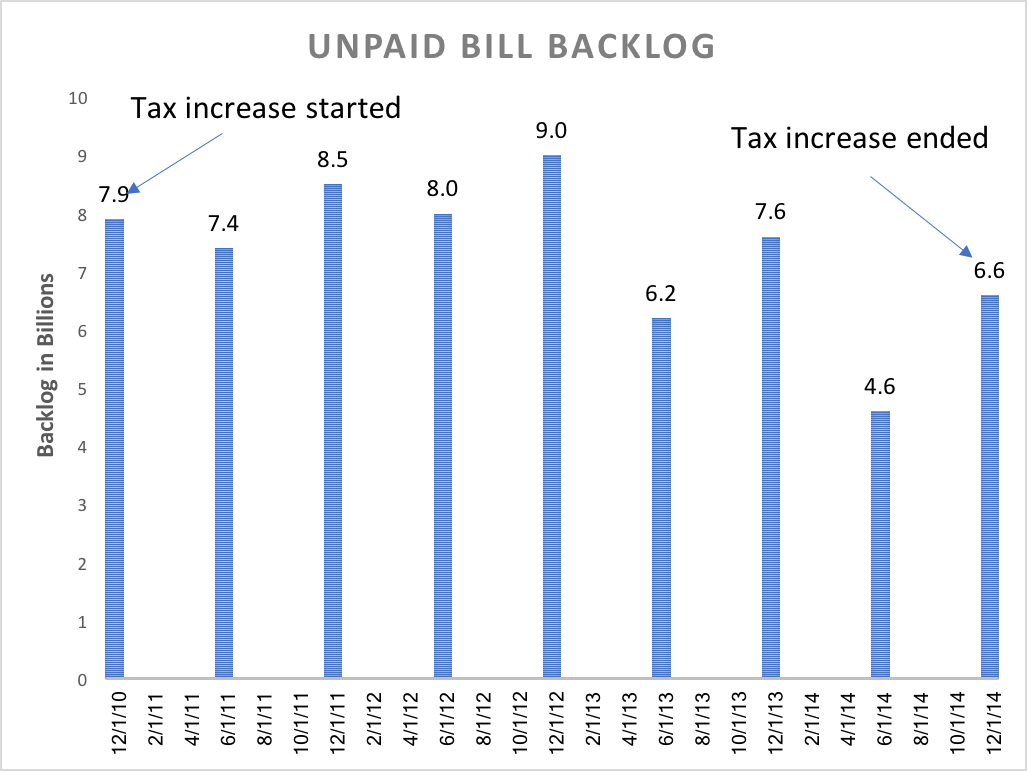
“If only Illinois had extended the temporary income tax increase we’d be in good shape.” Wrong.
“Sweet,” the guys who sell renewable energy hardware must be saying.
By: Mark Glennon* It’s hard to overstate how bad the Illinois General Assembly has become. Let’s look at just three sets of bills this session that have gotten so far along, have so much support and are so crazy that you truly should be frightened. Foolish bills that don’t go anywhere are an old story in Springfield. Sometimes they’re just grandstanding for a particular interest group or lobbyist. Sometimes they’re “fetcher bills” — proposed by one guy so his buddy can fetch a campaign contribution for killing it. And sometimes they’re smoke to distract attention away from what legislative leaders
To pretend that progressive taxes like those proposed in Illinois are the answer, with little else is, is quack demagoguery.
The dumbest idea yet in this legislative session, which is saying something.
By: Mark Glennon* Billions are harder to fathom than thousands. Former Illinois Comptroller Leslie Munger had a good way to illustrate Illinois’ financial status: Just take off six zeroes. For Illinois, keep in mind that each thousand below actually a billion. And for some perspective, one thousand seconds is less than three hours. One billion seconds is over 31 years. For those of you not following the budget crisis closely, imagine you own some kind of service business (services are most of what the state provides). Here’s the situation: You’re bringing in about $32,000 per
By: Mark Glennon* Could a formal bankruptcy proceeding for the State of Illinois be the answer to it’s fiscal crisis? If you think that’s out of the question, as many do, you’re wrong. On the contrary, though Congress isn’t working on it now, the option is quite viable, though subject to obstacles and open issues. The question is certain to gain growing national attention as a number of states sink further into insolvency, so it’s time to get up to speed. I have yet to see a single Illinois politician or reporter raise the question, but plenty of others

By: Mark Glennon* Five years ago this week I almost died off a beach on the Atlantic near Fort Lauderdale. I tell this not just because some of you are heading soon to a beach for spring break. Instead, regardless, you can take away from my experience what I did. I had enjoyed swimming in waves all my life. I’d been pulled out before, but no big deal. I float easily, and swimming to the left or right as you’re supposed to always avoided the current. But I was smart and cautious, I thought. I knew it’s usually middle-aged

By: Mark Glennon* You might remember when the capitol lights almost were shut off a couple years ago because the bill wasn’t getting paid. That was avoided but, figuratively, the lights are off. Consider what the story of House Bill 2584 says about how our General Assembly works. The bill would give a massive windfall to existing bondholders that they didn’t bargain for. But the real story is about how such a bad bill could get as far as it has, unquestioned, and what that shows about how Illinois operates. The bill would retroactively slap a blanket mortgage on all
By: Mark Glennon* A new study by Pew Charitable Trusts tried to measure how much states spend on higher education. The challenge is measuring spending in the form of tax breaks like Illinois and most states provide. Most states simply don’t know and Pew couldn’t fully measure it, they concluded. Only nine states have enough data to really tell, Pew says. Illinois is not among those nine that know. And higher education isn’t the only place where that kind of spending in Illinois is blind. Direct spending is measured and reported. But spending in the form of

By: Mark Glennon* The day itself mattered little — one high school’s all day seminar on racial civil rights, controversy over which captured national headlines. The enduring, bigger lesson is something different — its about how much lasting harm can be done by an imperious school board to an outstanding school and to the entire community it serves. This is about what happens when a school board, because it’s secure in its position despite being democratically elected, becomes autocratic, hypocritical, dishonest, incompetent, smug and outright insulting to minority viewpoints. Think that’s exaggeration? Read on. For schools, the buck stops with
By: Mark Glennon* I’m fed up with the entirely fictional debate about the Illinois budget being played out in the press. One cause is the the state’s failure — at all levels — to give us meaningful, current numbers. Let’s start with two: First, Governor Rauner’s office, Senate Republicans and Senate Democrats alike are consistently claiming that the pending pension bill, Senate Bill 11, would save about $1 billion per year. The press repeats that claim without challenge. But the bill is built primarily on the goofy “consideration” theory about pension reform. Yes, it’s “goofy,” because it

By: Mark Glennon* Step back from the trees and see the forest as you go through the “grand bargain” legislative package Springfield is considering. The details matter less than one overarching question about breaking the death spiral Illinois is in: Will the grand bargain slow the flight of people and employers from Illinois or accelerate that exodus? I hope you already know why that question is paramount. Nothing matters unless the exodus is stopped. State revenue is declining. The tax base is shrinking. Debt is growing. The deficit is accelerating. Employers are leaving. If the result is more
By: Mark Glennon* Base revenues for the State of Illinois fell again in February (compared to last Feburary) according to today’s report from COGFA, the Commission on Governmental Forecasting and Accountability. “Like a broken record,” COGFA says, monthly declines reflected weaker income taxes along with poor federal sources. For the fiscal year-to-date, base receipts are off $1.453 billion, or 7.5%, compared to the same period last year. “Weakness is widespread, and has resulted in year over year losses in key areas such as income taxes and federal sources,” says COGFA COGFA has scheduled a meeting for March 7 to discuss
By: Mark Glennon* What could be worse than bankruptcy for an Illinois town or city? An assetless bankruptcy. That’s when even a formal bankruptcy proceeding can’t help because there’s nothing to work with. It’s when the bank owns everything and nothing is left. That’s when it’s lights out. The concept applies regardless of whether a formal bankruptcy proceeding takes place. But that’s just what Senate Bill 10 would make more likely. It’s one of the twelve bills comprising the “grand bargain” now under consideration in Springfield. It would assure that bondholders — who you can think of as “the
Comment: Special thanks to Joan Oh, on the other side, for being so gracious — in stark contrast to so many on her side who have sent us the most hateful, vile, intolerant emails imaginable.
By: Chris Robling* New Trier Township High School has been a national model at least since World War II. Today, unexpectedly, it models the nation’s divisions over how to discuss – and act on – inequities based on race. Few public high schools can compare to New Trier’s past – or present. Life Magazine’s October, 1950 Special Issue “U.S. Schools, They Face a Crisis,” put a New Trier girl on its cover and presented the school as a Valhalla of secondary education, the very national example North Shore parents had hoped would keep their kids at home,
By: Mark Glennon* I’ll ask a leading authority on Illinois’ single subject rule about it and the “grand bargain” budget solution under discussion in Springfield, but first a little background. The single-subject clause of the Illinois Constitution is in Article I, § 8(d), paragraph 2. It provides: Bills, except bills for appropriations and for codification, revision or rearrangement of laws, shall be confined to one subject. Appropriation bills shall be limited to the subject of appropriations. But the grand bargain is a gigantic cornucopia of different subjects. It addresses pension reform, workers’ compensation, security for
By: Mark Glennon* Most readers’ eyes surely glazed over when they read last week about the cat fight between two of the agencies that rate credit for Chicago Public Schools. What’s far more important than that dispute is what it illustrated: The municipal bond community is way ahead in putting itself before everybody else with a stake in the financial crises gripping CPS, Chicago, other muncipalities and the State of Illinois. They’ve been hard at work securing positions to ensure they’ll get paid first, ahead of other creditors and ahead of taxpayers hoping to see government cash used for
By: Mark Glennon* Not since the Vietnam War have I seen as much strife and personal hostility within an otherwise friendly community. Thank the administration of New Trier High School in north suburban Chicago. This story is about the madness on college campuses now being crammed down into a public high school. More importantly, it’s about an angry brawl now growing rapidly. Oblivious to how identity politics have divided the country, the school is holding an attendance-mandatory All-School Seminar Day with the stated goal of “understanding today’s struggle for racial civil rights.” That sounds fine, but the problem is that
*Mark Glennon Governor Rauner today hired Illinois’ previous Comptroller, Leslie Munger, as Deputy Governor. “Deputy Governors” are essentially close advisors to the elected governor. Their duties are whatever are assigned to them by the governor. Rauner has another already, Trey Childress. Munger’s duties will include work with the budget and social service agencies. Munger is a welcome addition to Rauner’s team. She managed the impossible situation in the Comptroller’s office with smarts and integrity, where she earned the respect of the media. I got to know Munger reasonably well a few years ago. She’s one of
By: Mark Glennon* Tax receipts and other revenue for the State of Illinois declined again in January, continuing an ominous trend, according to the monthly report released today by COGFA, Illinois’ Commission on Governmental Forecasting and Accountability. Comparing last month to January of 2016, overall base revenues were off $167 million, or 5.4%. For the fiscal year-to-date (that started in July), base receipts are off $1.031 billion, or 5.9%. COGFA writes: The past months performance did little in the way of alleviating concerns over FY 2017 revenues spelled out in last month’s briefing, particularly the disturbing
By: Rep. Jeanne Ives* No one should be surprised that group think instead of rational choices surround the 13 interconnected bills of the “Grand Bargain” under consideration in the Illinois Senate. It is wholly predictable given the longevity of the Senate leaders involved. They’ve been working together for nearly two decades. They put in place many of the policies now taking a toll on our state. They are the beneficiaries of generous pensions when they retire, excessive pay for their part-time jobs, and the public attention and stature of the positions they hold. What’s new now is the
“Glennon’s facility with translating the Illinois Ruling Class’ fantasy math into the tangible human costs it imposes makes him a dangerous man to Illinois pols and a must-read for Illinois residents.” Flattered.
By: Mark Glennon* The introductory language in the bill is so perfect. The tax is imposed “for the privilege of doing business in the State.” And the rationale for how much tax is paid is pure genius: The more you pay employees in Illinois, the higher your tax. That’s right, it’s based on how big your Illinois payroll is. Whether you have any money, any revenue or any profit doesn’t matter. It’s in SB-9, a bill introduced today in the Illinois Senate. It would apply to pretty much anybody doing business in the state — any

By: Mark Glennon* Illinois Sen. Christine Radogno (R-Lemont) took the lead with Senate President John Cullerton (D-Chicago) to negotiate the “grand bargain” budget proposal for Illinois now being widely discussed. Let’s review her record. I’ve spoken before several times to Radogno about the primary budget issue for Illinois — pensions. It was clear to me that she simply doesn’t know what she’s doing. It was strike 3. Let’s look at just two strikes against her already on the record. Strike 1 was the blatantly foolish or dishonest claim she made about SB-1, the last major attempt at state pension reform.
By: Mark Glennon* From news reports about the “grand bargain” budget solution on the table in Illinois you might be thinking, “Well, I don’t like these tax increases, but it looks like this deal would fix our state budget problems by covering the budget hole with new taxes. Let’s do it and get this over with.” Huge mistake. The real numbers don’t come remotely close to a solution. That’s primarily because government budget numbers are nearly useless. Bill Bergman is an expert on government finance at Truth in Accounting I talk to regularly. He summarizes it this way: Government
By: Mark Glennon* If I offer you an equal trade for something which you are free to accept or reject, have you sacrificed or given anything up? Of course not, yet the notion that you’d have somehow made a big concession is behind the “pension reform” piece of the Illinois budget deal now being discussed. We’re talking about the “consideration” approach to pension reform, which has long been pushed by Illinois Senate President John Cullerton (D-Chicago) and his go-to lawyer on pension matters, Eric Madiar. The idea, differently stated, is for pensioners to give up benefits in

By: Mark Glennon* The figure I deeply admire in The Big Short, Mark Baum (Steve Eisman was his real name), had a simple reaction when financial screens began to bleed red as the subprime mortgage market collapsed and the Great Recession began: “It’s happening.” Illinois’ descent isn’t like that. No single day, month or even year will be marked on a chart to stick in the history books. But it is happening. Illinois is gradually bleeding out through ever deeper wounds inflicted by its own government. The most common question I get here is when it all blows up, but
By: Mark Glennon* The monthly report on state revenue was published today for December by COGFA (Illinois’ Commission on Government Forecasting and Accountability). It’s dismal again. Overall base revenue slipped compared to last December by $257 million, continuing a trend. For this fiscal-year-to-date (which started 7/1/16) compared to last year, state revenue is off by about $1 billion. “Perhaps most unsettling, says COGFA, “is that the last time the Big Three [personal income tax, corporate income tax and sales tax] experienced a combined decline during the first half of a fiscal year [absent tax rate changes] was
By: Mark Glennon* A tipping point is at hand in Illinois. It’s the point when potential homebuyers conclude they’ll never cash out whole because of increasing taxes and declining values: Buyers can get in but can’t get out — a Roach Motel. A buyers’ strike can follow, speeding the spiral downward. Excessive property taxes are driving the potential disaster. A property tax freeze is essential, immediately, to head it off. The evidence starts with effective property tax rates for towns and cities around Chicago, where the problem is most acute. Effective rates are the simple percentage
By: Dalton* Political dysfunction in Illinois runs deep. Chicago is the epicenter of the state’s political dysfunction and from Chicago emanates a broken politics that has polluted the state. Yet it’s not just a Chicago problem. Few if any political actors are rising to the occasion to present an honest assessment of the state’s crippled fiscal, political and economic reality, along with a message about an alternative vision for the future. Even with divided government, Illinois’ head-in-the-sand approach to impending catastrophe and pay-to-play approach to economic policy have continued to grind on. Here are four ways that political
By: Mark Glennon* Illinois Senate Democrats posted their “Top 10 New Illinois Laws for 2017.” If it weren’t labeled as being for Illinois, you’d seriously have to wonder if it was from some thriving, growing state. Where is there anything significant to help beaten-down employers, grow the tax base, end the state and local fiscal crises, stem the flight of people and companies or address the 800-pound gorilla — pensions? Zip. Nothing. It’s not that these things are bad. Most passed with bipartisan support and all, obviously, were signed by Republican Governor Rauner. The problem is what’s
By: Dalton* The Seinfeld-inspired Festivus holiday has launched a bold new tradition of airing one’s grievances at the end of the year. And a Festivus-style airing of grievances is a tailor-made tool to take on the state of Chicago policies and politics. In the immortal words of Frank Costanza: “The tradition of Festivus begins with the airing of grievances! I gotta lot of problems with you people. Now, you’re going to hear about it!” The list below captures certain issues that get to the essence of why Chicago’s politics and finances are so screwed up.
By: Mark Glennon* On October 16, 2015 I wrote an article here, The Shock and Awe Budget Address Rahm Should Have Given. It outlined the drastic steps Chicago should have taken to avoid doom. In the batch of personal emails of Mayor Emanuel recently released is an exchange between Rahm and Henry J. Feinberg in which Feinberg included a copy of my article to urge him to consider serious reform. I don’t know Feinberg but know of him: He’s a very accomplished guy in finance and evidently spends some time advising Rahm. The exchange puts Rahm’s character
By: Dalton* All the resources at stake in the AFSCME state union negotiations are extracted from private-sector taxpayers. AFSCME’s high pay, 37.5 hour work-week, platinum level healthcare, generous pensions and lifetime health insurance benefits are billable to Illinois taxpayers. And because the union wants even more, there is an impasse in negotiations. In reality, AFSCME is at impasse with taxpayers, not Rauner. The entire transfer of resources being negotiated at the bargaining table is from taxpayers to the union. Rauner is simply a taxpayer steward to represent their interests in the negotiations. And thank God for that, because
By: Mark Glennon* “About a third of our applicants fail the drug test. Another third lack basic life skills — like showing up for work on time. We’re left with the remaining third to find the particular skills we need, and that’s hard.” That was told to me earlier this year by a veteran at a major Illinois manufacturer who is is also working hard developing one of the state’s manufacturing corridors. I’m leaving that corridor’s name out because I don’t want to single them out for having that challenge. It’s a common complaint from manufacturers elsewhere.
By: Mark Glennon* I must have fallen asleep outside last night in the -12°. I can’t be reading correctly the guest opinion piece in this morning’s Crain’s, “Beware the Siren Call of ‘Pension Reform.‘” Only cessation of my neurological activity can explain my understanding of it. First, just a little background on the author, which I do think I remember correctly: Louis Kosiba is Exectutive Director of IMRF (the Illinois Municipal Retirement Fund). That’s the pension that is unique in Illinois because it automatically imposes property tax increases sufficient to cover the promises it makes, helping make Illinois property taxes
By: Mark Glennon* Our readership numbers continue to set new records and we’re sure grateful for your support. It’s especially nice to see the appetite for what we think are the stories truly important to Illinois’ economy and government. Special thanks to other publications that have quoted or reprinted us, including the Wall Street Journal, New York Times, Zerohedge and others. I’ll be making Wirepoints a full time career now instead of just the hobby it has been over the last few years. To do that, I’ve been winding down my consulting practice and dropped off my
By: Mark Glennon* A crisis in the Dallas police and firefighter pension has captured national and international headlines thanks largely to a particular form of savings account offered to its members. Illinois’ second largest public pension, IMRF, also offers a particular form of savings account to its members. IMRF is not in crisis and its savings account is different, but the way it’s most different isn’t good for Illinois taxpayers. The Dallas pension has experienced what you can think of as a standard “run on the bank.” It has all the usual problems with public pensions, but
By: Mark Glennon* If there’s any major officeholder in Illinois in either party who opposes comprehensive immigration reform, including a path to normalization for illegals already here, I don’t know who it is. That includes the Republican Congressional delegation and Governor Rauner. I support it, too, in case that matters. “But,” as GOP USA wrote yesterday, “cities that adopt ‘sanctuary’ policies make it much it more difficult to enact sensible immigration reform because they don’t discriminate between a non-dangerous undocumented immigrant and one who is a violent criminal.” They prohibit cities from even inquiring about citizenship, making
By: Mark Glennon* Total revenue for Illinois continued to decline in November. That’s based on comparison of both this November to last November and this fiscal year through November to last year. That bad news is in the monthly briefing from COGFA, Illinois’ Commission on Governmental Forecasting and Accountability. “Last month’s briefing mentioned concern with FY 2017 revenue performance—that concern continues to grow,” says COGFA. For this November, the bright spot was an increase in personal income tax revenue, which exceeded last November’s by $75 million. However, that improvement was offset by declines in revenue from
By: Mark Glennon* The top listed story on the “News” section at NBC5 Chicago’s site right now is headlined, Even During a Security Briefing, SNL’s Trump Would Rather Be Tweeting. The same story is in their “Entertainment” section. What’s the difference if you want to conflate the two? According to the story (not the sketch but the story), “a theory that has taken hold” that the sketch is accurate — that Trump tweets to “distract the media from his business conflicts — and all the scary people in his cabinet.” No discussion of support is offered for
By: Mark Glennon* Illinois and many of its municipalities, including Chicago, are bleeding red with no end in sight. It doesn’t matter whether one side or the other capitulates or compromises in the state’s budget negotiations because nothing approaching a truly balanced budget is being considered. There is no such budget solution to be had. We began writing here four years ago by warning that a humanitarian crisis will come, the cost of which would exceed the combined damages of Hurricanes Katrina and Sandy, all concentrated on Illinois, though hitting slowly. That crisis is already here for some,
By: Mark Glennon* Nobody should have been surprised. You’d think they’d realize they’re admitting their own incompetence. But the supposed scholars in all things pertinent to society, democracy and social justice are falling over themselves to signal their shock at the election results. Petitions and statements from faculty and administrators are flying on pretty much every campus in America. The common denominators in their messages jump out: surprise at the election results and, of course, assurance to their students that they’ll be kept safe and secure from the horror of those results that shocked them, too. Their
By: Mark Glennon* The 6th U.S. Circuit Court of Appeals today upheld a Kentucky county’s right-to-work ordinance, validating enactment of right-to-work at the local level. (The case is UAW v. Hardin County, 6th U.S. Circuit Court of Appeals, No. 16-5246.) Lincolnshire, Illinois passed a right-to-work ordinance last December. If upheld by the courts, it would bar private employers from requiring workers to join unions and set the precedent for other Illinois towns, cities and counties to do the same. That ordinance is being challenged by unions in federal court and a decision there, either way, undoubtedly will
By: Mark Glennon* Governor Rauner and legislative leaders were widely reported today to be discussing how to fill a budget hole of about $7 billion. The real number is closer to twice that, and probably much higher. They won’t come close to eliminating the true deficit. Here’s why: That $7 billion is the difference between total income and total expenses projected for the 2018 fiscal year, which will start July 1 of next year. (The budget projected for the remainder of this 2017 fiscal year doesn’t indicate much because it’s for just half the remaining year and assumes
Our article on the GrubHub affair is cited in this WSJ article. Our shameless self-promotion here.
By: Mark Glennon* Yesterday we covered the likely effects on Illinois from Trump’s appointment of a ninth justice to the Supreme Court, which are alone are huge. Below is the rest. What Trump actually will do is uncertain and credibility isn’t exactly his hallmark, but he has made a firm pledge on a specific 100-day action list and other priorities are starting to emerge from public statements by him and his transition team. For better or worse, here’s what we should probably expect: Infrastructure spending. Trump is discussing a $1 trillion program which appears to have substantial
By: Mark Glennon* Straight to the point, we’ll focus in this first part just on the impact of Donald Trump’s appointment of a ninth justice to the United States Supreme Court. That appointment almost surely will be a hard core conservative, as Trump has promised, tipping the balance back towards a reliably conservative majority from the current 4 – 4 ideological deadlock. Many national issues will be determined by the new court that affect all states, but we’ll focus here only on those specifically related to Illinois. For Illinois, the impact most likely will be on labor initially
By: Mark Glennon* “We need to build bridges…. The more we talk about the divisions, without finding common ground, the more polarized we become as a nation.” With whom do we we need to do that? With those who we say gave a “national affirmation of everything that is antithetical to what we aspire to and hold as our most cherished values.” “We need to reach out, build connections and coalitions, build a more inclusive and united voice.” Inclusive and united with whom? With those who we say have given the “ultimate validation” to a “climate and rhetoric of hate,
By: Mark Glennon* Cook County on Thursday slapped another $224 million tax on its residents, this time in the form of a “sugary drinks” tax. According to the Chicago Tribune, the tax will add 72 cents to the cost of a six-pack of soda or 68 cents for a 2-liter bottle. The tax also will be imposed on fountain drinks at a penny an ounce, bringing the tax on a 7-Eleven Gulp to 32 cents and on a Double Gulp to 50 cents. Where’s it going? In a sense, money is fungible, but it’s pretty clear from
By: Mark Glennon* Neil Steinberg of the Sun-Times yesterday gave his suggestions for folks contemplating suicide over Trump’s election. Yes, it was a serious article, because calls to suicide prevention lines indeed jumped Wednesday. (Anybody truly feeling suicidal over the election or anything else should stop here and call the prevention hotline at 1-800-273-8255.) Never mind some of the others on his list of life-savers, which include flying a flag, learning Spanish and going to Margie’s Candies. It’s this gem I’d like you to consider: “Subscribe to a newspaper,” he says. “Get the paper at home —
By: Mark Glennon* A firestorm broke out today in the national media over an email by the Founder/CEO of Chicago-based GrubHub, Matt Maloney, to all employees, essentially telling Donald Trump supporters to resign. There’s a major learning experience to be had in this affair. It’s not just the usual story about intolerance on the left. It’s about how an exceptionally bright person can be exceptionally blind to the certainty of self-inflicted harm. It’s about why the phrase “just don’t get it” isn’t just some platitude in the Donald Trump saga. It’s deeper than we knew. I know
By: Mark Glennon* Regulars here may have noticed there hasn’t been much to read in the last couple weeks. The reason should tell you something — something discouraging, which I’m sure is just what you want to hear. We aggregate the best stories we can find about the role of governance in Illinois’ economy, with a particular focus on our state and local fiscal crises. But we try to avoid politics, which is usually rather different. We haven’t found much lately. Attention has properly turned towards the election, and what has that meant? Is there any
By: Mark Glennon* There is no room for any different interpretation of Obama’s words. In an interview Friday and now made public, President Obama encouraged illegal immigrants to vote and assured them that no repercussions would follow. The complete interview with actress Gina Rodriguez is linked here. The relevant portion starts at the 3:20 mark. I’ve tried to avoid writing about the presidential election, but this is far too much to ignore. I never thought I would see the day when an American president would do such a thing, or when the press would ignore anything so
By: Mark Glennon* This is very bad news indeed. COGFA, the Commission on Government Forecasting and Illinois, just released its Illinois state revenue report for October and the fiscal year to date (which began July 1). Tax revenue continues to drop, despite the supposed economic recovery. Comparing this October to last October, overall base revenues fell $304 million. Receipts from the individual income tax, corporate income tax and sales tax all declined, although transfers the state gets from the Federal government also contributed to the drop. Comparing this fiscal year-to-date to the same period last year,
SIGN UP HERE FOR OUR FREE WIREPOINTS DAILY NEWSLETTER
)